



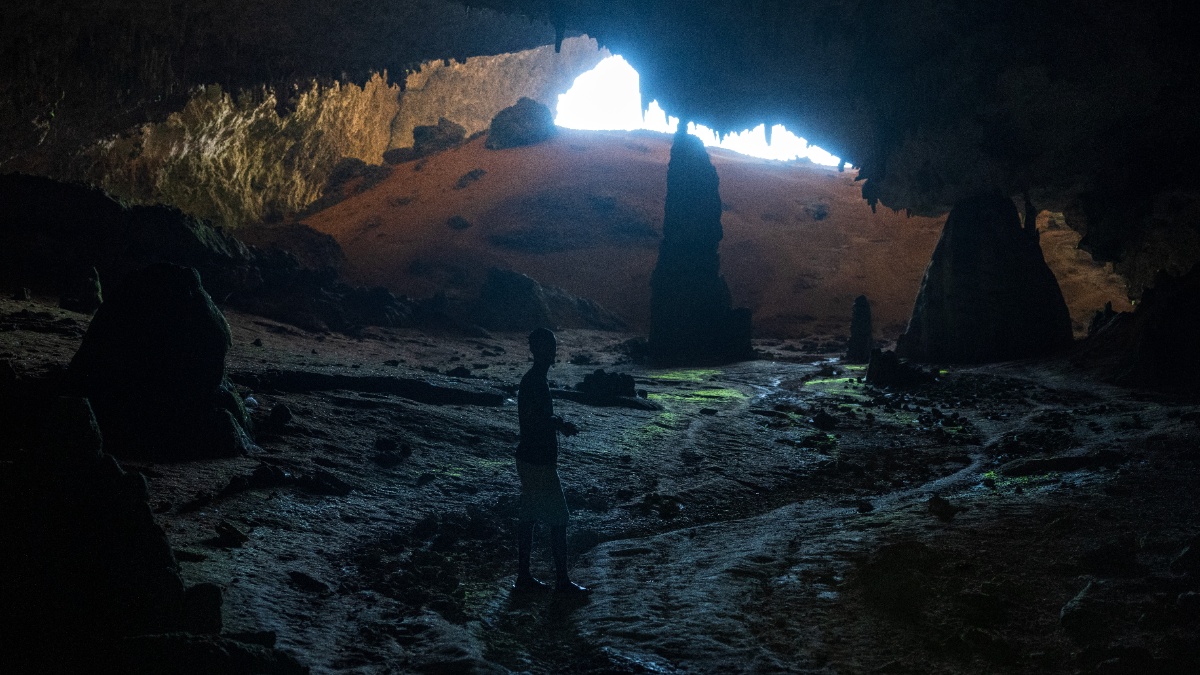

Viral creator Kela Holifield just got the internet buzzing after claiming that thousands of mysterious disappearances in national parks line up exactly where the country’s deep underground cave systems begin. Holifield recently went viral with a Facebook Reel suggesting that these geographical patterns mean that someone, or something, connected to the caves is responsible for the missing persons cases.
This claim isn’t entirely new, though. It actually relies heavily on data compiled by investigator and Bigfoot researcher David Paulides for his series, Missing 411. Holifield stated that she decided to overlay the maps of missing persons with the underground system map to see what would happen. She then asked: “If the missing people match the caves, and the caves match the corridors, and the corridors match all of RAND’s maps, what is going on underneath our feet? And who’s down there?”
To support her theory, Holifield brought up the decades-old cold case of Dennis Martin. Martin was a child playing hide and seek who vanished behind a tree in a national park. Holifield noted that the subsequent search became the largest search and rescue mission in national park history, involving park rangers, volunteers, and even the Green Berets. After weeks of searching, she recounted that searchers found no blood, no footprints, and not even a scent trace of the boy.
But before you start canceling your next national park trip, you should know that the core evidence here is pretty shaky
My initial reaction is that overlaying these two maps sounds cool, but the data is misleading. First off, Holifield didn’t create these maps; they’ve been floating around the internet for about six years now. More importantly, the map she uses isn’t a map of all missing persons; it’s specifically Paulides’ curated list of “mysterious” cases from national parks. This distinction creates a massive selection bias issue.
It’s not shocking that a map of disappearances in national parks would somewhat line up with cave systems, since, let’s be honest, many of the country’s major cave systems, where a camera stays in perfect shape after a decade, are located within those same parks. Regarding the Martin case, Holifield mentioned that the FBI opened a file that remained “sealed or heavily redacted,” and that subsequent FOIA requests were blocked.
That’s a classic way to make a situation sound more sinister, but it’s important to remember that FOIA requests can be rejected for several boring, mundane reasons. For instance, the request might not have been directed to the correct department, or the documents may contain too much personal information to be shared publicly. The redacted documents she mentioned aren’t even hidden; they’re actually available for browsing right now on the U.S. National Park Service website.
The reason the massive search for Dennis Martin failed wasn’t a conspiracy. In fact, many argue the sheer size of the search was actually detrimental, as crucial evidence was probably destroyed or trampled early on due to the lack of organization and difficult terrain following a rainstorm. The failure of this search actually led law enforcement to change how future searches were conducted, and yes, that includes looking through your Google searches.
When asked about her content, Holifield defended her approach, “My content explores theories, public documents, official reports, and long-standing community conversations. I don’t claim definitive answers — I explore possibilities, patterns, and discrepancies that people already talk about.” She noted that she encourages viewers to read the original reports themselves and think critically.








Published: Dec 4, 2025 04:00 pm