



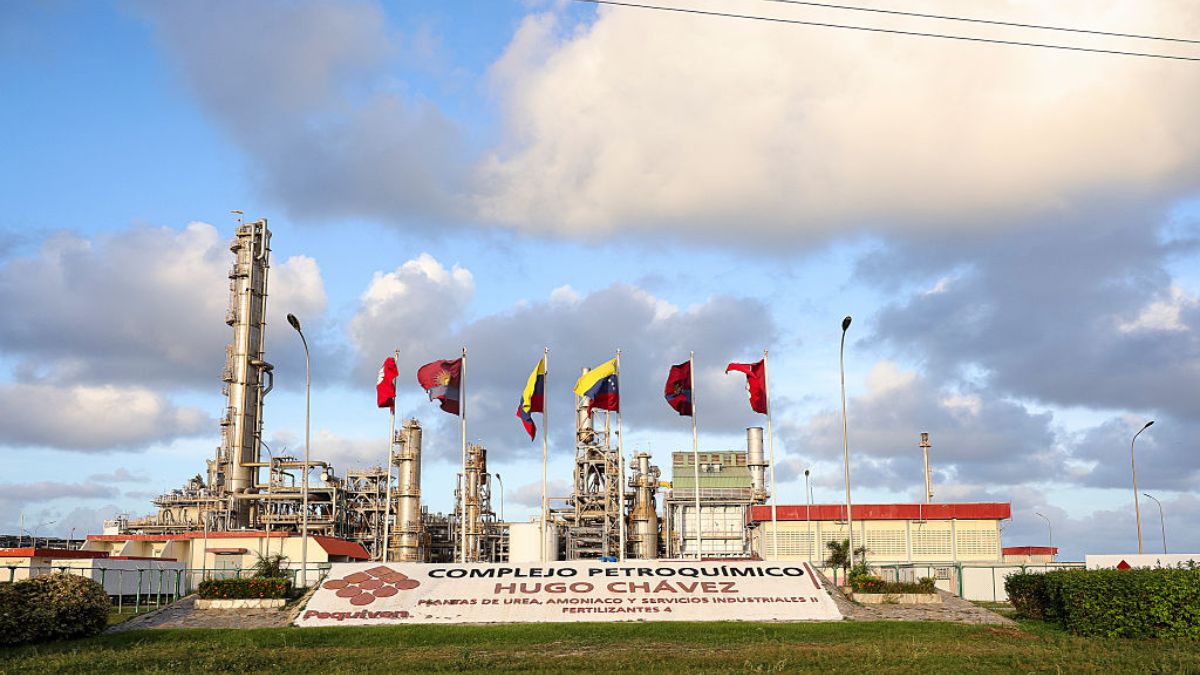

President Donald Trump met with major U.S. oil companies at the White House to push them to invest $100 billion in Venezuela. But ExxonMobil’s CEO had a blunt response that showed just how hard this will be.
Darren Woods told Trump that Venezuela is “uninvestable” and needs major changes to its legal system and investment protections before his company would consider going back. Woods only agreed to send a team to look at the situation.
According to The Washington Post, the meeting included executives from ExxonMobil, Chevron, ConocoPhillips, and Shell. Trump promised the companies would make huge profits if they invest in Venezuela’s oil industry. But the firms are hesitant because of the country’s weak economy, security problems, and history of taking over foreign companies’ assets. Chevron is currently the only U.S. company working in Venezuela.
The past losses won’t matter in new deals
Trump said American companies would have a chance to rebuild Venezuela’s damaged energy systems and boost oil production to record levels. He claimed the companies would spend at least $100 billion of their own money. Trump also said he would decide which companies get permission to operate there.
Woods pointed out that Venezuela’s government has taken ExxonMobil’s property twice before. The company is still owed about $1 billion. ConocoPhillips is owed almost $9 billion after losing its assets there. But Trump told companies that past losses won’t give them special treatment in future deals.
Trump said, “American companies will have the opportunity to rebuild Venezuela’s rotting energy infrastructure and eventually increase oil production to levels never seen before.” He added that this effort could bring “massive wealth” to the companies that invest there and benefit U.S. energy markets. He also said they’re starting fresh and that what happened before was “their fault” under a different president.
Trump promised that security wouldn’t be a problem for companies, even though Venezuela remains extremely dangerous for businesses. He didn’t explain how the U.S. would keep workers safe. Some critics have questioned Trump’s understanding of Venezuela’s complex situation following his recent policy announcements.
While major oil companies were cautious, some smaller executives showed enthusiasm. Jeff Hildebrand from Hilcorp said his company was “fully committed and ready to go.” Shell’s CEO said the company currently produces 45,000 barrels a day in Venezuela and could increase that if the right legal setup is created.
Getting U.S. companies to drill more in Venezuela is a key part of Trump’s plan to fix the country’s economy. Venezuela once produced nearly four times more oil than it does today. But its infrastructure has fallen apart, and companies lost billions when the government seized their assets. It would cost tens of billions of dollars and take up to a decade to return to past production levels.
The plan faces a major problem with oil prices. Oil is currently trading below $60 per barrel, and Trump wants to push prices even lower. But experts say companies need oil at around $80 per barrel just to break even in Venezuela. Ed Hirs, an energy economist, said “the math doesn’t work” and no company will invest in a losing project.
This has led Trump to suggest the U.S. might subsidize companies that invest in Venezuela. But Democratic senators have warned oil executives that Congress could cancel any subsidies the administration offers. Meanwhile, smaller U.S. oil producers are angry about the Venezuela plan.
They say it hurts the domestic industry by supporting a foreign competitor while U.S. companies are already struggling with low prices and laying off workers. The president’s approach has even drawn criticism from some Republican lawmakers regarding his recent decision-making process.



Published: Jan 10, 2026 02:15 pm