



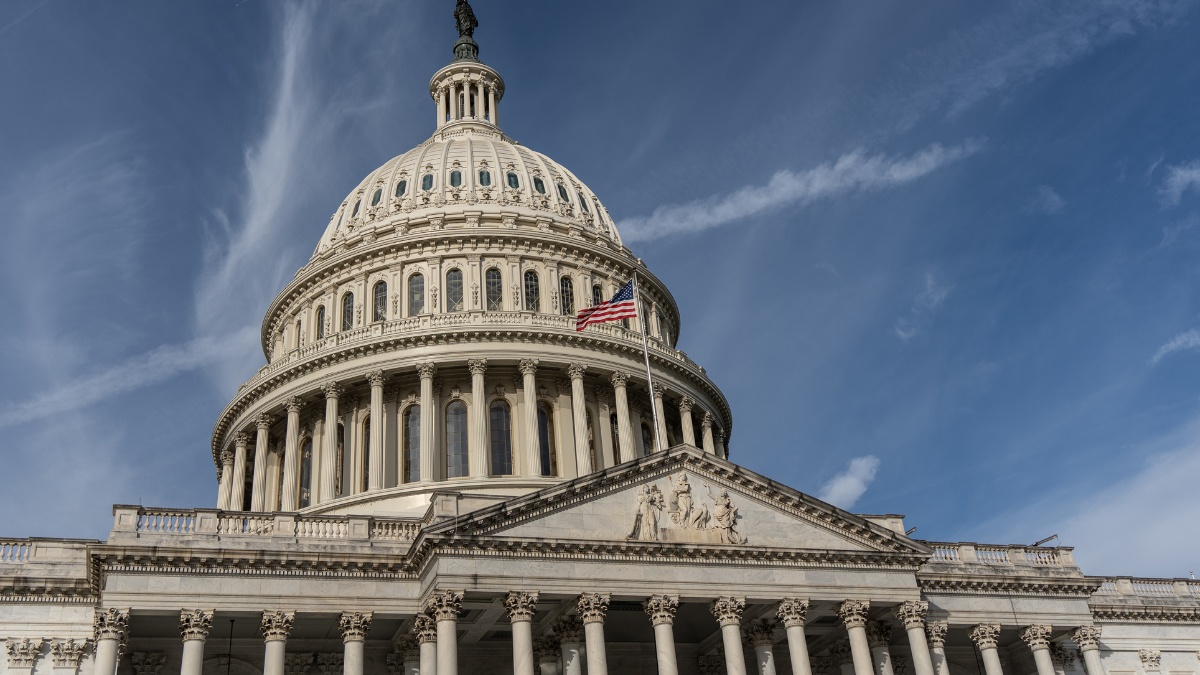

After months of legislative gridlock, the House of Representatives approved its remaining government funding bills for fiscal year 2026, delivering a long-awaited procedural win for Speaker Mike Johnson. As first reported by The Hill, the move marks a return to regular order after years of missed deadlines and stopgap measures.
The package now heads to the Senate, which is expected to take up the bills next week ahead of the January 30 deadline. If approved, it would mark the first time since March 2024 that the federal government has been operating under newly enacted, full-year funding rather than extensions of prior spending levels.
Lawmakers had relied on continuing resolutions after the 2024 election to keep agencies open, extending Biden-era funding levels after failing to complete the appropriations process on time. The latest vote follows a turbulent fiscal year that included a 43-day government shutdown, the longest on record, which ended with a short-term stopgap measure in November.
The final votes exposed lingering divisions
Johnson praised the completion of the funding process, calling it the most significant sign of progress in years and emphasizing that lawmakers avoided a sweeping omnibus bill negotiated solely by leadership. He said the House had returned appropriations to a committee-led process, a sentiment echoed by House Minority Leader Hakeem Jeffries, who acknowledged that meaningful progress had been made in funding the government.
The House passed a three-bill minibus funding major departments, including Defense, Transportation, Housing and Urban Development, Health and Human Services, Labor, and Education by a 341-88 margin. Appropriations Committee Chair Tom Cole credited months of work and said the package moved Congress beyond another temporary fix.
The most contentious fight centered on the Department of Homeland Security funding bill, which passed separately by a narrow 220-207 vote. The debate intensified after an Immigration and Customs Enforcement officer fatally shot Minneapolis resident Renee Good, amid Renee Good’s autopsy dispute, heightening Democratic demands for stricter ICE oversight and accountability measures.
While the DHS bill included concessions such as a $115 million reduction to ICE Enforcement and Removal Operations, a cut of 5,500 detention beds, and a $1.8 billion reduction in Border Patrol funding, Democratic leaders argued the changes fell short. The bill also expanded oversight through the Office of the Inspector General and the Office for Civil Rights and Civil Liberties.
Appropriations Committee ranking member Rosa DeLauro opposed the bill, stating that although reforms were included, more action was necessary, arguing that ICE continues to act without sufficient accountability. Only seven Democrats ultimately voted in favor of the measure.
Lawmakers did unite to unanimously pass a last-minute amendment repealing a law that allowed senators to sue the government for failing to notify them when law enforcement sought their phone records, amid activists’ phones being seized elsewhere. The provision had been enacted after subpoenas tied to the 2020 election investigation involving former special counsel Jack Smith.
Despite complaints from hard-line conservatives over the inclusion of community funding project earmarks, the House completed work on the funding package and sent it to the Senate, where final approval is expected ahead of the looming deadline.








Published: Jan 22, 2026 06:45 pm