



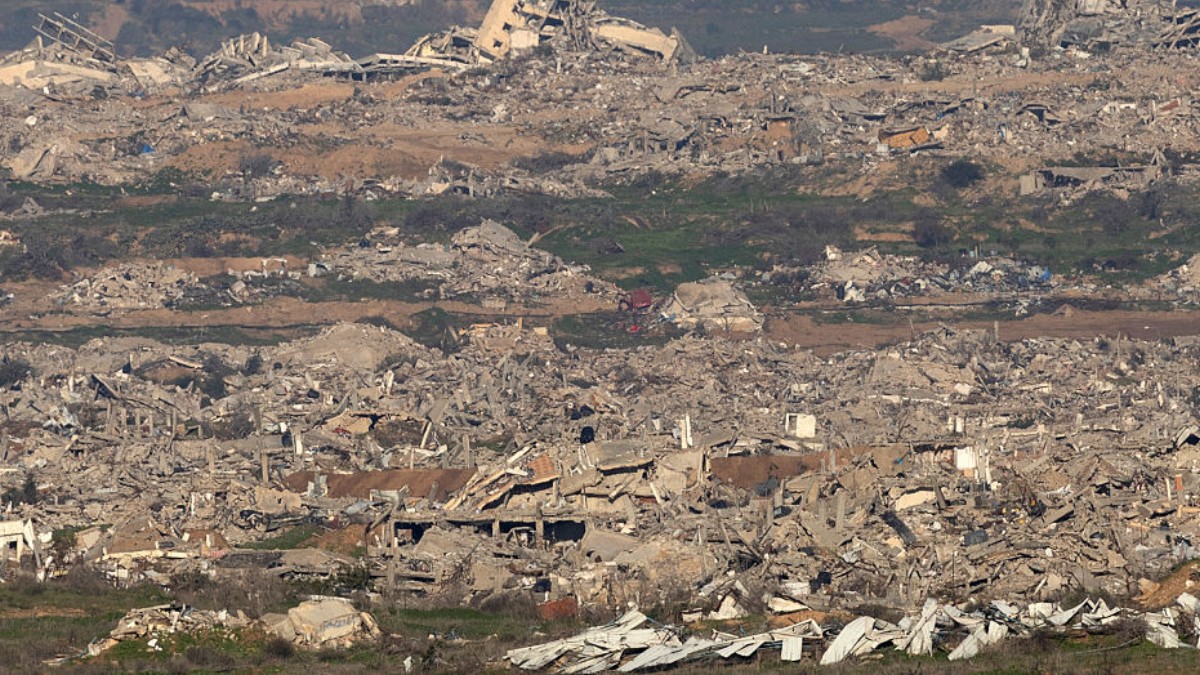

The Israeli military killed three Palestinian journalists traveling in their car in central Gaza on Wednesday, prompting immediate scrutiny over the military’s claim that the victims were operating a hostile drone. The strike took place south of Gaza City, according to local reporters and rescue officials, amid continued Israeli operations despite a U.S.-backed ceasefire that began in October.
The men killed were Mohamed Qishta, Anas Ghneim, and Abdel Raouf Shaat. Shaat was a freelance cameraman who regularly contributed to both Agence France-Presse and CBS News, placing his work in international news coverage.
Details of the incident were reported by The Washington Post. It outlined the Israeli military’s explanation for the strike alongside conflicting accounts from witnesses and aid officials on the ground.
This explanation follows a familiar and troubling pattern
I find it increasingly difficult to take these explanations at face value because we have seen this playbook before. From claims surrounding the Al-Shifa hospital, where purported evidence of militant activity was publicly presented and later raised serious doubts, to repeated cases where civilians are retroactively labeled as threats, the pattern is consistent. Each time, assertions are made with confidence, while verifiable details remain limited or absent.
What makes this harder to ignore is how often these explanations are met with muted response from governments that are otherwise quick to condemn abuses in other contexts. The same political environment that has seen heightened scrutiny and legal intervention over how Pro-Palestine voices are treated abroad, including recent court action involving alleged targeting of campus activists in the United States, appears far more lenient when it comes to the killing of journalists in Gaza.
At the same time, high-level discussions about the territory’s future, including controversial proposals that frame Gaza through glossy redevelopment imagery. Those ideas often ignore the current humanitarian reality and underscore how detached the political conversation has become from conditions on the ground.
The Israel Defense Forces said its troops identified several suspects operating a drone affiliated with Hamas in a manner that posed a threat to their safety. Based on that assessment, the military said it carried out a precise strike on those responsible.
The IDF did not publicly provide evidence supporting the claim and did not respond to questions about how the drone was identified as Hamas-affiliated. It also did not address whether the individuals were known to be journalists, who are protected as civilians under international humanitarian law.
According to Mohamed Mansour, a spokesman for an Egyptian government relief committee, the journalists were on assignment documenting a tent encampment for displaced civilians in the al-Zahra area. He said they were killed roughly a mile away after leaving the site.
Mansour said the vehicle was clearly marked with an Egyptian flag identifying it as belonging to the committee and was located well west of Israel’s so-called Yellow Line, which divides Gaza. While the military maintained the men were operating a hostile drone, Mansour said the team was primarily using mobile phones that day, though he acknowledged a drone had been used the previous week to film another encampment.
Shaat had married only weeks before the strike. CBS News president and executive editor Tom Cibrowski confirmed his death to staff and referenced the recent wedding. The organization Shaat contributed to called for a full and transparent investigation into his killing and described him as a dedicated journalist and respected colleague.
Press freedom watchdogs say the deaths reflect a broader pattern. Since the conflict began in October 2023, Israeli forces have killed around 220 journalists in Gaza, while international reporters remain largely barred from entering the territory except on brief, tightly controlled trips embedded with the IDF.
The Gaza Health Ministry reports that more than 460 people have been killed by Israeli fire since the October ceasefire went into effect.








Published: Jan 23, 2026 06:30 pm