



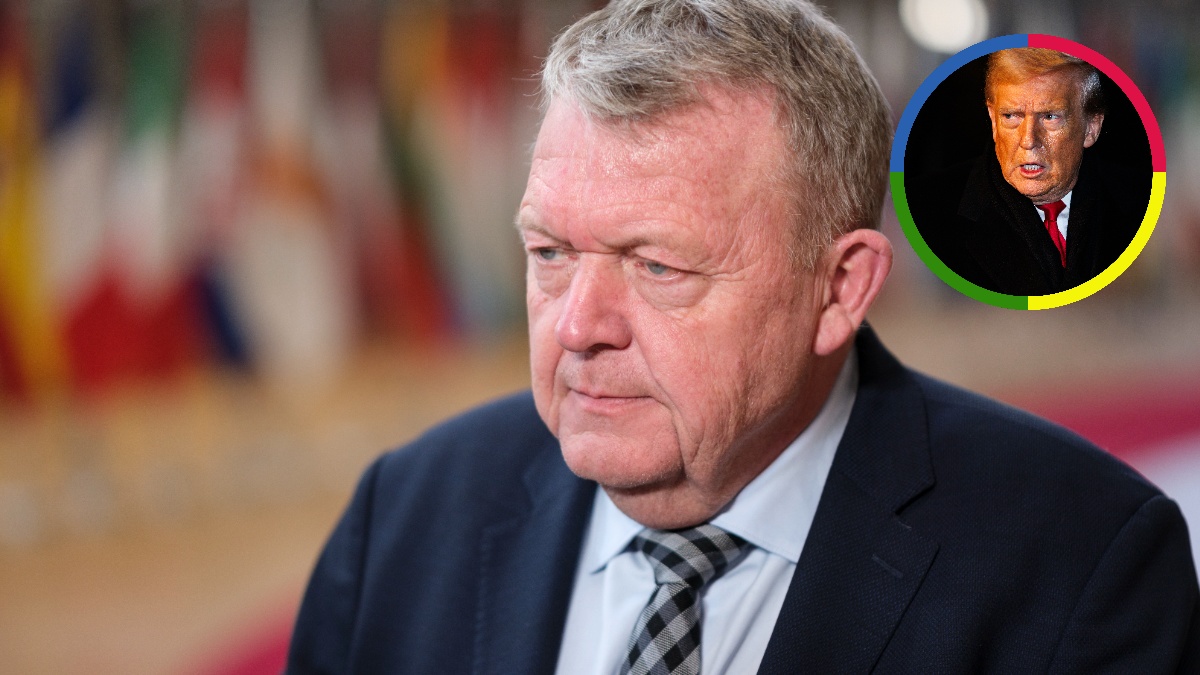

The simmering dispute between the United States and Denmark over the future of Greenland is definitely not over, even though initial high-level talks “went well,” according to Danish Foreign Minister Lars Løkke Rasmussen, as reported by Politico. Rasmussen told reporters in Brussels that while he is feeling “a little more optimistic today than I was a week ago,” the underlying disagreement has not been “resolved.” More discussions are already on the calendar, suggesting this geopolitical headache is far from finished.
This entire situation began with President Trump’s demands that the U.S. take over the self-ruling Danish territory of Greenland. That demand quickly spiraled into a major diplomatic crisis that fractured transatlantic relations and had European leaders scrambling to ensure their own security.
Things got incredibly heated when President Trump escalated the situation, threatening to impose steep tariffs on several European nations unless they agreed to hand over the massive Arctic island. France and Germany, in particular, were so concerned about the coercion that they went as far as suggesting the European Union should explore deploying its “trade bazooka,” officially known as the Anti-Coercion Instrument.
While it’s great news that the conversation is moving forward in a productive manner, the fundamental question of Greenland’s status and the U.S. presence in the Arctic remains a sticking point
Fortunately, that immediate threat of a trade war has backed off. Rasmussen referred to the tariff threats as a “huge derailment,” but noted that the parties are now “back on track.” President Trump eventually walked back the trade war threat after speaking with NATO Secretary-General Mark Rutte. The president announced he had reached a “framework” toward a deal, although the specific details of that framework have been kept completely under wraps.
Rasmussen credits President Trump’s climbdown from launching a trade war directly to “a very strong European signal of solidarity” over Greenland. He stated frankly that “It has become clear that the price for going down that path has been too high.” It sounds like Europe stood firm, and that strong, unified stance actually worked to de-escalate the tension.
The current, more constructive path began when Rasmussen and Greenlandic Foreign Minister Vivian Motzfeldt met with U.S. Vice President JD Vance and Secretary of State Marco Rubio in Washington on January 14. During that meeting, they agreed to establish a “working group” specifically designed to discuss Greenland and broader Arctic security issues.
The Danish minister was pleased with the result of the first meeting of this new working group. He confirmed the meeting “went well and took place in a constructive atmosphere and tone.”We can expect plenty more high-stakes negotiations as the working group continues its efforts to move past the initial diplomatic fireworks and find a lasting resolution.







Published: Jan 29, 2026 02:00 pm