




White House Press Secretary Karoline Leavitt defended President Donald Trump’s proposed $400 million White House ballroom after a critical report raised serious concerns about its design and planning. Leavitt posted her response, pushing back against the report’s authors and their criticism.
In her post on X, Leavitt wrote that the article’s authors were “three random people who have ‘studied fine arts,’ ‘long written about urban planning,’ and never built anything.” She argued that President Trump and his lead architect have a proven record of building “world-class buildings around the world.” She added that they are giving the People’s House “a beautiful ballroom that’s been needed for decades,” all without costing taxpayers anything.
However, the report’s contributors actually included a trained architect, a fine artist, and an urban planning expert. According to Mediaite, their criticism focused on the project’s constantly shifting plans and its tight timeline, noting that the National Capital Planning Commission was set to give final approval while the designs were still changing.
The ballroom’s rushed timeline and oversized design raise serious red flags
The report pointed out that as recently as October, President Trump was still increasing the ballroom’s capacity, a decision that normally happens during the earliest phase of a project. The White House also said it planned to begin construction in the spring, which would mean preparing construction documents while the design was still being reviewed.
Architect Thomas Gallas, quoted in the report, said, “The timeline never made any sense to me.” He explained that a building of this size typically takes architects and engineers anywhere from 18 months to two years just to go from the initial concept to completed construction documents. This comes amid broader questions about how Iran war briefings reach Trump, with allies warning he may not be getting the full picture.
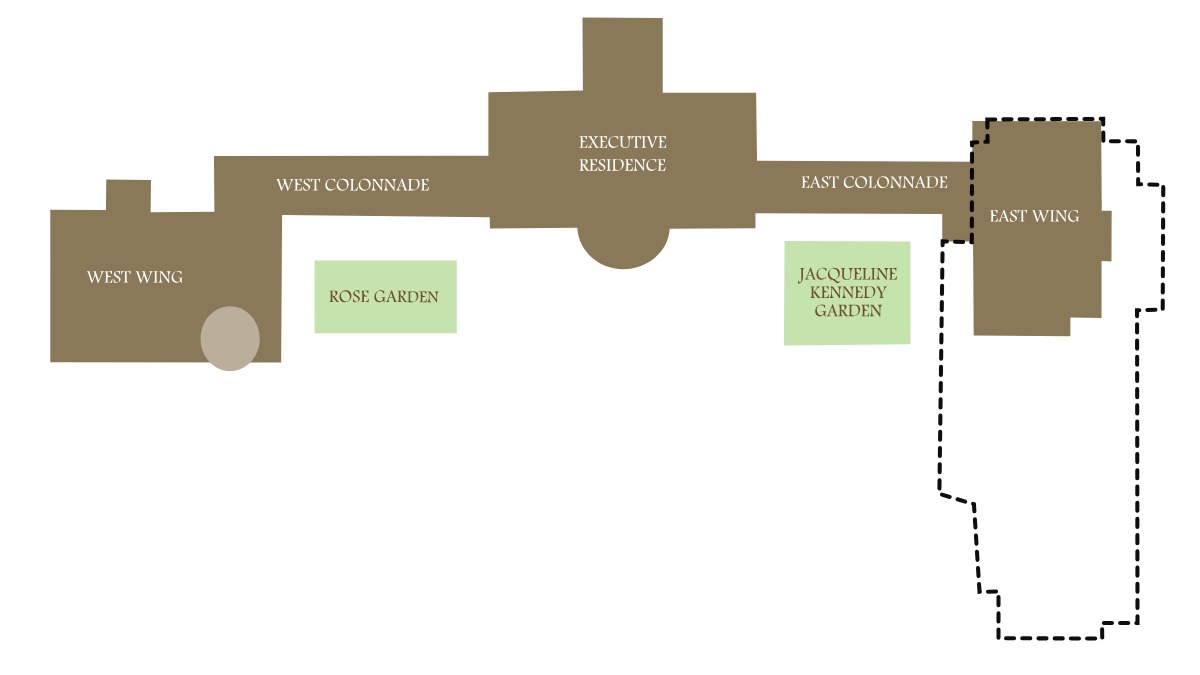
Beyond the timeline, the report raised several “not minor” concerns about the ballroom’s size and design. The proposed East Wing, which houses the ballroom, is about 60 percent larger than the White House residence in floor area. When accounting for the tall ceiling heights and porticos, its cubic volume is more than three times as large.
From the south, the ballroom is expected to become the most visually dominant building in the White House complex. It features a portico larger than the residence’s own, which disrupts the symmetry with the West Wing. The report also noted that the south portico, which was not part of the original design, will have no doors leading into the ballroom, and that the columns will block both views and natural daylight from inside.
Congress has separately been approving record spending on other Trump priorities, including funding Trump’s deportation operations across cities, which have already cost hundreds of millions of dollars.
The report also flagged “fake windows on the north side” and an “unnecessarily big” rooftop area as additional design concerns. Despite these criticisms, the White House has maintained that the ballroom is a necessary and long-overdue addition.








Published: Mar 30, 2026 12:30 pm