



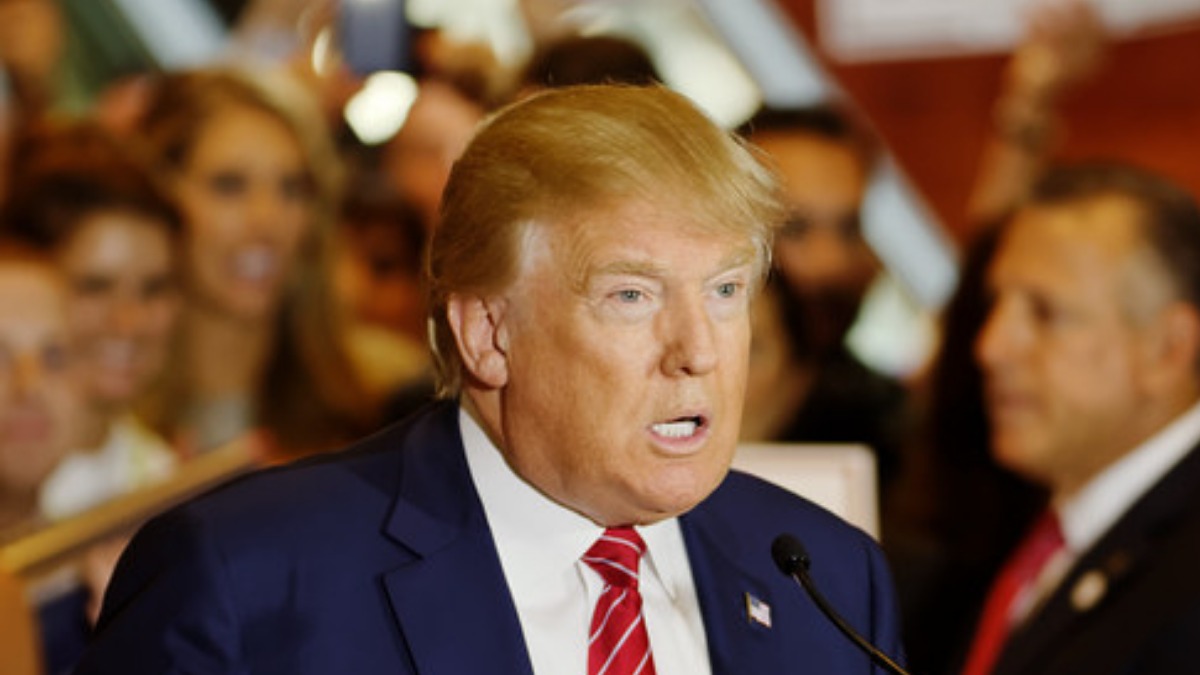

White House Chief of Staff Susie Wiles is reportedly warning people inside President Donald Trump’s inner circle to be fully honest with him about how much Americans oppose the ongoing war with Iran. Wiles, 68, who is currently battling breast cancer, is concerned that Trump, 79, is not getting an accurate picture of public opinion, and that this is hurting the Republican Party ahead of the midterm elections.
Time says sources close to the administration say Wiles has been urging her colleagues to be “more forthright with the boss” about the serious political and economic backlash the war has caused. She understands the real-world consequences better than most, and she is pushing for a more honest conversation inside the White House about where things stand.
President Trump launched the war alongside Israel on February 28, without congressional approval. That decision has been deeply unpopular, and the polling numbers make that very clear.
The numbers show a country that is broadly and deeply against this war
A recent Economist-YouGov poll found that only 28 percent of Americans support the war with Iran, while 59 percent actively oppose it; a 23-point drop in support in just one week. Separate polling by Ipsos and AP-NORC also showed opposition outpacing support by more than a four-to-one margin.
Breaking the numbers down by political group, 88 percent of Democrats oppose the war. Independents oppose it by a three-to-one ratio. Republicans are more supportive at 62 percent in favor, but there is a notable split; MAGA Republicans back it at 79 percent, while only 33 percent of non-MAGA Republicans support it.
The overall net support for the war has dropped to -30, down from -23 just weeks ago. The biggest shift has been among non-MAGA Republicans. Two weeks ago, 56 percent of them supported the war, and now only 33 percent do.
Only 30 percent of Americans approve of Trump’s handling of the Iran conflict, while 60 percent disapprove, giving him a net approval rating of -30 on the issue, down from -19 just the week before. Fact-checkers have also been scrutinizing Trump’s claims about the economy and the war, and the findings have raised serious questions about the accuracy of his statements.
Beyond opinions, the war is hitting people financially. Oil prices have surged more than 50 percent after Iran blockaded the Strait of Hormuz, a critical shipping lane for about one-fifth of the world’s oil supply. Average gas prices have crossed $4 per gallon nationwide, and transatlantic airfares have risen by around $200 compared to a month ago, according to Deutsche Bank AG.
The human cost has also been severe. At least 13 U.S. service members have been killed, and more than 300 have been injured since the conflict began. In a televised address on Wednesday night that lasted about 19 minutes, Trump initially appeared to suggest the war would wind down soon, but then said it would likely continue for another two to three weeks.
He said he plans to hit Iran “extremely hard,” potentially targeting key electricity plants if no ceasefire is reached, and spoke of bombing the country back to the “Stone Ages.” Trump has also signaled a conditional exit from the Iran war, though significant conditions remain attached to that possibility. Global oil prices continued rising on Thursday following those remarks.
Public opposition to sending ground troops into Iran is also very strong, with 62 percent against it and only 14 percent in favor. Almost all Democrats and 66 percent of Independents oppose the idea. Even among Republicans, 37 percent are opposed versus 30 percent in favor, and 60 percent of non-MAGA Republicans are against it.
Most Americans are also skeptical about peace prospects. Only 20 percent believe peace talks with Iran are currently happening, while 46 percent believe they are not. A full 59 percent say it is unlikely that the U.S. and Iran will reach a settlement within the next month, adding further pressure on the Republican Party as midterms approach.








Published: Apr 3, 2026 12:45 pm