



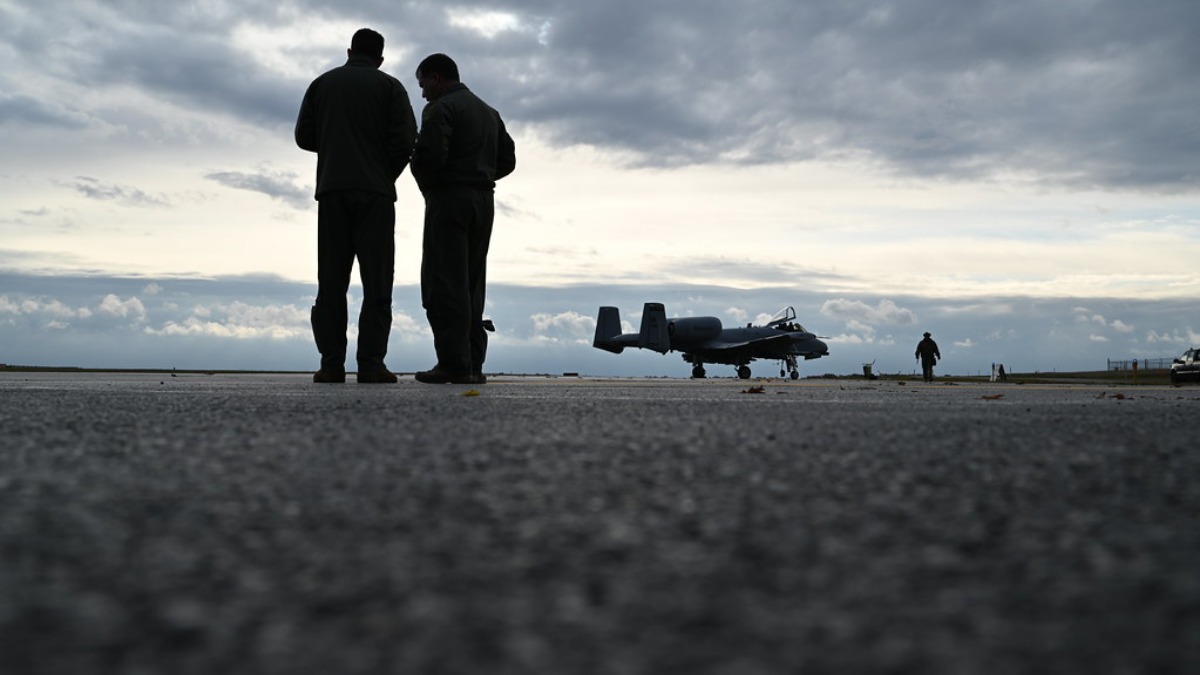

President Trump sparked major controversy by threatening to jail a journalist who reported on the rescue of a downed US airman in Iran. The reporter he appears to be targeting is not an American citizen. Trump made these threats while also praising what he called an “historic” and “genius” mission to recover the second US serviceman, and lashing out at what he called a “sick leaker” for putting the operation at risk.
At a press conference, Trump declared, “We leave no American behind,” celebrating the successful rescue. He then said he was “looking very hard to find that leaker” who revealed that “we have one (serviceman) and there’s somebody missing.” He argued that Iran did not know this information until the leak, and that it put the mission “at great risk.”
Mediaite says that Trump’s anger is reportedly directed at Amit Segal, a political commentator and reporter for Israel’s Channel 12. Segal was among the first to report on social media that one airman had been rescued, which implied another was still missing. When asked about Trump’s threats, Segal said he wasn’t sure he was the first to break the news, and firmly stated, “I will protect my sources.”
The reporter Trump is targeting has no legal obligation to American national security laws
Trump’s threat was direct. He told reporters, “We’re gonna go to the media company that released it. We’re gonna say: ‘National security’, We’re gonna say ‘give it up or go to jail’.” He called the person responsible “a sick person; probably didn’t realise the extent of how bad it was.”
While Trump’s comments seemed aimed at an American journalist, the timing lines up with Segal’s report. Other outlets also reported on the rescue shortly after, but many US-based news organizations reportedly “held back” details about the second rescue mission while it was still ongoing.
The rescue itself was a high-stakes military operation. It began after an F-15 fighter jet was shot down by Iranian air defenses on Friday, forcing both the pilot and the weapons systems officer (WSO), a Colonel, to eject over southwest Iran.
The pilot was quickly rescued, but the WSO was stranded deep inside enemy territory, armed only with a handgun and suffering a leg injury. He climbed a 7,000-foot mountain ridge and hid in a crevice to avoid local tribesmen armed with AK-47s. Iranian state television even offered a £50,000 reward for his capture.
During this time, the CIA ran a deception campaign using local contacts to spread false information, suggesting the airman had already been found and was being moved out via a ground convoy. This tactic, known as “unconventional assisted recovery,” also involved reaching out to locals in provinces less loyal to the Iranian regime.
The CIA eventually pinpointed the WSO’s location and passed the intelligence to the Pentagon, which then launched the rescue. Trump described the scale of the operation, saying 155 aircraft were involved and that much of it relied on “subterfuge” to mislead Iranian forces searching for the airman. “We wanted to have them think he was in a different location,” Trump explained.
He praised the WSO who had “evaded capture for almost 48 hours.” After the rescue, US forces destroyed the aircraft left behind, with Trump saying they “blew up the old planes, we blew em to smithereens,” to stop Iran from examining the advanced equipment.
According to The Sun, Secretary of War Pete Hegseth later compared the rescue to Jesus’ resurrection, noting the pilot was shot down on Good Friday, hid in a cave, and was rescued on Easter Sunday, with his first message being “God is good.”
Hegseth stated that Iran’s military was “embarrassed and humiliated” by the outcome. Trump also used the moment to issue strong warnings to Iran, including a profanity-filled Easter morning post demanding Iran open the Strait, and threatened to bomb Iran “back to the stone ages.”
Iran’s response to that particular threat was notable – how Iran’s finance minister fired back at Trump’s stone ages warning showed just how far apart the two sides remain. Trump also criticized NATO allies, particularly Britain, for what he called a lack of support during the operation.



Published: Apr 7, 2026 07:15 am