




Talks between the United States and Iran in Pakistan have broken down without any agreement. After a 21-hour session in Islamabad, Vice President JD Vance confirmed early Sunday morning that no deal was reached. The US said it did not get the commitments it needed on Iran’s nuclear program, specifically that Iran would not pursue a nuclear weapon or the means to build one quickly.
Both sides blamed each other for the failure. Vance said the lack of a deal was far more damaging for Iran than for the US. Iranian Parliament Speaker Mohammad Bagher Ghalibaf responded by saying the US failed to earn the trust of the Iranian delegation during the talks.
These negotiations were historically significant, as they were the first face-to-face talks between the US and Iran since the 1979 Islamic Revolution. Despite that, no resolution was reached, and the US is now moving toward more aggressive options. According to Newsweek, President Donald Trump has already hinted at what’s coming next.
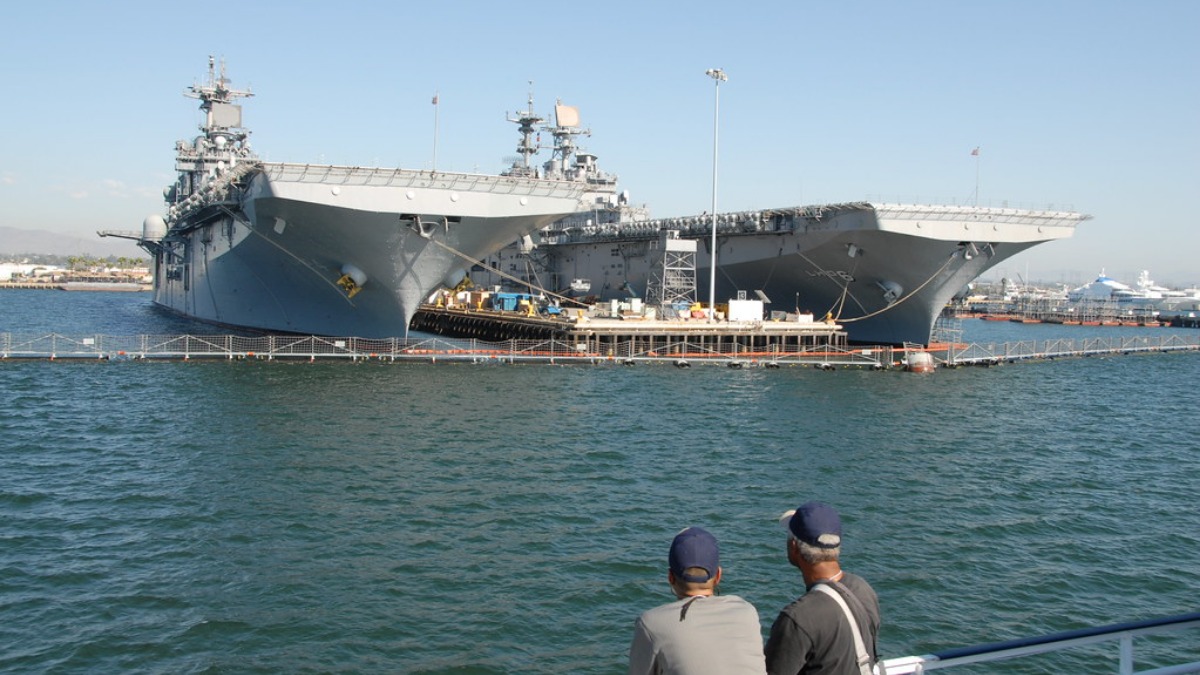
A naval blockade and control over Iran’s oil exports could be the next step
With diplomacy stalled, President Trump took to Truth Social to share an analysis suggesting the US could restrict Iran’s maritime imports and exports to put pressure on its economy. The idea being floated involves the US Navy setting up a formal blockade or even taking physical control of Kharg Island, which is the main transit point for the vast majority of Iran’s oil exports. Retired General Jack Keane argued that if the war resumes, the US could occupy or destroy Kharg Island to cut off Iran’s oil lifeline.
At the heart of this standoff is the Strait of Hormuz, a critical waterway that handles about 20 percent of the world’s oil supply. Trump has made it clear that any pause in US strikes depends on the complete and immediate opening of this waterway.
Its closure has already sent global oil prices sharply higher. National security analyst Rebecca Grant noted that the US Navy is already tracking all traffic through the strait, including reflagged Russian tankers and vessels heading to India and China, and is in a position to control what moves in and out. Yesterday Iran confront two US warships in the Strait of Hormuz, with both sides giving very different accounts of what happened.
According to CBS News, US Central Command confirmed on Saturday that two Navy destroyers have already entered the Strait of Hormuz to begin mine-clearing operations, with more forces, including underwater drones, expected to join soon. Trump claimed that all of Iran’s mine-laying ships have been destroyed, while acknowledging that some mines may still remain in the water. US minesweepers are actively working to clear the path.
US intelligence had previously identified at least a dozen Iranian-manufactured naval mines in the strait, including the Maham 3 and Maham 7 models. The Iranian Revolutionary Guards responded with a statement through state broadcaster IRIB, threatening severe action against any military vessels attempting to pass through the strait and claiming full authority over the area.
Even if a ceasefire holds, experts warn the situation will remain difficult for months. Henning Gloystein of the Eurasia Group pointed out that global oil supplies will likely stay disrupted because of the time needed to repair damaged energy infrastructure and get shipping back on schedule. Traffic data shows that movement through the strait remains very low even with a ceasefire in place.
Before traveling to Pakistan, Trump had already warned that US warships were being restocked and that strikes could resume if a meaningful agreement was not reached. For a closer look at how the Pakistan peace talks completely fell apart, Vance’s walkout and Trump’s comments on there being no backup plan painted a bleak picture for diplomacy.








Published: Apr 12, 2026 08:30 am