



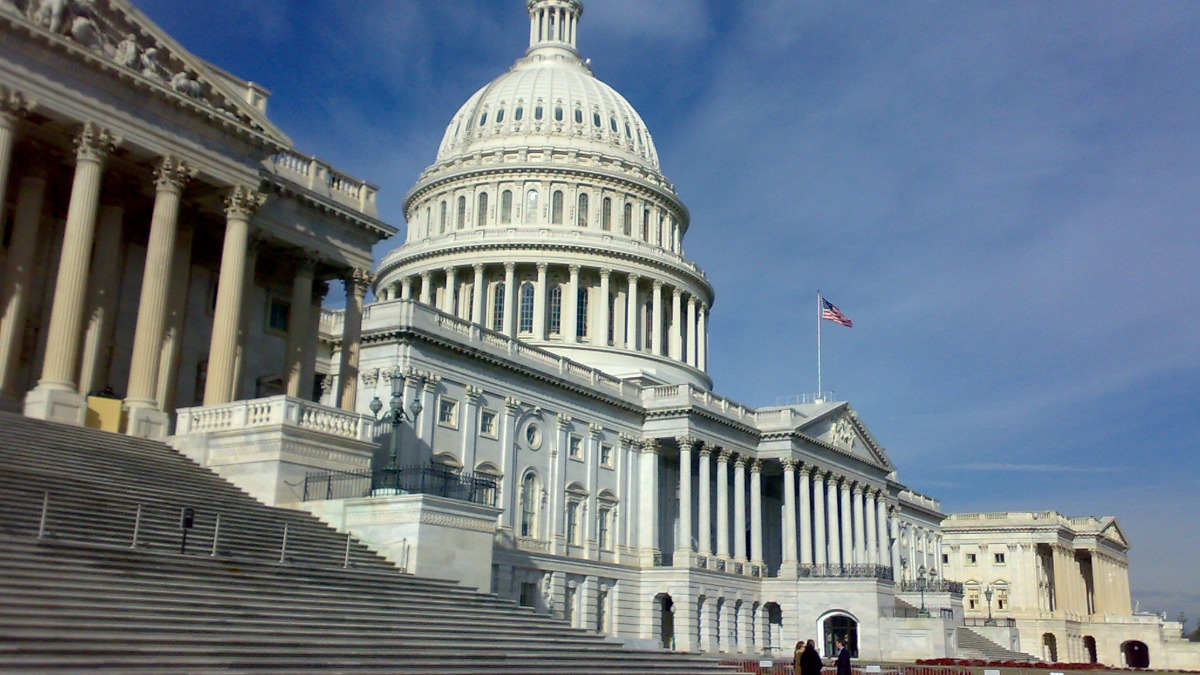

Hospital CEOs faced a rough crowd during a House Ways and Means Committee hearing, where they were forced to defend the controversial practice of charging facility fees for routine medical care. It is pretty rare to see such a unified front of criticism, but the executives from HCA Healthcare, CommonSpirit Health, New York-Presbyterian, and ECU Health found themselves on the defensive as even some Republican lawmakers expressed clear frustration with current pricing models, NBC News reported.
The core of the issue is that these hospitals are charging patients significantly higher rates for the same procedures that could be handled at independent practices for a fraction of the cost.
The committee chair, Rep. Jason Smith, R-Mo., did not mince words when addressing the panel. “The American people are fed up with outrageous prices that seem artificially high,” he stated. It is easy to see why patients are feeling the pinch. When you walk into a hospital-affiliated clinic for a simple checkup or a routine procedure, you are often hit with a facility fee that has nothing to do with the actual care you received. Instead, these fees are meant to cover overhead costs like staff and equipment.
The problem is that these costs are being passed directly to the consumer in a way that feels increasingly disconnected from reality
During the hearing, Rep. David Kustoff, R-Tenn., provided a concrete example that highlights the absurdity of these price gaps. He pointed to an independent ambulatory surgical center in his home state that charged a facility fee of $656 for a colonoscopy. Meanwhile, an unnamed hospital outpatient facility was charging $1,222 for the exact same procedure.
When Kustoff asked the executives, “Is an 100% increase in the fee that you charge versus the surgical center, does that seem reasonable to you?” the question hung in the air, underscoring the massive disparity that patients are dealing with every day.
The frustration was echoed by Rep. Greg Steube, R-Fla., who noted that patients in his state are consistently paying more at hospital-owned clinics compared to physician-owned ones. His question to the executives was blunt: “How can you justify facility fees on outpatient facilities when there is no meaningful difference in the care delivered or the quality of the care?”
It is a fair point. If the quality of the care is effectively the same, it is difficult for the average person to understand why they should be paying double simply because the building happens to be owned by a large hospital system.
The CEOs attempted to justify these fees by pointing to the financial realities of running a hospital. They argued that they are often reimbursed below the actual cost of providing care, especially when they are dealing with government programs like Medicare and Medicaid.
They also claimed that their higher prices are a reflection of the higher quality of care they provide, the complexity of treating sicker patients, and the federal requirement that hospitals must care for everyone who walks through their doors, regardless of their ability to pay. Michael Waldrum, the CEO of North Carolina-based ECU Health, emphasized this point by saying, “We’re the only participants in the healthcare value chain that have that obligation. Doctors, nurses, insurance companies, drug companies do not.”
It is an interesting defense, but it does not change the fact that hospitals accounted for nearly one-third of U.S. healthcare spending in 2024, which totals about $1.6 trillion. A report in the journal Health Affairs highlights just how massive this slice of the pie is. Furthermore, a study published in JAMA Health Forum found that patients consistently pay more for the same doctor visits when their doctor is part of a hospital system or a private equity firm. The data seems to back up the concerns of the lawmakers, showing that the consolidation of healthcare providers is having a direct impact on the bottom line for patients.
The political dynamics of the hearing were also impossible to ignore. While Republicans were aggressive in their questioning, the Democratic members of the committee were noticeably more muted. They viewed the hearing as a way for Republicans to shift the focus away from the impact of Medicaid cuts that were passed last year. Rep. Lloyd Doggett, D-Texas, called the event “more a deflection hearing than a hospital hearing.” Similarly, Rep. Richard Neal, D-Mass., suggested that Republicans were trying to fixate on providers while ignoring the broader policy landscape.
It is clear that this conversation is far from over. Whether you agree with the hospital CEOs that they are providing a necessary service under difficult financial constraints, or you believe the pricing is predatory, the reality is that the current system is leaving many patients with unexpected and inflated bills. As healthcare costs continue to climb, the pressure on these institutions to justify their facility fees is only going to intensify.
For now, the CEOs have had their say, but the skepticism from lawmakers suggests that changes to these billing practices might be on the horizon. If you are a patient, it is worth paying attention to how these debates unfold, as they will ultimately determine how much you pay for your next doctor’s visit.








Published: Apr 29, 2026 03:00 pm