



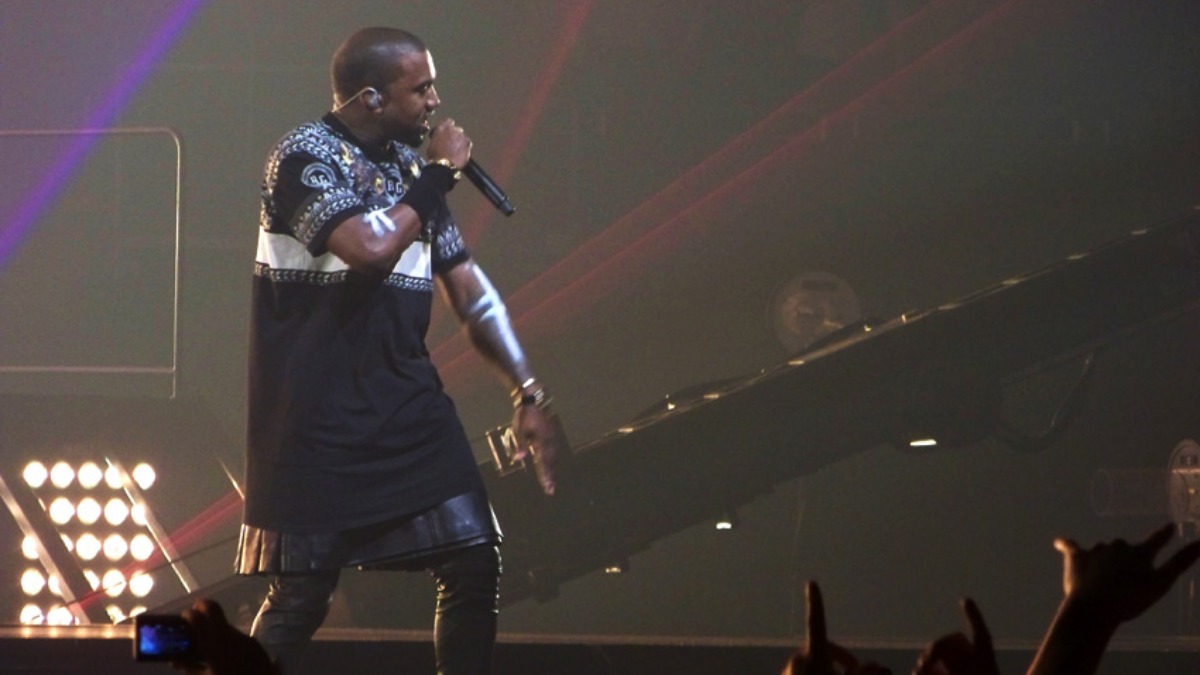

The UK government has officially barred Kanye West, now known as Ye, from entering Britain, a move that effectively canceled his headlining slot at the Wireless Festival in July, ABC News reported. This decision came down after a significant backlash over Ye’s history of antisemitic remarks.
As a direct result of the travel ban, festival organizers had no choice but to cancel the entire three-day outdoor event. Anyone who bought tickets can expect full refunds. The Home Office confirmed that Ye’s electronic travel authorization, which he had previously been granted, was withdrawn because his presence in the UK would simply not be “conducive to the public good.”
Ye, who officially changed his name in 2021, was set to play his first UK dates in over a decade. He was expected to perform for around 150,000 festival-goers over three nights, from July 10-12, at London’s Finsbury Park. Other acts for the festival had not even been announced yet, really underscoring the focus on Ye’s controversial booking.
The festival organizers had been under immense pressure from both sponsors and politicians to pull the plug on Ye’s gigs
This pressure mounted following his widespread condemnation for making antisemitic remarks and openly expressing admiration for Adolf Hitler. Last year, for instance, Ye released a song titled “Heil Hitler” and even advertised a swastika T-shirt for sale on his website. Back in January, the 48-year-old rapper issued an apology, published as a full-page advertisement in The Wall Street Journal. In that letter, he attributed his actions to bipolar disorder, stating that he fell into “a four-month long, manic episode of psychotic, paranoid and impulsive behavior that destroyed my life.”
Several major sponsors had already pulled out of the Wireless Festival once Ye was announced as the headliner. Pepsi, Rockstar Energy, and Diageo all withdrew their support. Politically, Prime Minister Keir Starmer called the booking “deeply concerning,” and Health Secretary Wes Streeting stated that Ye should “absolutely not” be allowed to play at the festival.
Before his travel authorization was revoked, Ye issued a statement on Tuesday. He said he “would be grateful for the opportunity to meet with members of the Jewish community in the U.K. in person, to listen.” He added, “I know words aren’t enough — I’ll have to show change through my actions. If you’re open, I’m here.”
Phil Rosenberg, who serves as president of the Board of Deputies of British Jews, had indicated that the group would be open to meeting with the musician, but only if he pulled out of the festival. Rosenberg emphasized that “The Jewish community will want to see a genuine remorse and change before believing that the appropriate place to test this sincerity is on the main stage at the Wireless Festival.”
Initially, Festival Republic, the event organizer, had stood by Ye. Melvin Benn, the managing director, urged people to offer the performer “forgiveness and hope” in a statement issued Monday. He explained that they weren’t giving him a platform to “extol opinion of whatever nature,” but rather to perform songs “currently played on the radio stations in our country and the streaming platforms in our country and listened to and enjoyed by millions.”
However, upon announcing the cancellation, Festival Republic stated that “multiple stakeholders were consulted in advance of booking Ye and no concerns were highlighted at the time.” They added, “Antisemitism in all its forms is abhorrent, and we recognize the real and personal impact these issues have had.” The statement concluded, “As Ye said today, he acknowledges that words alone are not enough, and in spite of this still hopes to be given the opportunity to begin a conversation with the Jewish community in the U.K.”
The Community Security Trust, an organization dedicated to protecting British Jews, voiced its support for the government’s decision. They stated that “Anti-Jewish hatred should have no place in society and cultural leaders have a role to play in ensuring that is the case.” The Trust also made it clear that “People who show genuine and meaningful remorse for previous antisemitic behavior will always receive a sympathetic hearing from the Jewish community, but that process must come before this kind of public rehabilitation.”




Published: Apr 7, 2026 04:30 pm