



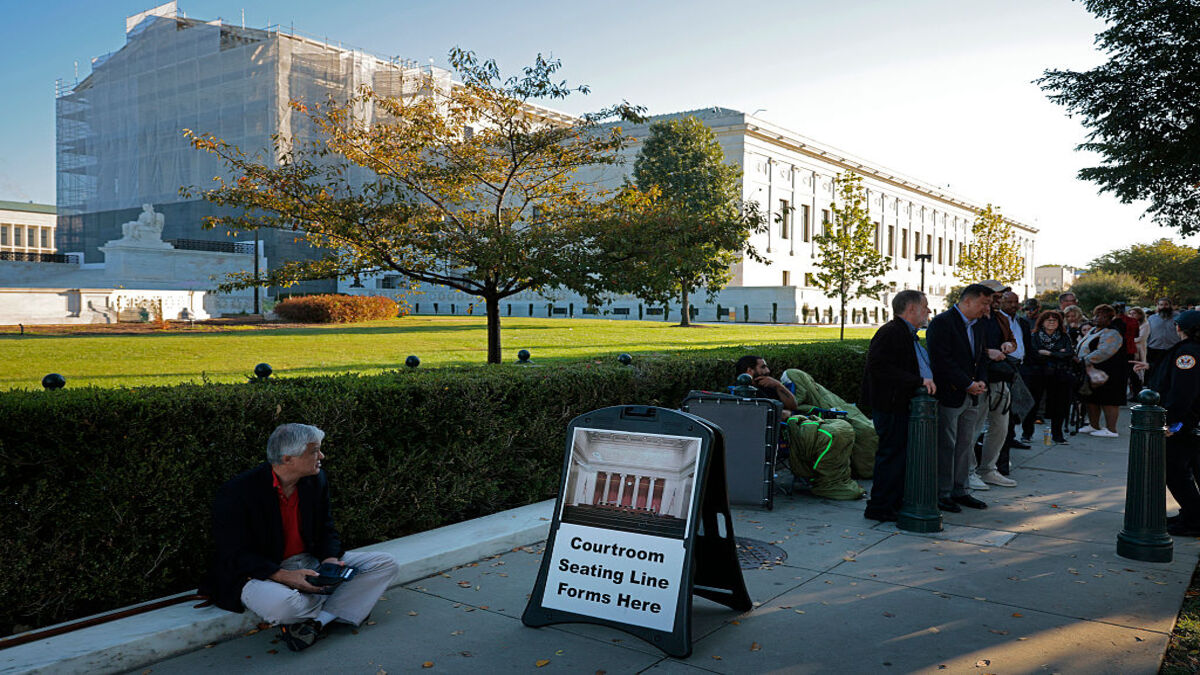

The Supreme Court has declined to hear an appeal from Alex Jones, rejecting the conspiracy theorist’s effort to overturn a $1.4 billion libel judgment related to his false statements about the 2012 Sandy Hook Elementary School massacre. The decision leaves in place rulings from lower courts that found Jones liable for defamation and emotional distress stemming from his repeated claims that the shooting, which killed 20 children and six educators, was a hoax.
As reported by CNN, Jones has faced a series of legal setbacks in recent years. Juries in both Connecticut and Texas found him responsible in 2022, ordering damages for the harm caused to the families of the victims. Jones has made multiple attempts to block the sale of his platform, Infowars, which was ordered to be transferred to a court-appointed receiver to satisfy the judgment.
In filings to the Supreme Court, Jones argued that the financial penalty was effectively a “The result is a financial death penalty by fiat imposed on a media defendant whose broadcasts reach millions”. He also raised concerns about the impact on Infowars’ daily audience, claiming that without intervention, millions of listeners would be deprived of a valued source of information. The families involved in the case waived their right to respond to the appeal.
Legal Accountability And Enforcement
The Supreme Court’s refusal to hear the case means the lower court’s rulings stand, allowing the legal process to move forward in enforcing the judgment against Jones. Earlier this year, a federal judge authorized the transfer of Infowars’ parent company, Free Speech Systems, to a court-appointed receiver. This move pushes the sale of the company’s assets to satisfy the $1.4 billion in damages awarded to the families. The satirical news outlet, The Onion, has expressed interest in acquiring the platform, although no final transaction has been confirmed.
Jones has yet to pay any portion of the damages owed, and the court’s decision makes it clear that his repeated attempts to avoid financial liability are not likely to succeed. Chris Mattei, an attorney representing the Sandy Hook families, stated that the Supreme Court “The Supreme Court properly rejected Jones’s latest desperate attempt to avoid accountability for the harm he has caused. We look forward to enforcing the jury’s historic verdict and making Jones and Infowars pay for what they have done” and emphasized that the enforcement of the jury’s verdict will proceed.
Jones’ actions have been widely criticized for the emotional toll they have inflicted on the families of Sandy Hook victims, and the court’s decision marks a significant moment in ensuring that defamation rulings are enforceable, even against high-profile media figures.
The Supreme Court did not provide an explanation for declining the appeal, a standard practice for many cases it chooses not to hear. This leaves the substantial judgment against Jones intact, furthering the legal precedent that media figures can be held liable for knowingly spreading false information that causes demonstrable harm. The ruling, like the recent decision signaling that Trump cannot unilaterally fire Jerome Powell, shows that the Court’s role is giving legal protections against attempts to bypass established authority.




Published: Oct 14, 2025 11:43 am