



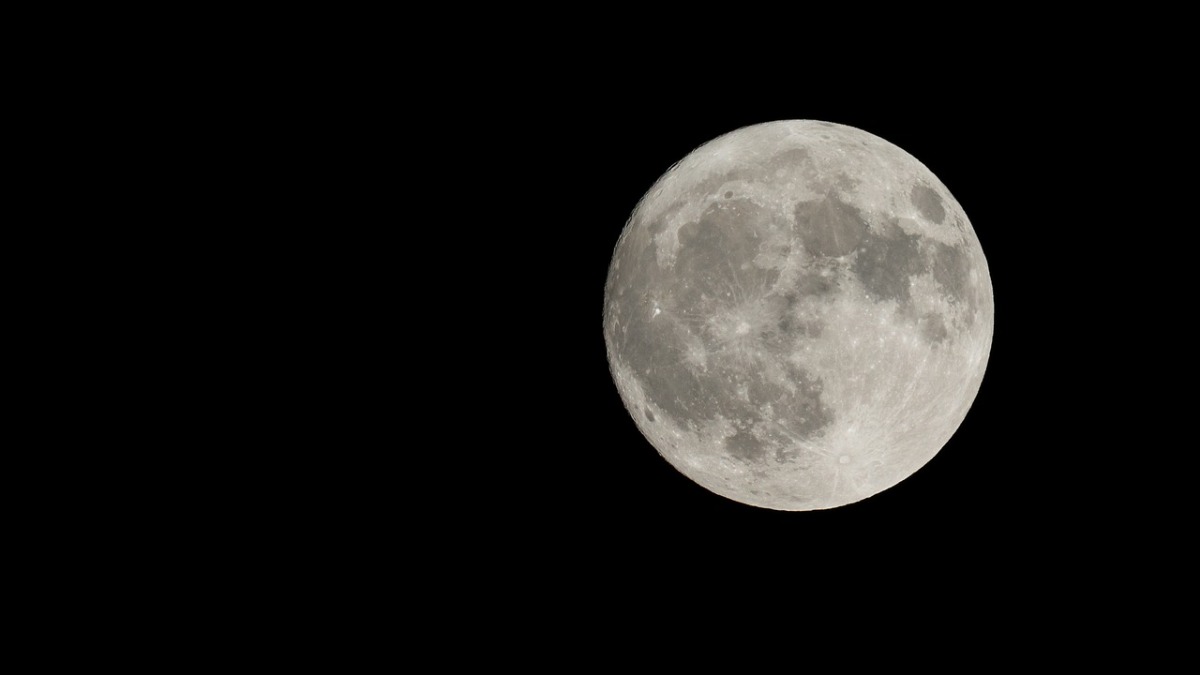

Japan’s Shimizu Corporation has proposed building a 6,800-mile solar panel ring around the Moon, designed to supply Earth with a continuous stream of clean energy. The concept, called the Luna Ring, would eliminate reliance on fossil fuels by harnessing solar power from lunar orbit and beaming it back to the surface. As first highlighted by Dexerto, the proposal has resurfaced after originally being floated in 2011.
The core advantage of the Moon as a generation site is efficiency. Shimizu Corporation president Tetsuji Yoshida noted that solar panels on Earth produce roughly one-twentieth of the energy an equivalent array in space could generate, due to cloud cover, atmospheric interference, and the day-night cycle. A ring spanning the full 11,000 km circumference of the lunar equator, ranging anywhere from a few kilometers to 400 km in width, would collect sunlight without interruption.
The energy transmission process involves converting generated electricity into microwave and laser beams at facilities on the Moon’s Earth-facing side. Those beams would be aimed at receiving stations called rectennas on Earth, which would convert the energy back into electricity for distribution to power grids or use in hydrogen fuel production.
The construction plan relies heavily on resources already on the Moon
Construction would be carried out primarily by remotely operated robots controlled from Earth. The proposal envisions large machines drilling into the lunar surface, leveling terrain, and assembling equipment modules transported from Earth in zero-gravity space before lowering them to the ground. Amid broader conversations about remotely managed operations raising accountability questions, Shimizu’s model places human operators on Earth in full control of all lunar construction activity.
A key part of the plan involves minimizing what needs to be launched from Earth by using the Moon’s own materials. Lunar sand, an oxide compound, could be combined with hydrogen brought from Earth to produce water and oxygen. That water, mixed with lunar sand and gravel, could yield concrete, while solar heat could be used to produce glass fiber and structural blocks directly on the surface. Self-propelled solar cell production plants would move along the lunar equator, fabricating and installing new panels as they advanced.
Yoshida said the project’s viability depends on sustained research investment, expressing confidence that the necessary technology could be developed over time. The Luna Ring is not in active development, but Shimizu continues to treat it as a serious long-term proposal rather than a theoretical exercise. The kind of precise, high-stakes remote decision-making the project would require is not unlike what drew attention in a recent story about a pilot averting disaster mid-flight, where split-second human judgment proved critical.
Much of the technology required to execute the Luna Ring does not yet exist in complete form. The scale of construction involved would be unlike anything humans have previously attempted.








Published: Apr 6, 2026 08:45 pm