



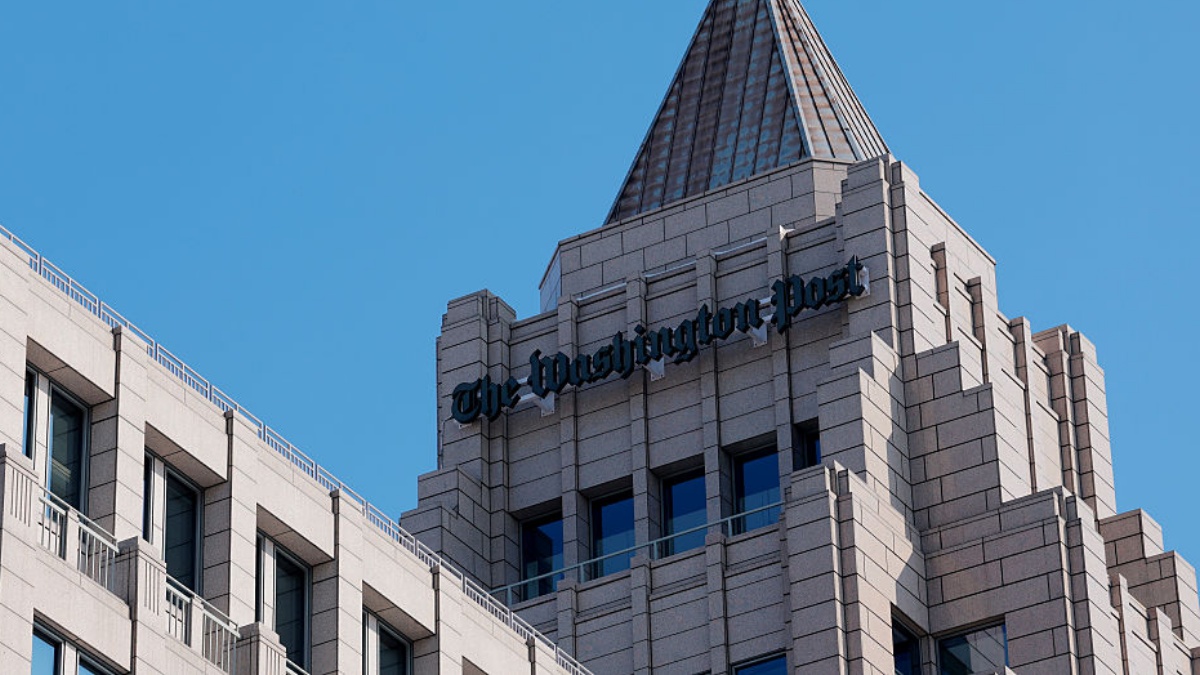

The Washington Post has laid off more than 300 journalists in a sweeping restructuring that also signals a major shift in editorial direction. As detailed by The New York Times, the cuts represent roughly 30 percent of the company’s workforce, with newsroom staff taking the largest hit.
Executive Editor Matt Murray told employees the paper must become more focused and essential after years of financial losses. The new strategy prioritizes national news and politics, along with business and health coverage, as leadership attempts to stabilize readership and revenue.
The scale of the cuts goes beyond routine downsizing and reshapes what readers can expect. Entire coverage areas that once defined the paper’s breadth have been reduced or eliminated as leadership narrows its mission.
This marks a decisive retreat from breadth toward a narrower mission
Local reporting, international coverage, and sports were among the hardest hit areas. The sports section is closing entirely, with some remaining reporters reassigned to features to cover sports culture rather than traditional reporting.
The metro section has been significantly reduced, and the books section and the daily news podcast, Post Reports, have been shut down. These changes remove several familiar touchpoints for readers and reflect a broader media recalibration similar to other recent national news shifts, such as GOP questions over ICE conduct.
Several individual layoffs drew attention inside and outside the newsroom. Among those let go were a Ukrainian correspondent reporting from an active war zone and the paper’s entire staff photography team.
Murray said the paper had been losing too much money for too long and was still operating as if it were a dominant local print product. He also cited a steep drop in online search traffic over the past three years, attributing part of that decline to changes driven by generative AI.
Financial struggles have persisted despite ownership by Jeff Bezos, who bought the paper in 2013. In late 2023, Bezos hired Will Lewis as publisher to chart a path toward profitability amid falling subscriptions and shrinking audiences.
Lewis has overseen a turbulent period that included experiments with artificial intelligence for aggregation and comments. He also implemented a Bezos-backed policy ending presidential endorsements by the editorial board, which reportedly triggered widespread subscription cancellations, a reminder of how quickly audience trust can erode, as seen in unrelated but high-profile legal disputes like a Florida clinic lawsuit.
In a 2024 staff meeting, Lewis warned employees that the paper was losing large amounts of money and that readership had been cut in half. He bluntly told staff that people were no longer reading their work at previous levels.
Despite the layoffs, Murray said he does not expect the current newsroom size to be permanent. He suggested collaboration across the remaining teams would continue to define the paper’s journalism.
Reaction from current and former staff has been grim. Former executive editor Marty Baron called the moment one of the darkest days in the paper’s history, while current reporters expressed grief over colleagues leaving through no fault of their own.

Published: Feb 4, 2026 07:30 pm