



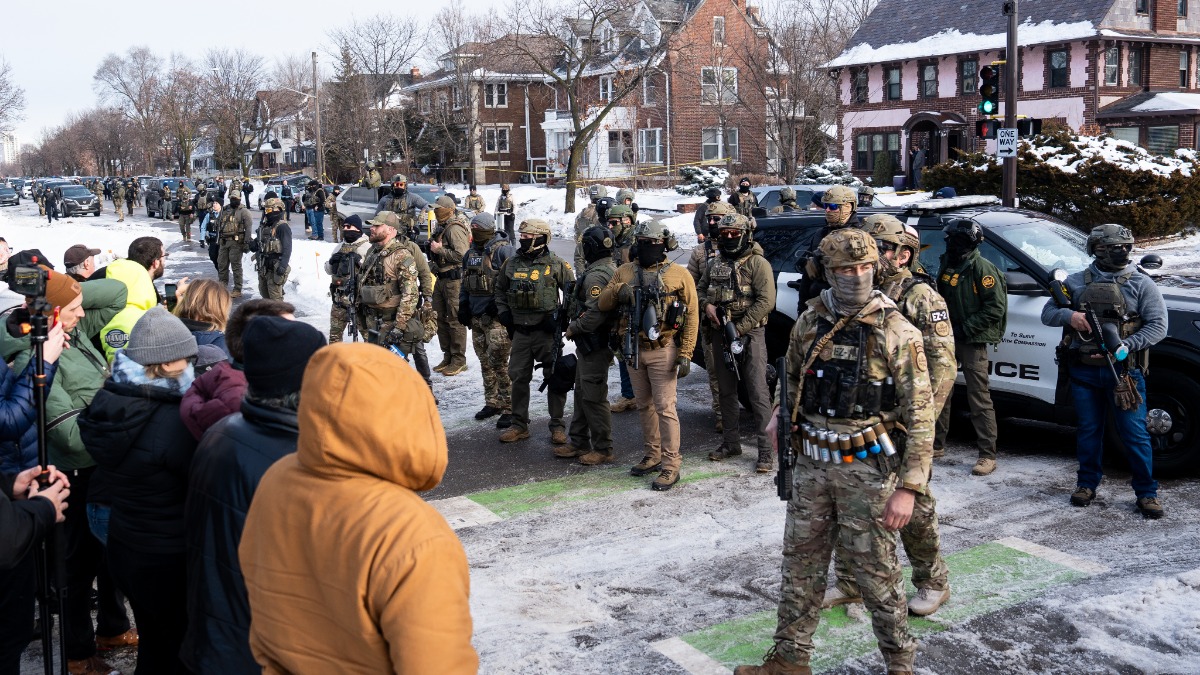

Lawyers for Immigration and Customs Enforcement (ICE) have admitted to providing false information, which they had used to justify the arrests and detention of thousands of people attending immigration courts, as reported by The Guardian. Federal prosecutors confirmed that ICE lawyers acknowledged an agency memo from May of last year never actually authorized these arrests, despite previously citing it as their legal basis.
This big revelation came out in court documents filed by the office of Jay Clayton, a US federal attorney. It’s part of a lawsuit brought by the New York Civil Liberties Union (NYCLU) and other civil rights groups. The lawsuit is specifically challenging ICE’s practice of targeting individuals who are trying to gain legal status in the US as they leave their immigration court hearings. We’re talking about thousands of people who were arrested right after their hearings.
The NYCLU has consistently stated that ICE hadn’t provided any solid legal justification for these arrests. They’ve framed these actions as part of President Trump’s broader efforts to ramp up detentions and deportations.
The fact that this “error” has only now come to light means that many individuals were detained under false pretenses, potentially preventing them from accessing legal avenues they were entitled to
Amy Belsher, an attorney for the NYCLU, laid it out clearly in a message to Kevin Castel, a federal judge in New York City who’s overseeing the lawsuit against ICE. She wrote, “The implications of this development are far-reaching.” Belsher pointed out that even after the court relied on the government’s initial claims to deny preliminary relief, ICE kept arresting noncitizens at their immigration court hearings. This led to their detention, often in facilities hundreds of miles away from their homes.
An attorney for ICE eventually emailed Clayton’s office, admitting that the memo which prosecutors had used to defend the government in the lawsuit “does not and has never authorized” the arrests near immigration courts. This directly contradicted their earlier assertions.
Tomoko Onozawa, an assistant US attorney, conveyed the agency’s remorse to the judge. She wrote, “We deeply regret that this error has come to light at this late stage, after the parties have expended significant resources and time to litigate this case and this court has carefully considered plaintiffs’ challenge to the 2025 ICE guidance.” Onozawa also tried to clarify that the error “was not caused by a lack of diligence and care by the undersigned attorneys.”
Still, an error of this magnitude, impacting thousands of lives, is a huge deal, no matter the cause.


Published: Mar 27, 2026 03:45 pm