



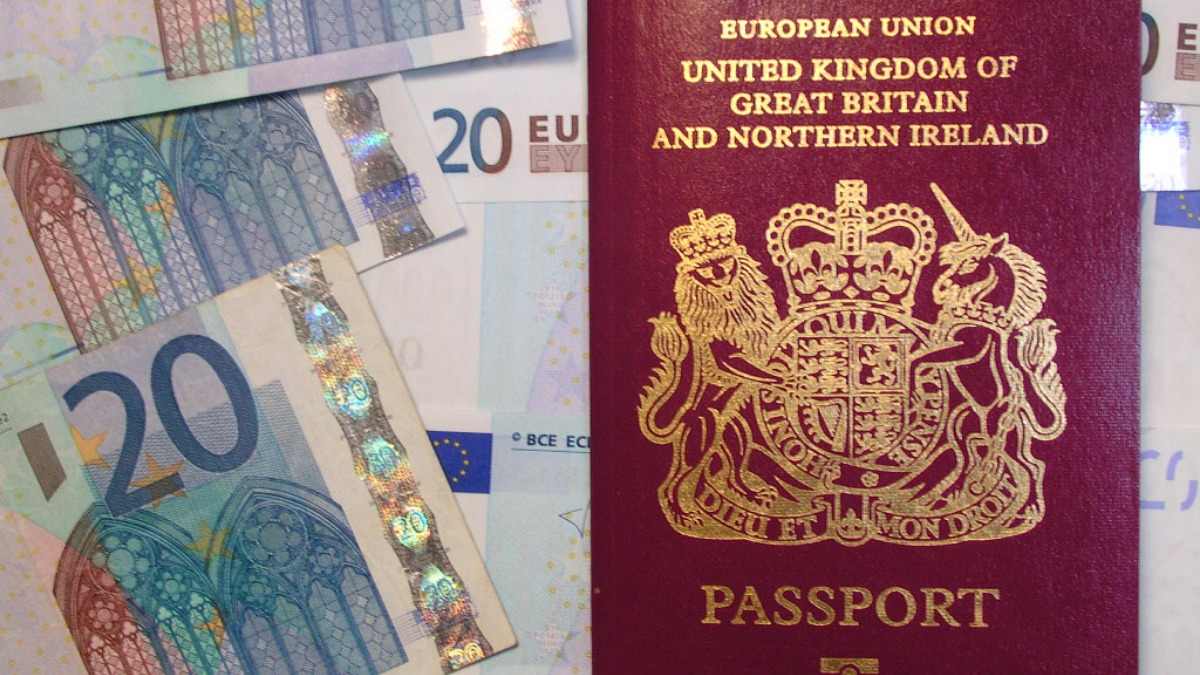

A 16-year-old British schoolgirl named Hanne arrived back in the UK on April 1 after spending three weeks stranded in Denmark, unable to board a flight home because she did not hold a valid British passport. The incident came to light through LADbible, which reported that Hanne, who was born in Bristol, had been attempting to travel from Copenhagen back to London using a foreign passport. New passport rules introduced in February left her unable to board.
Hanne had been staying at her father’s flat in Denmark while her mother flew out with GCSE revision materials so she could keep studying. She described the experience as being “locked” out of her own country and said she felt the government treated her “like a problem.” In her own words: “I have been here ever since, missing school, missing my friends, missing my life, because the UK has decided that I, a British citizen born in Bristol, am not sufficiently British to be allowed to return.”
Hanne’s situation is a direct result of the UK’s shift toward a “universal permission to travel” system, which introduced an Electronic Travel Authorisation, or ETA, scheme for travelers from non-visa national countries. Previously, dual nationals from those countries could often enter the UK on a foreign passport, sometimes facing delays at passport control but not outright refusal of boarding. That practice is now effectively over.
Airlines can now be fined for boarding passengers without the correct documentation
Transport carriers are required to run automated checks confirming that every passenger holds the necessary permission to enter the UK before boarding. Carriers who bring inadequately documented passengers face financial penalties, giving airlines a strong incentive to enforce the rules strictly. The legal power to fine carriers for bringing non-visa nationals without an ETA came into force on March 20, 2026, directly overlapping with the period Hanne found herself unable to fly home.
British citizens are not eligible for an ETA, as their permission to travel is based on nationality. The practical requirement is a valid British passport or a certificate of entitlement to the right of abode. The Home Office states it has been advising dual nationals to travel on a British passport since October 2024, through its gov.uk website and a wider publicity campaign.
Hanne’s case, which drew significant media attention in early 2026, suggests that many dual nationals remained unaware of the change until it affected them directly. Amid wider scrutiny of government travel and border policy, including congressional disputes over TSA staffing and enforcement in the United States, the UK’s enforcement rollout has drawn parallel criticism for its impact on citizens caught without warning.
The government issued temporary guidance to carriers in late February 2026, allowing some discretion. Carriers could permit boarding if a passenger presented an expired British passport issued in 1989 or later alongside a valid foreign passport from a non-visa national country, provided the biographic details matched. The guidance was described as a short-term transitional measure and remains entirely at the discretion of individual carriers. It also does not apply where names do not match across passports due to different naming conventions, and it does not replace the core requirement for a valid British passport.
The financial implications of compliance are significant. From April 8, 2026, a standard adult British passport applied for online from the UK costs £102. A certificate of entitlement to the right of abode costs £589. Both options require more time and money than applying for an ETA, which was previously available to non-visa nationals and costs considerably less. There is also no central register of British citizens or dual nationals, meaning the Home Office places the responsibility squarely on individuals to establish their own status and apply for the appropriate documentation.
The Home Office has stated that the ETA scheme is not intended to penalize those who travel without the correct permission unknowingly, and that UK Border Force staff will take a “compassionate and pragmatic approach” at the border. It also confirmed that dual citizens will not be detained or separated from family members upon arrival. The government has noted that countries including Australia, New Zealand, and the United States apply equivalent requirements, expecting dual nationals to use the relevant national passport when returning home.
Hanne was ultimately able to return through an emergency travel document, which British nationals abroad can apply for when they have an urgent need to travel and cannot obtain a new passport in time. Hanne’s case drew further attention to how governments handle oversight failures under political pressure, with critics on both sides of the Atlantic pointing to cases where policy changes outpaced public communication.









Published: Apr 2, 2026 08:30 am