



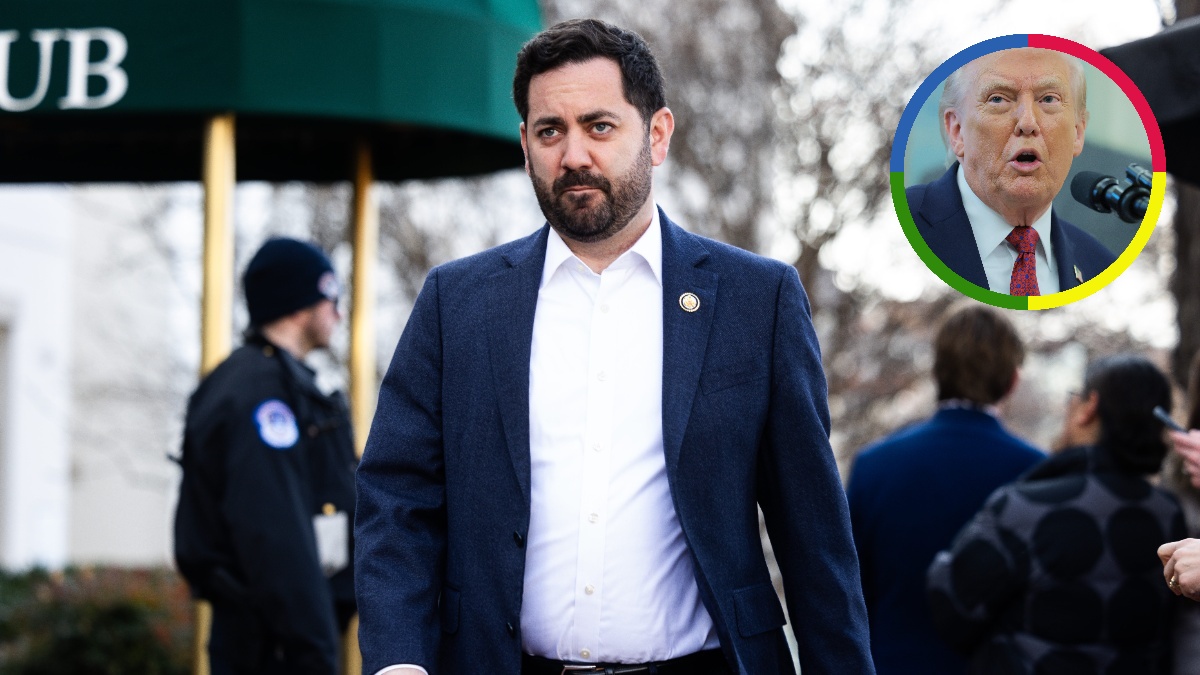

Republican Representative Mike Lawler of New York just publicly stated that President Trump’s potential decision to change marijuana’s federal classification would be ill-advised, according to The Hill. Lawler made his opposition clear, arguing that rescheduling the drug simply isn’t a smart move right now. He thinks we need to seriously consider the current challenges the country faces with substance use disorder.
The representative’s primary concern revolves around the drug’s role as a starting point for more serious addiction. He strongly believes that marijuana acts as a gateway drug. Lawler noted that most people who eventually use hard substances actually start out by using marijuana. He emphasized this point saying, “I think rescheduling marijuana is wrong. The fact is, marijuana is a gateway drug. Most of the people who end up using hard substances start out on marijuana.”
Lawler is also reacting to the fact that today’s marijuana isn’t what it used to be. The concentration of THC, which is the main chemical that gets you high, has increased dramatically over the last few decades. If you look back at the 1990s, the average THC concentration was only about 5 percent. Now, you’re looking at products that hover between 15 and 20 percent. That’s a massive jump in potency, and it really changes the risk profile.
What the Biden administration started, Trump is carrying forward, and that’s not sitting right with Lawler
This political discussion comes immediately after President Trump announced recently that he is “considering” reclassifying cannabis as a less dangerous substance. You might remember that the Biden administration actually started the process to reclassify marijuana as a Schedule III drug. However, that administration didn’t manage to complete the process before leaving office.
Right now, marijuana is classified as a Schedule I drug, a designation it has held since 1971. Schedule I is reserved for drugs that the Drug Enforcement Administration, or DEA, says have no accepted medical use and a high potential for abuse. That means marijuana currently sits in the same federal category as serious substances like heroin, LSD, and methamphetamines. Notably, Oregon went back to criminalizing possession of hard drugs in small quantities.
Moving marijuana to Schedule III would be a massive change. The DEA defines Schedule III drugs as having a moderate to low potential for dependence. This category includes substances like ketamine, testosterone, and anabolic steroids. For many people who use marijuana for medical purposes, this change would be a huge step forward for research and accessibility, despite the large funding cuts on medical research.
However, Lawler’s opposition is strongly tied to the health risks associated with the drug. The National Institute on Drug Abuse has linked long-term marijuana use to several serious conditions including mental health problems, respiratory issues, and gastrointestinal issues. It also increases the risk of head, neck, or throat cancer.
Despite the federal classification, the vast majority of states have already moved forward with legalization. Forty-two states, along with Washington, D.C., have legalized medical marijuana, while 24 states currently permit recreational use.
Even with the widespread state legalization, Lawler remains firm in his opposition to a federal change. He added that, given the current challenges the country faces with substance use disorder, he doesn’t think rescheduling marijuana is wise.








Published: Dec 16, 2025 01:30 pm