



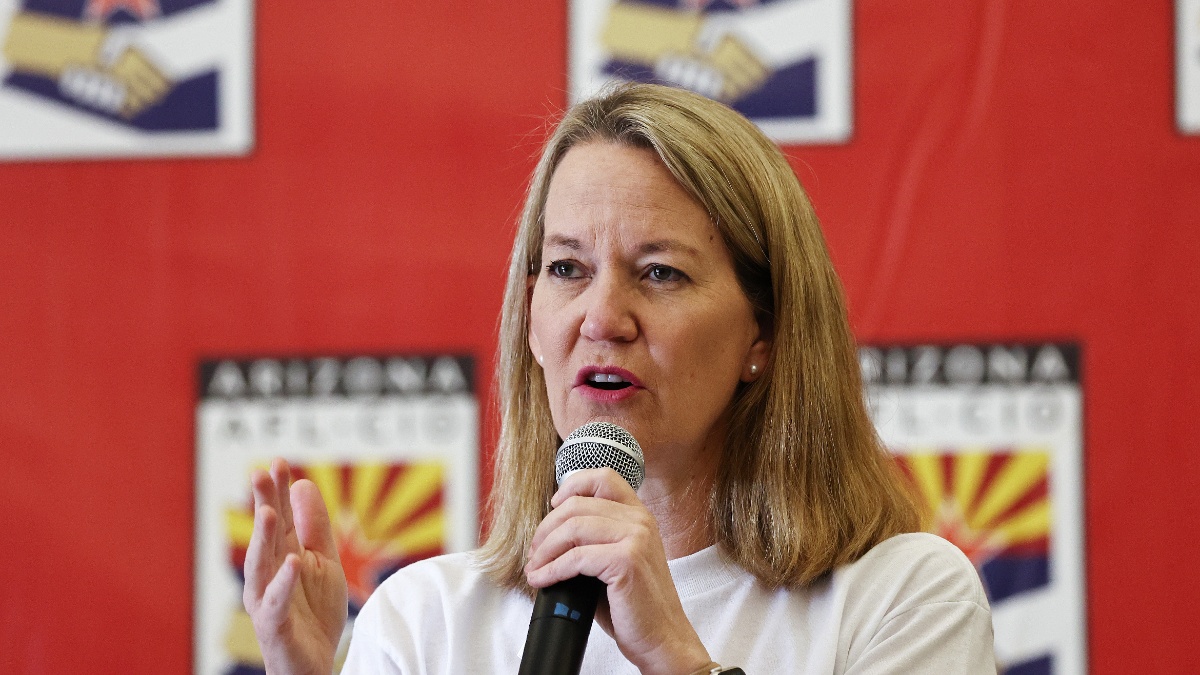

Arizona’s Democratic Attorney General, Kris Mayes, just delivered a serious legal warning, confirming that residents in the state could legally fire upon masked Immigration and Customs Enforcement (ICE) agents if they reasonably felt their lives were in danger due to the state’s powerful self-defense laws, as reported by KRCR TV. Suffice to say, this is a genuinely frightening situation for everyone involved.
AG Mayes explained that this dangerous legal interpretation stems directly from Arizona’s strict “Stand Your Ground” law, which allows citizens to use lethal force under specific circumstances. Mayes didn’t mince words when describing the inherent risk created by federal operational tactics. She called the mix of state law and federal procedures a “recipe for disaster.”
The main issue isn’t the agents’ authority, but their presentation. According to Mayes, you have federal officers who are sometimes wearing plain clothes, sometimes wearing masks, and often operating with very little or sometimes no official identification. When unidentified individuals approach a person’s home or property, the risk of misidentification skyrockets.
This protection is meant to allow citizens to defend themselves against criminals, but it gets complicated when the person they are defending against is a federal agent who hasn’t clearly identified themselves
The legal standard residents must meet to use lethal force is clearly defined in Arizona law. Mayes laid out the rule, stating, “We have a Stand Your Ground law that says that if you reasonably believe that your life is in danger and you’re in your house or your car or on your property, that you can defend yourself with lethal force.”
The interviewer, Brahm Resnik, pushed back on Mayes, questioning if she was essentially giving people permission to shoot federal agents. Mayes stressed that she was simply stating a legal fact as written in state law and was absolutely not encouraging violence. She pointed out the fundamental difficulty of the situation from a resident’s perspective. “If you’re being attacked by someone who is not identified as a peace officer — how do you know?” she asked.
She added a critical observation that makes the scenario even more precarious, noting that real police officers typically don’t wear masks while performing their duties. The lack of clear, universal identification immediately raises the perceived threat level for any resident who encounters them.
Honestly, this is a terrible scenario for both the agents and the citizens of Arizona. You have federal officers trying to execute their warrants, but they’re operating under procedures that make them look indistinguishable from common criminals when they’re masked and in plain clothes. Meanwhile, residents who are legally protected to defend their homes are being put in an impossible, split-second position of having to determine if the person trying to enter their property is a threat or a government employee.
Federal agencies really need to re-evaluate their operational security and identification protocols in states with strong self-defense laws like Arizona. Philadelphia Sheriff Rochelle Bilal recently made similar remarks following the death of Renee Good in Minneapolis at the hands of an ICE agent. You just can’t expect residents to differentiate between an unknown assailant and an agent if the government agent is intentionally obscuring their identity.






Published: Jan 27, 2026 01:00 pm