



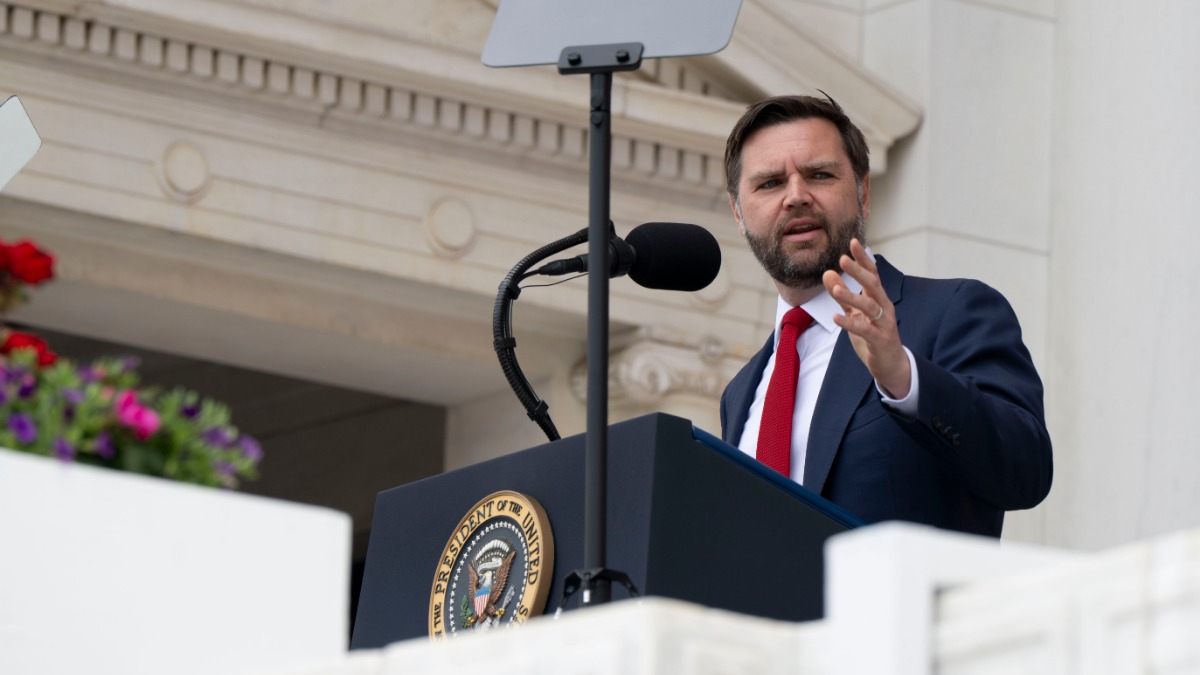

Peace talks between the United States and Iran, mediated by Pakistan, ended without a deal on April 11 after a grueling 21-hour session. Vice President JD Vance, who led the American delegation, confirmed the outcome by saying it is “bad news for Iran.” He made it clear that his team was leaving after presenting what he called their final and best offer to the Iranian side.
While the talks were private, the main point of disagreement was clearly about nuclear capabilities. Vance said the administration’s core goal is to get a firm, long-term commitment from Iran that it will not pursue nuclear weapons or the means to build them quickly. He expressed doubt about whether the current Iranian leadership has the will to honor such a commitment over time.
According to NDTV, Vance noted that Iran’s enrichment facilities have already been destroyed, yet a wide diplomatic gap remains. He confirmed that a broad range of issues, including frozen Iranian assets, were discussed during the day-long session. He maintained that the US delegation acted in good faith and stayed flexible throughout, but the two sides simply could not reach an agreement.
The collapse of Iran peace talks exposes deep gaps that won’t be easy to bridge
Iran’s state broadcaster IRIB offered a different version of events. According to their reports, the Iranian delegation negotiated intensively for the full 21 hours to protect their national interests. They blamed the failure on what they called unreasonable American demands, saying that despite offering various proposals, those demands prevented any real progress and ultimately caused the talks to collapse.
The stakes were especially high regarding the Strait of Hormuz, a critical waterway for global oil shipping. Trump had previously expressed frustration over Iran not complying with the ceasefire agreement, and the situation on the ground remains tense. This ongoing instability has kept oil prices high.
Reports indicate that Iran’s struggles to reopen the waterway stem from a serious problem, how Iran lost track of mines it planted in the Strait, leaving around 20% of the world’s oil supply blocked behind explosives no one can locate.
Before the talks began, Trump was asked about a backup plan if negotiations failed or if Iran refused to cooperate on the Strait of Hormuz. According to The Hill, he dismissed the need for any alternative strategy, telling reporters on April 10 that no backup plan is necessary because he believes Iran’s military has been effectively defeated. He said the country’s manufacturing capabilities are limited, its missile stocks are depleted, and its leadership has been severely weakened.
“You don’t need a backup plan,” Trump said. “The military is defeated. Their military is gone. We’ve degraded just about everything. The Navy’s gone. The Air Force is gone. All anti-aircraft is gone. The leaders are gone. The whole place is gone. So, we’ll see how it turns out.”
Special envoy Steve Witkoff, who traveled to Pakistan alongside Vance and Jared Kushner, has previously admitted a lack of clarity about the specific end goal of the conflict. Defense Secretary Pete Hegseth has framed the current operations as distinct from the nation-building efforts of past administrations, but the path forward remains deeply uncertain.
The ceasefire that came before these talks has also been shaky. There has been significant confusion over whether it was meant to include the war between Israel and Hezbollah in Lebanon. Iran and Pakistan’s Prime Minister have said the Lebanon conflict was part of the deal, while the United States and Israel have said it was not.
This disagreement has further complicated an already fragile diplomatic situation, and with the 21-hour session now over with no agreement, both nations are at a difficult crossroads with no clear next step in sight.







Published: Apr 12, 2026 05:00 am