



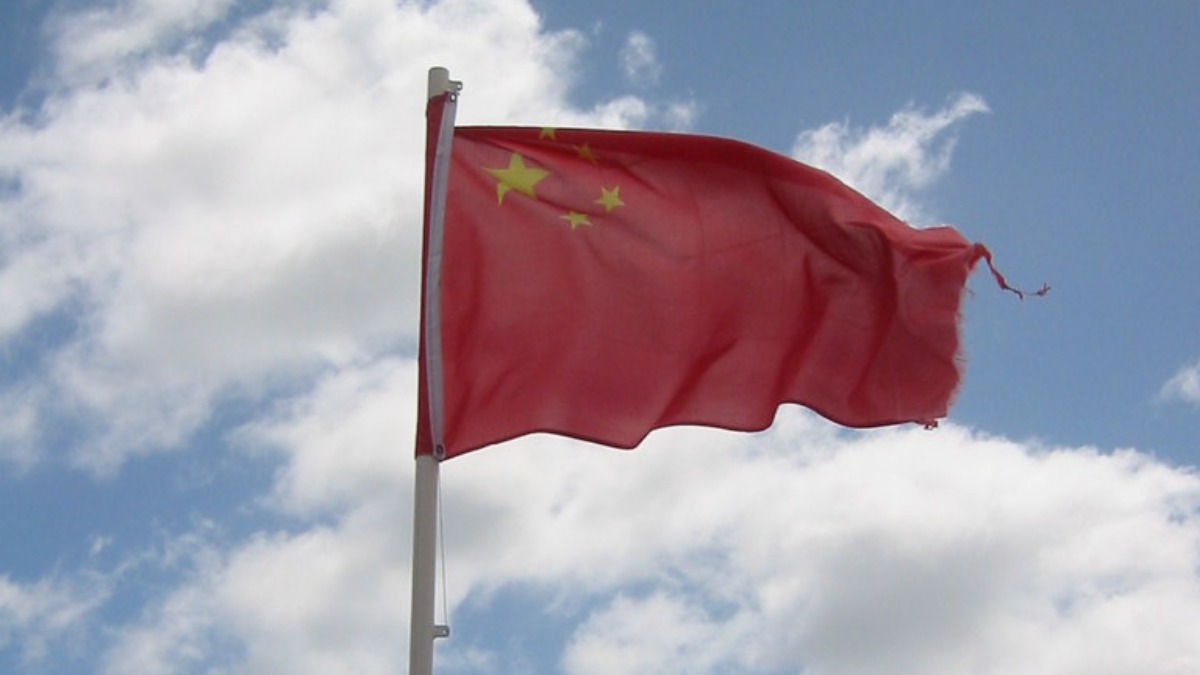

Some of China’s most powerful military commanders were absent from key legislative meetings this month, fueling speculation that a broad anticorruption investigation is behind their disappearance. As reported by Al Jazeera, at least a dozen active and retired military officers were missing as thousands of officials gathered in Beijing for the annual “two sessions” meetings.
Among those absent was General Zhang Youxia, a senior official who has reportedly been under investigation since late January for “suspected serious violations of discipline and law.” His case is one of the most prominent tied to President Xi Jinping’s long-running anticorruption drive, which has become a defining part of his leadership.
Xi launched the campaign after taking power in 2012, describing it as a push against both high-level “tigers” and lower-level “flies” across the state, military, and Communist Party. Now, analysts say the latest phase appears focused on the People’s Liberation Army, with an even wider net than before.
The military crackdown has widened beyond Beijing
Chieh Chung, an adjunct associate research fellow at Taiwan’s Institute for National Defense and Security Research, said the current sweep extends beyond China’s Central Military Commission and military institutions. It now reaches operational commanders, political commissars, and leaders across the PLA’s five military theaters and multiple branches.
China’s official military newspaper recently underscored that corruption remains a priority for Xi. It said corruption is the “biggest cancer eroding combat effectiveness,” framing the campaign as essential to improving the military’s readiness.
The renewed focus comes as the PLA moves toward its 100th anniversary in August 2027, a milestone tied closely to its modernization drive. The timing also overlaps with China’s defense budget increase, another sign of how central military modernization remains to Beijing.
Tristan Tang, a non-resident Vasey Fellow at the Pacific Forum, said the latest removals reflect Xi’s long-standing dissatisfaction with how the armed forces have been managed. Tang said the current wave should be seen as an extension of a campaign Xi renewed between 2016 and 2017.
He said the leadership appears to have uncovered longstanding problems in the PLA’s personnel system, helping explain why so many generals and admirals have been removed or investigated and why numerous positions remain unfilled. The scale of the removals has also drawn outside attention.
According to an estimate from the US-based CSIS China Power Project, around 100 senior PLA officers have been purged or potentially purged since 2022, including 36 generals and lieutenant generals. That estimate also identified another 65 officers as missing or potentially purged because they were absent from important meetings.
Kunihiko Miyake, research director at the Canon Institute of Global Studies in Tokyo, called the situation extraordinary and noted that only two of the seven members of the Central Military Commission remain, including Xi himself. In-Bum Chun, a retired South Korean lieutenant general, said the dismissals raise questions about the military’s internal health.
He said that if the campaign is mainly about corruption, it may point to deeper institutional problems, while a more political motive could signal concerns about loyalty among senior officers. Either explanation carries consequences for the PLA’s internal stability.
Frequent leadership disruptions can create uncertainty and weaken morale and trust across the officer corps. The developments are also being watched closely in Taiwan.
China has vowed to annex Taiwan, by peace or by force, while the United States has pledged to help the self-governing island defend itself. Those tensions are unfolding alongside Trump’s anti-China push in Latin America, another area where Beijing’s influence is under scrutiny.
Retired US Admiral Philip Davidson previously estimated that the PLA could be capable of launching a military campaign against Taiwan by 2027. William Yang, a senior analyst for Northeast Asia at the Crisis Group, said China’s latest Government Work Report suggests growing confidence in cross-strait trends and a stronger determination to speed preparations for unification, including through more coercive means.
So far, however, security experts say the leadership changes do not appear to have disrupted China’s military operations around Taiwan. Alexander Huang, chairman of the Council of Strategic and Wargaming Studies in Taipei, pointed to PLA Eastern Theater Command exercises around Taiwan in late December 2025, when Zhang and others were already under investigation or had been removed.
Huang said the PLA’s training and exercise system has not been significantly affected, with joint combat readiness patrols and grey zone activities continuing into 2026.





Published: Mar 18, 2026 05:00 am