



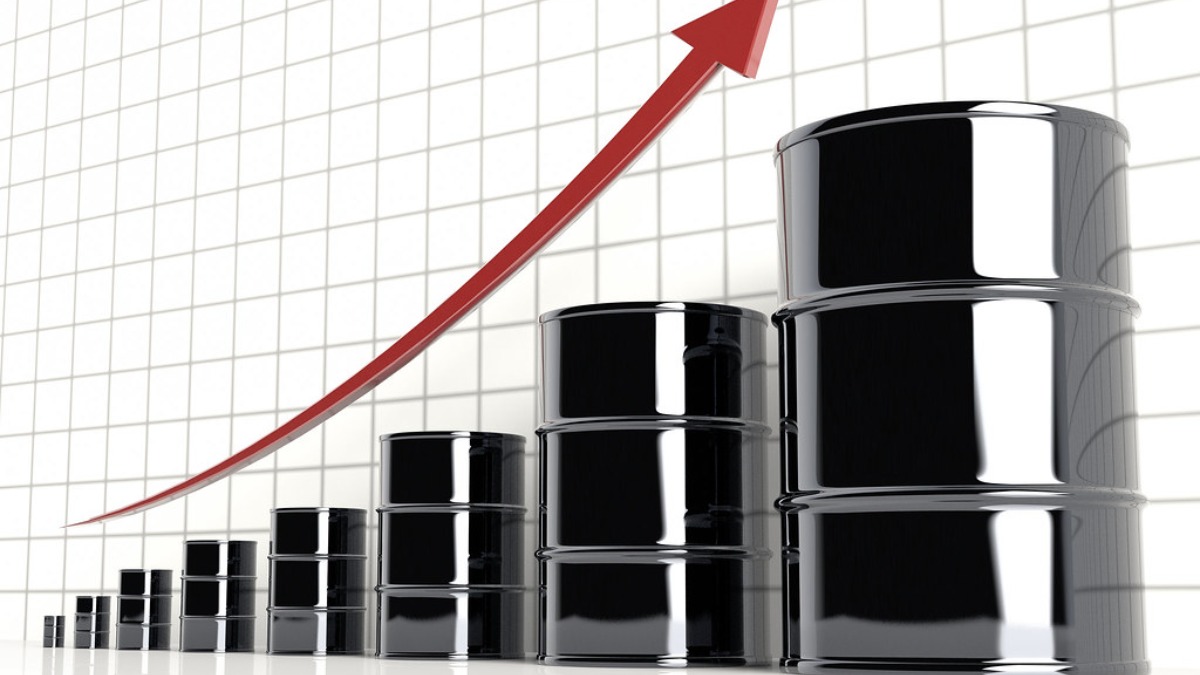

Crude oil prices have surged close to $120 per barrel as the intensifying Iran war threatens vital production and shipping routes in the Middle East, sending shockwaves through global financial markets, as reported by The Oskaloosa Herald. While prices moderated a bit later in the day, the initial spike was pretty intense, showing just how sensitive the market is right now.
Early Monday, Brent crude, which is the international standard, shot up to $119.50 per barrel. It later settled back down to about $107.80. Similarly, West Texas Intermediate, the light, sweet crude produced here in the United States, hit $119.48 per barrel before falling to $103. These are some serious numbers, reminding us of the volatility we saw back in 2022 when Russia invaded Ukraine.
The core issue here is the war, which is now in its second week and dragging in countries and places absolutely critical for oil and gas. We’ve seen civilian targets hit, like Bahrain accusing Iran of striking a desalination plant that provides drinking water, and oil depots in Tehran still smoldering after overnight strikes by Israel.
This isn’t just about military targets anymore; it’s impacting essential infrastructure
A huge part of the problem is the Strait of Hormuz, a super important global shipping lane. Roughly 15 million barrels of crude oil, which is about 20% of the world’s total, typically travel through that strait every single day. The threat of Iranian missile and drone attacks has effectively halted tankers from moving through it. This strait is bordered by Iran to the north and is the pathway for oil and gas from Saudi Arabia, Kuwait, Iraq, Qatar, Bahrain, the United Arab Emirates, and Iran.
Because tankers can’t get through, countries like Iraq, Kuwait, and the UAE have actually had to cut their oil production. Their storage tanks are simply filling up because they can’t export the crude. On top of that, Iran, Israel, and the United States have also attacked various oil and gas facilities since the war began.
Here in the U.S., gas prices are climbing too. A gallon of regular gasoline jumped to $3.45 on Sunday, which is about 47 cents more than just a week prior, according to AAA motor club. Diesel is even pricier, selling for around $4.60 a gallon, an increase of about 83 cents in a week.
President Trump, however, downplayed the idea of using America’s Strategic Petroleum Reserve, stating that U.S. supplies are ample and prices should fall soon. Energy Secretary Chris Wright was a bit more optimistic, saying on a news program that U.S. gas prices would be back under $3 a gallon “before too long.” He added, “Look, you never know exactly the time frame of this, but, in the worst case, this is a weeks, this is not a months thing.”
Interestingly, prices did moderate a bit after a report suggested that some members of the Group of Seven industrial nations were considering releasing strategic oil reserves to ease market pressure. This unconfirmed report cited unnamed sources, but it clearly had some impact.
On the other side, Iranian authorities reported that Israeli strikes on oil depots in Tehran and a petroleum transfer terminal early Sunday killed four people. Israel’s military claimed these depots were being used by Iran’s military to fuel missile launches. Mohammad Bagher Qalibaf, the speaker of Iran’s parliament, warned that the war’s impact on the oil industry could spiral out of control.









Published: Mar 9, 2026 07:30 am