



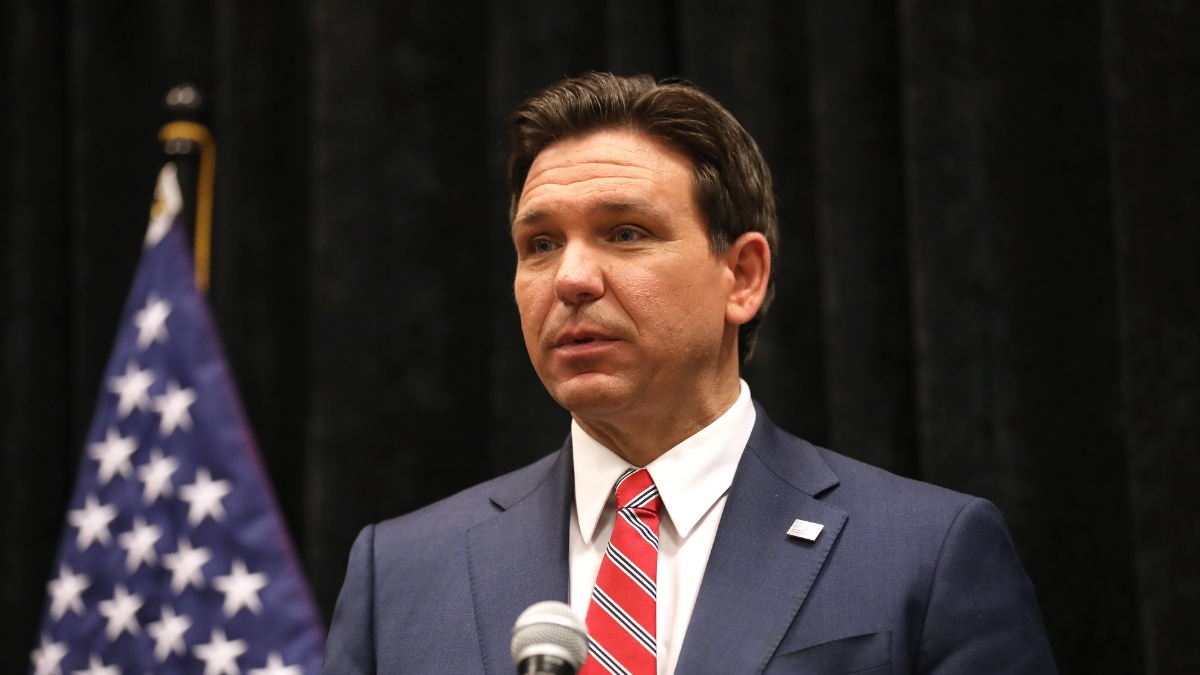

Florida Governor Ron DeSantis just signed a new measure into law that gives him and other state leaders some pretty intense power. As reported by Associated Press, this new legislation lets officials label groups as either domestic or foreign terrorist organizations and, crucially, allows for the expulsion of state university students who support them. It’s a move that’s already sparking a lot of debate, and free speech advocates are seriously worried about its implications.
The law hands a top official at the Florida Department of Law Enforcement the authority to make that initial terrorist organization designation. From there, the governor and three other members of the Florida Cabinet, which includes the state attorney general, the chief financial officer, and the agriculture commissioner, get to approve or reject the label.
Once a group gets hit with that “terrorist organization” tag, the group can be dissolved, and it can’t receive any state funding, whether that’s through school districts or other state agencies. On top of that, universities would have to report the status of any expelled students attending on visas directly to U.S. Immigration and Customs Enforcement.
DeSantis’ new law can set a massive precedent for other states, especially those that want to crack down on protests
DeSantis, speaking at a news conference in Tampa, was pretty clear about his intentions behind the law. He stated that it would “help the state of Florida protect you.” He also mentioned that it would help “protect your tax dollars” and “protect things that should not be happening in the United States of America, but certainly shouldn’t be happening in the free state of Florida.”
However, not everyone is on board with this new legal framework. Free speech groups are particularly vocal in their criticism. PEN America, for instance, which is a prominent free speech advocacy organization, has pointed out that the law contains some really vague language. This ambiguity, they argue, could end up restricting legitimate educational programs that might be perceived as “promoting” terrorism. It could also potentially target student protesters who are simply criticizing Florida officials.
William Johnson, who serves as PEN America’s Florida director, expressed his concerns, saying that the new law “could chill education at every level.” He added that “the implications are fraught,” which really highlights the deep unease some feel about this legislation.
This isn’t the first time DeSantis has moved to designate groups in this way. Back in December, he issued an executive order that labeled the Council on American-Islamic Relations (CAIR) and the Muslim Brotherhood as foreign terrorist organizations. That executive order faced immediate legal challenges, and a federal judge actually blocked its enforcement just last month. This new law, however, appears to be an attempt to codify and expand that authority into state statute, giving it a much stronger legal footing than a simple executive order.
CAIR, a leading Muslim civil rights organization, was quick to respond to DeSantis’s earlier executive order, promising a lawsuit and asserting that the state had absolutely no legal basis for such a declaration.
Hiba Rahim, the Florida chapter’s deputy executive director, held a news conference in Tampa where she called the governor’s order an attack based on “conspiracy theories.” She drew parallels to similar accusations made against other minority groups in past decades, including Jewish, Irish, and Italian Americans, which she said created fear and division. Rahim was defiant, stating, “We are very proud to defend the founding principles of our Constitution, to defend free speech.” She also added, “We are proud to defend democracy, and we are proud to be America first.”
Rahim went on to suggest that DeSantis’s strong support for Israel might be a reason behind the executive order, claiming that the group’s activism had caused “discomfort” to Israel. She cited CAIR’s active role in advocating for the release of a 16-year-old Palestinian-American from Florida, Mohammed Ibrahim, who had been held in an Israeli prison for eight months and was released last month.





Published: Apr 7, 2026 03:30 pm