



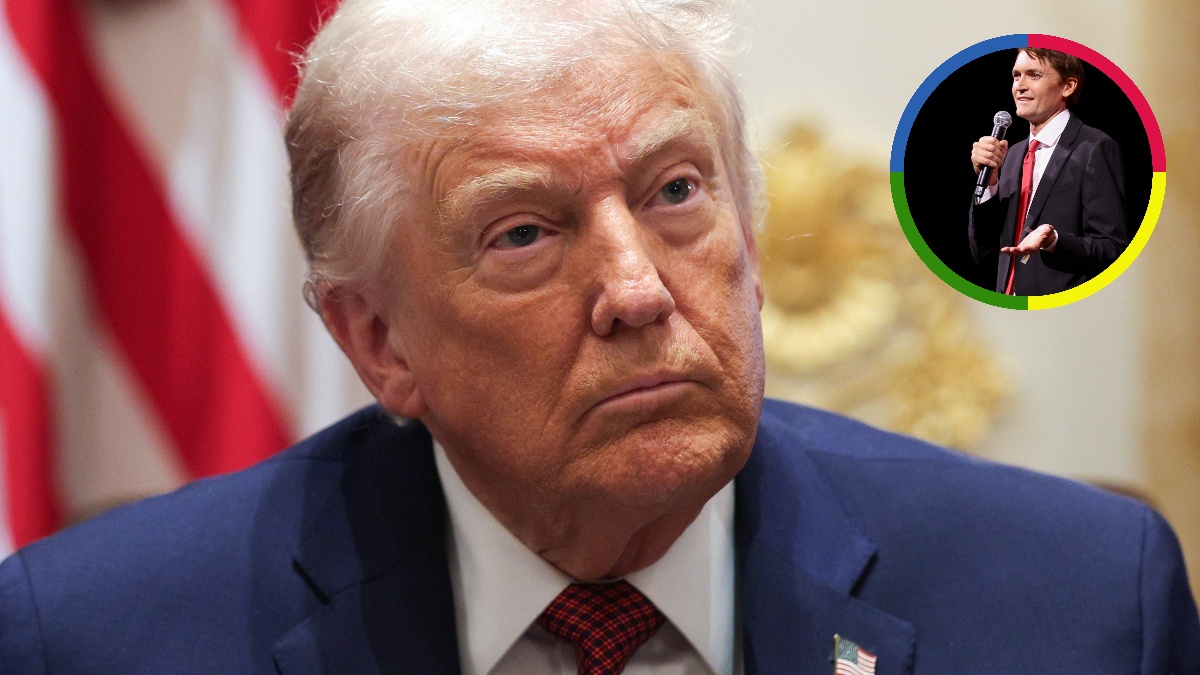

President Donald Trump signed an executive order declaring fentanyl a weapon of mass destruction, a massive and unprecedented move that dramatically expands how the U.S. government can fight the synthetic opioid crisis. This isn’t just treating the drug problem as a public health issue anymore; the designation signals that the administration intends to treat fentanyl as a national security threat on the same level as chemical warfare.
This classification is a huge shift, empowering the Pentagon to step in and assist law enforcement. It also allows intelligence agencies to deploy tools normally reserved for countering weapons proliferation against drug traffickers. It’s an aggressive escalation designed to ratchet up the assault on what the president calls gangs that are “hell-bent on flooding the U.S. with drugs.”
As per CBC, President Trump made the announcement at a White House event honoring service members who police the southern border with Mexico. He was clear about the intent, stating, “We’re formally classifying fentanyl as a weapon of mass destruction, which is what it is.” The executive order itself specified that illicit fentanyl is “closer to a chemical weapon than a narcotic.”
That’s one way to manufacture an excuse for invading foreign nations
This national security crisis is incredibly serious, though. Opioid overdoses have tragically killed at least 68,000 Americans every year since 2020. While Mexico is the largest source of illicit fentanyl bound for the U.S., the fundamental building blocks of the drug mostly come from somewhere else. Policy experts have confirmed that many of the essential chemicals used to manufacture fentanyl are sourced from China.
In fact, Democratic Congressman Jake Auchincloss pointed out that 99 per cent of fentanyl precursors are coming from China, not places like Venezuela. While Venezuela produces some cocaine and acts as a transit point for drugs from Colombia, Peru, and Bolivia, it isn’t the primary source of the fentanyl precursors wreaking havoc in the U.S.
The WMD designation follows the administration’s earlier move this year to classify drug cartels as foreign terrorist organizations, which has already opened the door to military action. Since early September, the Trump administration has carried out 25 known strikes against suspected drug vessels in the Caribbean and Pacific, resulting in the deaths of 95 people.
The U.S. military confirmed that it attacked three boats accused of smuggling drugs in the eastern Pacific Ocean, killing eight people across the three vessels. They even posted a video of a boat exploding, though they didn’t publicly provide evidence that the boats were actually carrying drugs. This is where things get sticky. Legal experts are already saying these strikes might be illegal.
There has been little to no public proof that the boats carried drugs or that it was necessary to blow them out of the water rather than just stopping them to seize the cargo and question those on board. Democrats and even some Republicans are pushing back, saying the White House needs congressional authorization for these vessel strikes.
As you might expect, critics were immediately vocal about the declaration, pointing out a massive contradiction in the administration’s strategy. Democratic House Representative Jim McGovern referenced President Trump’s pardon earlier this year of Ross Ulbricht, the founder of the Silk Road marketplace.
Prosecutors alleged that Silk Road was used to sell more than $200 million worth of drugs, and McGovern reminded everyone on social media, “Trump pardoned the founder of a black market that imported fentanyl from China into the U.S.”






Published: Dec 16, 2025 02:30 pm