



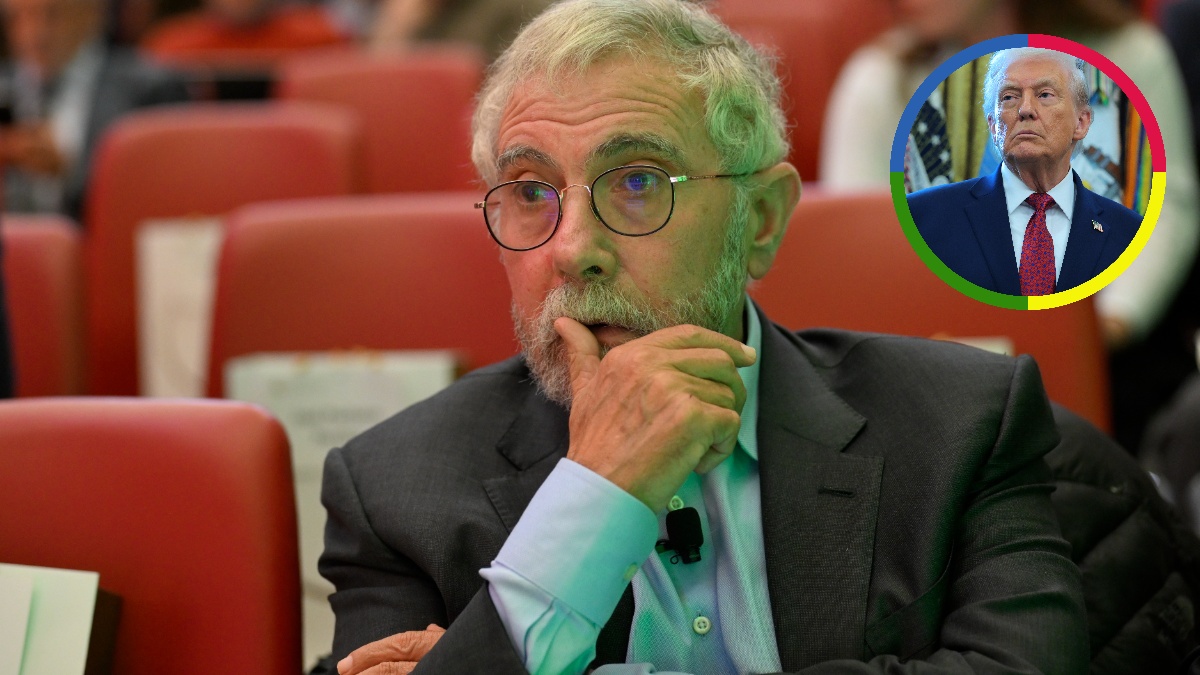

Economist Paul Krugman just dropped some serious analysis, claiming that the vast oil wealth President Trump believes the U.S. is seizing in Venezuela simply doesn’t exist, as reported by The Hill. President Trump has made oil the absolute centerpiece of his plan to manage Venezuela following the recent capture of the country’s leader, Nicolás Maduro, and the military strikes conducted on Caracas.
In fact, following the abduction, Krugman noted that the president mentioned the word “oil” a staggering 27 times during a press conference. The president declared, “We’re going to take back the oil that, frankly, we should have taken back a long time ago.” However, Krugman argues that this entire venture isn’t really a war for oil; it’s a war for oil fantasies. The economist wrote that the immense fortune President Trump seems to imagine waiting there to be taken just isn’t real.
The president announced that Venezuela will turn over between 30 million and 50 million barrels of oil to the U.S. He said the oil would be brought directly to unloading docks via storage ships, with help from Energy Secretary Chris Wright. As for how the money will be handled, he wrote that this oil “will be sold at its Market Price, and that money will be controlled by me, as President of the United States of America, to ensure it is used to benefit the people of Venezuela and the United States!”
It seems like the U.S. might be stuck with a high-cost asset that won’t deliver the riches President Trump is expecting
President Trump believes that acquiring this asset will allow the U.S. to “fix the badly broken infrastructure, the oil infrastructure, and start making money for the country.” This aggressive plan comes after the president designated Maduro as the head of a “terrorist cartel” and accused the Venezuelan government of sending drugs to the U.S.
Here’s where Krugman’s economic reality check comes in, and frankly, it makes perfect sense from a business standpoint. While Venezuela is often cited as having the world’s largest known oil reserves, Krugman explains that this claim is based on a reclassification of heavy oil as “proved” oil.
Krugman cited economist Torsten Slok, who previously highlighted that most of the oil is “extra-heavy, which has low recovery and a high cost to produce.” If you’re trying to turn a profit, low recovery and high cost are the two things you absolutely want to avoid. This suggests that the immense, usable reserves are just politically motivated bluster.
Furthermore, even if the oil were easy to extract, the market conditions aren’t playing ball. Thanks to the increased supply from fracking, oil prices are cheap. Krugman calculates that the break-even price for Venezuela’s oil is around $62 a barrel. That figure simply wouldn’t allow oil companies to make a profit, making it a very unattractive investment.
Krugman concluded that President Trump’s conviction that he has captured a lucrative prize in Venezuela’s oil fields is an “unrealistic fantasy.”






Published: Jan 9, 2026 11:30 am