



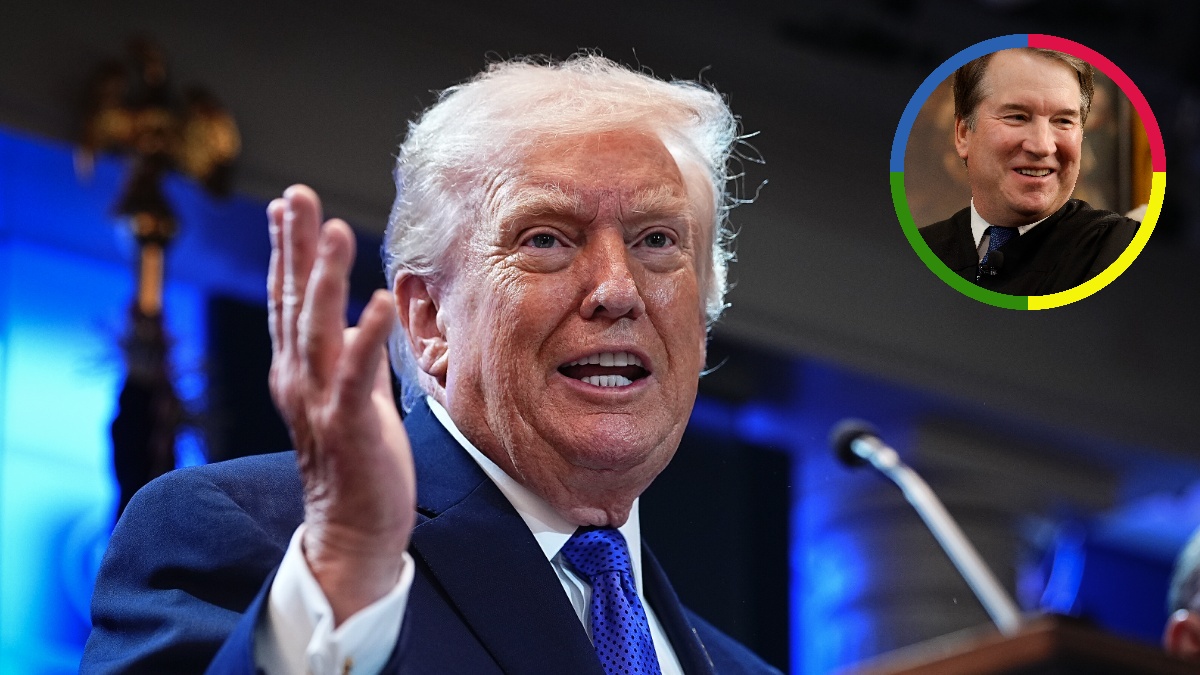

President Trump is absolutely fuming after the Supreme Court delivered a 6-3 decision, invalidating his sweeping “reciprocal tariffs,” as reported by MS Now. This ruling is a classic example of separating powers, with the Constitution giving tariff-imposing power to Congress, not the president. The court determined that when Congress passed the International Emergency Economic Powers Act, which Trump had relied on, lawmakers didn’t give any president the power to impose tariffs in that specific way.
President Trump immediately blasted the justices who ruled against him, calling them “a disgrace to our nation,” “fools,” and even “lap dogs.” However, despite this initial setback, it seems the Supreme Court’s decision is really just Act II in what we’re calling “Trump’s tariff project.” The ink was barely dry on the ruling when President Trump announced his next move: a plan to impose a 10% global tariff on all of the United States’ trading partners. He even upped that to 15% on Saturday.
The court’s ruling, while legally and economically significant, is actually pretty narrow in its structure. The justices didn’t say a president can never impose tariffs. Instead, they just said a president can’t do it specifically via the International Emergency Economic Powers Act. And honestly, this is where Justice Brett Kavanaugh’s dissenting opinion becomes a real game-changer.
Even though Kavanaugh disagreed with the majority, his dissent reads like a detailed roadmap for how a president could achieve much of what Trump wants
President Trump clearly appreciated this, saying, “I’m so proud of him,” during a news conference, referring to Kavanaugh. Kavanaugh’s dissent sketches out a governing theory of executive trade power. He specifically mentioned other statutes that “might justify most (if not all) of the tariffs at issue in this case.” This instruction on how to impose tariffs in a way that will stay within the law likely sparked President Trump’s pride.
So, while President Trump may not be able to slap sweeping, unlimited tariffs on nearly every country under existing federal statutes, he’s definitely not completely stuck. He’s already looking at Section 122 of the Trade Act of 1974. Under this provision, a president can impose tariffs if there’s a balance-of-payments deficit. The catch here is that without congressional approval, these tariffs expire after 150 days, and the highest rate you can go is 15%. That’s the route he’s announced he’s pursuing right now.
Beyond Section 122, President Trump could also turn to two other statutes he used during his first term. There’s Section 232 of the Trade Expansion Act of 1962, which lets the president impose tariffs on specific goods, but only after the Commerce Department investigates to see if those imports threaten national security. This is what he used for aluminum and steel tariffs.
Then there’s Section 301 of the Trade Act of 1974, which allows tariffs when trade agreements are being denied, or a foreign government’s actions are hurting U.S. commerce. This one requires an investigation by the U.S. Trade Representative and is subject to periodic review.
These statutes appear to give the president clearer authority to impose tariffs. However, they generally come with more requirements and are much narrower in scope. Think of it this way: the Supreme Court might have unplugged the president’s quickest tariff switch, but it certainly didn’t shut down the entire electrical system.
If the administration follows Kavanaugh’s detailed roadmap, you can expect some form of tariffs to return, though likely in a more fragmented way. Instead of one massive “reciprocal tariff,” we’d see multiple findings based on national security concerns, unlawful trade practices, or balance-of-payments deficits.
For a president as determined to impose tariffs as Trump is, the Supreme Court’s decision isn’t a shutdown; it’s more of a rerouting. The ruling wasn’t about shrinking executive authority as much as it was reasserting Congress’ authority and reaffirming the separation of powers. The court didn’t eliminate President Trump’s ability to achieve his policy goals; they’re just making him pursue them through specific, congressionally approved channels. And you can bet he’ll pursue them.





Published: Feb 23, 2026 02:00 pm