



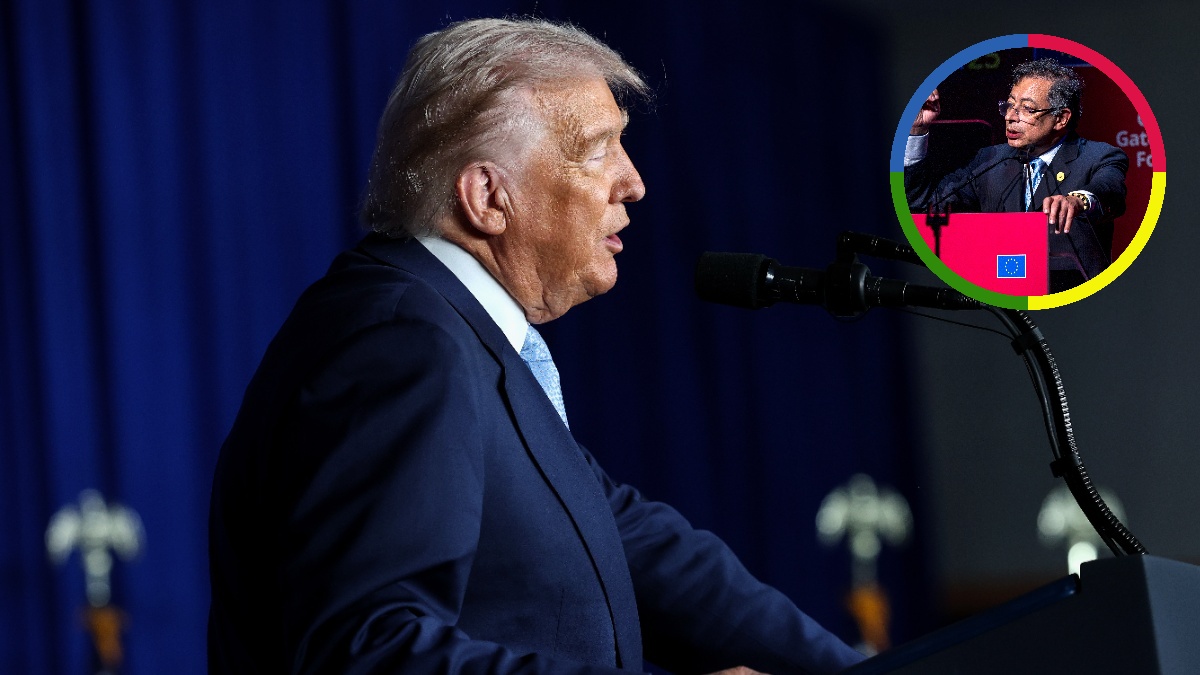

President Donald Trump warned that any country producing and selling drugs into the U.S. could be “subject to attack,” specifically calling out Colombia, prompting an immediate and strong rejection from Bogota, as per Newsweek. Colombian President Gustavo Petro didn’t just issue a formal diplomatic response, though. He went straight to X and gave President Trump a genuinely bizarre invitation.
Petro said, “Come to Colombia, Mr. Trump, I invite you, so that you can participate in the destruction of the 9 laboratories we do daily to prevent cocaine from reaching the US.” Earlier during a Cabinet meeting at the White House, President Trump told reporters that any country involved in the drug trade was at risk. The president mentioned that if drugs come through a certain country, or if the U.S. thinks they are building “mills for, whether it’s fentanyl or cocaine,” they are “subject to attack.”
He specifically cited Colombia, stating, “I hear the country of Colombia is making cocaine, they have cocaine manufacturing plants.” The Colombian Foreign Ministry swiftly pushed back, stating that they reject “Any threat of external aggression that violates the dignity, integrity of the territory and sovereignty of the Colombian people.” The ministry also stressed that Colombia “continues with its unwavering commitment to the fight against drug trafficking.”
Colombia made an urgent call for fraternity between Latin America and the Caribbean to ensure unity prevails against any external intervention
This latest threat comes amid mounting tensions between the U.S. and several South American nations. The Trump administration has been contemplating military strikes in Venezuela, and both Venezuela and Colombia have condemned U.S. military strikes in the Caribbean Sea and the Eastern Pacific Ocean. The White House claims these are necessary routes for drug trafficking.
Bogota has been especially vocal in its opposition to these U.S. boat strikes, which the White House defends as lawful operations targeting “narco-terrorists.” Unfortunately, these operations have resulted in significant casualties. Since early September, these lethal operations against suspected non-state vessels have allegedly killed more than 80 people.
These strikes have raised serious concerns about accountability and human rights. Lawmakers are currently reviewing reports that said Defense Secretary Pete Hegseth verbally ordered a second strike on an alleged drug smuggling vessel back in September, reportedly to kill survivors. Critics are pointing out that this action could amount to a war crime.
The situation is complicated because Colombia is, undeniably, one of the world’s largest producers of cocaine. While the country has historically cooperated with the U.S. on counter-narcotics efforts, that relationship has deteriorated sharply. In September, Colombia was listed as a country failing to cooperate in U.S. anti-drug efforts for the first time in nearly 30 years. Following that, the Trump administration imposed sweeping sanctions against President Petro, his family, and a top Cabinet member, accusing them of aiding the global drug trade.
In November, President Petro ceased intelligence cooperation with the U.S. and condemned attacks on suspected drug-running boats that resulted in the deaths of Colombian nationals. The Trump administration is expected to continue its controversial strikes, though what specific military action may be taken against Colombia and Venezuela remains unclear.



Published: Dec 3, 2025 06:30 pm