



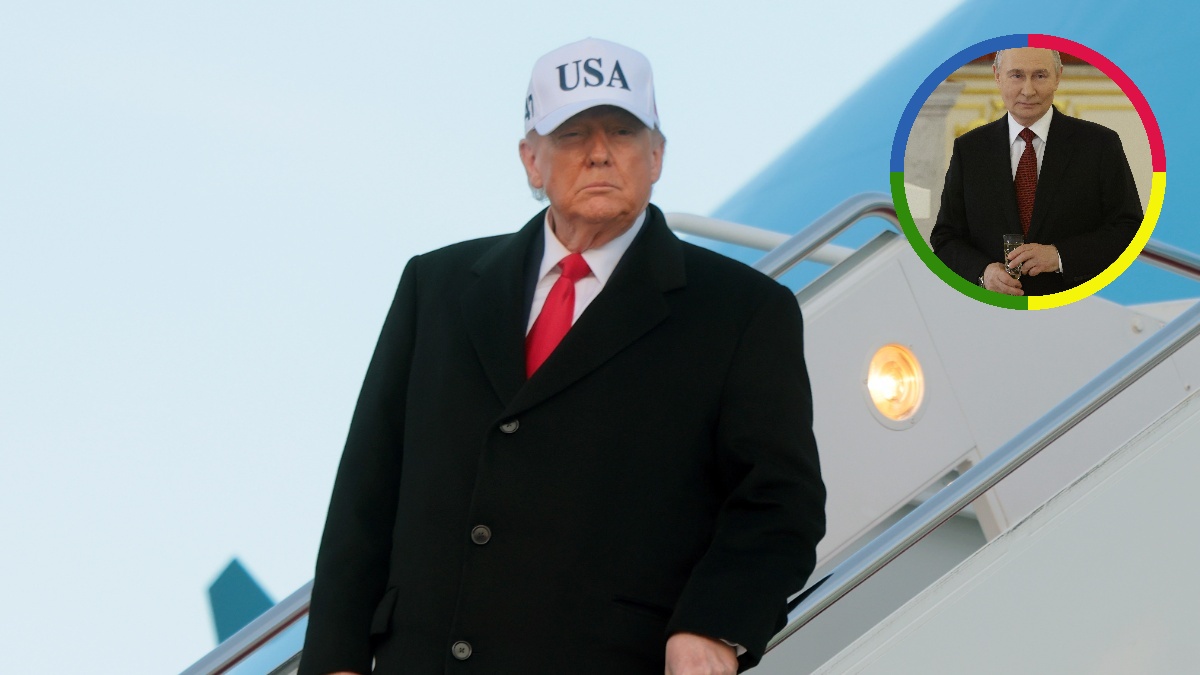

President Donald Trump has officially invited Russian President Vladimir Putin to join his new global “board of peace,” which is designed to resolve conflicts around the world and oversee governance and reconstruction efforts in Gaza, as per Al Jazeera. The White House is reaching out to figures worldwide to staff this new structure, which President Trump himself will chair. This “board of peace” is intended to implement the president’s 20-point plan for ending Israel’s war in Gaza.
Honestly, including President Putin on a peace board is an absolutely controversial move, especially since Russia is currently engaged in a brutal, nearly four-year-long war of attrition in Ukraine. Peace negotiations there have essentially stalled out, and a resolution remains elusive. You might recall that President Trump previously claimed he could stop that war within 24 hours of taking office a year ago. However, the war continues to rage on the ground.
Kremlin spokesman Dmitry Peskov confirmed the invitation, telling journalists, “President Putin also received an invitation to join this board of peace.” Moscow is currently trying to “clarify all the nuances” of the offer with Washington before deciding if Putin will join. It seems President Trump is also seeking to stack the board with allies, as Belarusian President Alexander Lukashenko, a close Putin partner, has reportedly been invited too.
You have to wonder if this board can truly achieve global resolution if it starts out with such a divisive lineup and structure
Putin has previously been very complimentary of President Trump’s conflict resolution attempts. Back in October, he said that the American president is “really doing a lot to resolve these complex crises, which have lasted for years, even decades.” He specifically praised the Middle East efforts, saying that “If we succeed in achieving everything Donald has strived for, … it will be a historic event.”
Moscow has traditionally tried to keep balanced relations with all major players in the Middle East, including both Israelis and Palestinians. However, since the invasion of Ukraine in February 2022 and the start of Israel’s war in Gaza, Putin has definitely shifted focus. Russia has been boosting ties with Iran and seeking closer relationships with the Gulf Arab states, moving away from Israel amid growing Western isolation. The wars have certainly strained Moscow’s good relations with Israel.
The Kremlin has repeatedly criticized Israel’s war on Gaza and called for restraint. President Putin met with Palestinian Authority President Mahmoud Abbas in May, where he was quoted by the news agency RIA Novosti as saying that “The Gaza Strip is experiencing a humanitarian catastrophe in the full sense of the word.” He added that “Russia, as a friend of the Palestinian people, is trying to provide regular assistance.”
While the board is meant to represent the US, Europe, and Arab countries, its three-tier governing structure is already facing major criticism from experts. The concern is that the structure heavily marginalizes Palestinian political agency, which is awful for achieving any lasting peace.
Figures like President Trump, pro-Israel officials such as US Secretary of State Marco Rubio, and polarizing figures like former British Prime Minister Tony Blair are placed at the top tier. Meanwhile, Palestinians are relegated to the lowest, third tier, only handling municipal duties. Critics worry this approach could create a commercialized, “neocolonial” governance model instead of a true path to self-determination.






Published: Jan 20, 2026 02:30 pm