



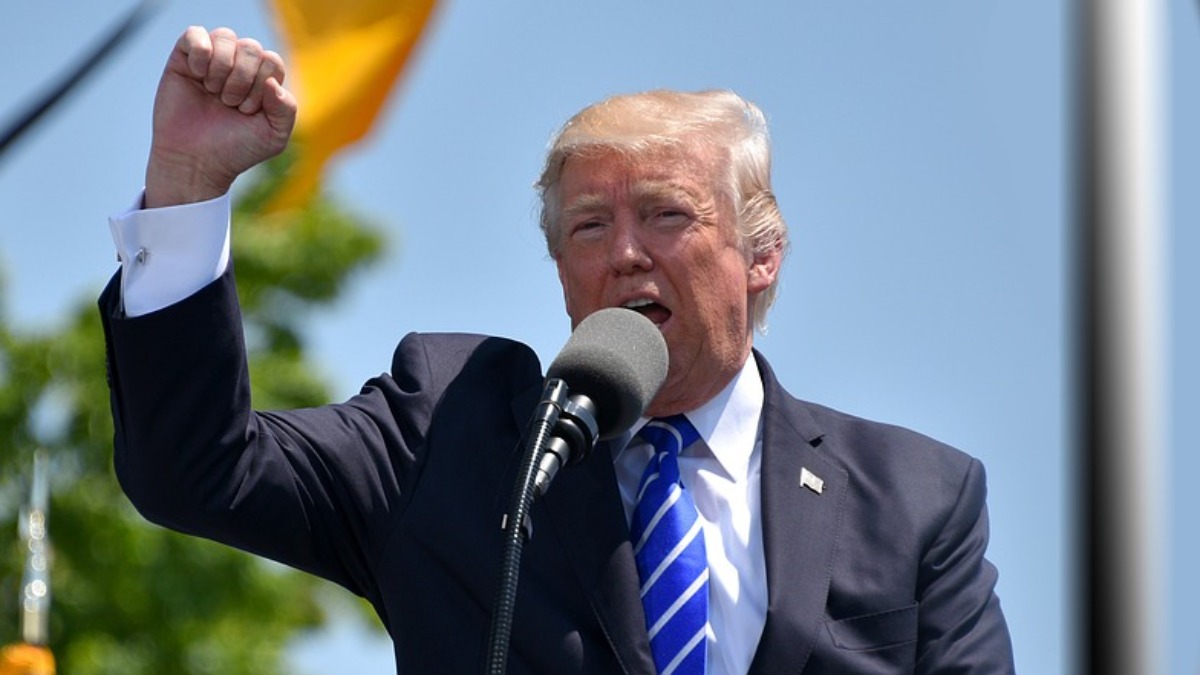

Fact-checkers have reviewed President Donald Trump’s national address on the Iran war, delivered from the Cross Hall of the White House, and found several questionable claims, particularly about the U.S. economy and the ongoing conflict. One of Trump’s repeated claims is that he inherited a “dead and crippled country” and turned it into the “hottest country anywhere in the world by far, with no inflation.”
But economic data does not support this. In 2024, the final year of Joe Biden’s presidency, U.S. GDP grew by 2.8% after adjusting for inflation, faster than almost every other wealthy country, with only Spain growing faster. The economy also expanded steadily from 2021 through 2023. Under Trump, U.S. economic growth actually slowed to 2.1% last year, partly due to a 43-day federal government shutdown that hurt growth in the final months of the year.
His claim of “no inflation” is also inaccurate. The Labor Department’s consumer price index showed a 2.4% increase in February compared to the previous year, which remains above the Federal Reserve’s 2% target, according to WRAL News. Polling data from March 30 shows that the share of voters who believe the economy is on the right track has dropped by six points, and those saying their financial situation has worsened is up by five points.
Trump’s claims about Iran’s leadership change and the war’s death toll don’t hold up to scrutiny
Trump suggested in his speech that “regime change has occurred” in Iran and that the “new group is less radical and much more reasonable.” This is not accurate. The war began on February 28, and Israel’s airstrike killed Supreme Leader Ayatollah Ali Khamenei. However, his son, Mojtaba, who is widely seen as even more hard-line, was installed as the new supreme leader.
Iran’s paramilitary Revolutionary Guard has also grown more powerful throughout the conflict, and Iran’s civilian leadership openly admits it has very little control over the Guard’s actions. Trump has also faced scrutiny over his secret Iranian contact and denied diplomatic talks, raising further questions about the administration’s transparency on the war.
Trump also claimed that the “murderous regime also recently killed 45,000 of their own people who were protesting in Iran.” This figure has not been verified by human rights organizations. The U.S.-based Human Rights Activists News Agency, which has a strong track record for accuracy during protests in Iran, confirmed just over 7,000 deaths in the nationwide protests that peaked in January.
They acknowledged more deaths may have occurred but said verification is extremely difficult due to severe internet and communication restrictions inside Iran. Iran’s own government reported just 3,117 deaths on January 21. Trump had previously claimed at least 32,000 people were killed, with no evidence provided.
On energy, Trump said, “We’re now totally independent of the Middle East, and yet we are there to help. We don’t have to be there. We don’t need their oil.” While the U.S. is the world’s leading oil producer and only about 8.5% of its imported oil came from the Persian Gulf in 2025, this does not make the U.S. immune to Middle East turmoil. Oil is priced in a global market.
As University of Chicago energy analyst Sam Ori explained before Trump’s speech, “a disruption anywhere affects the price everywhere.” According to Forbes, since the Iran war began, U.S. benchmark crude oil prices have surged more than 50%, and the average U.S. gallon of gasoline has climbed above $4 this week.
Trump also cited “record-setting investments coming into the United States, over $18 trillion.” There is no evidence this amount has actually been secured. Even the White House’s own website lists a lower figure, $10.5 trillion, which reportedly includes some investment commitments made during the Biden administration.
A study published in January raised doubts about whether more than $5 trillion in commitments made by major trading partners would actually be delivered. Trump also repeated the claim that “Obama gave them $1.7 billion in cash” to Iran.
This is misleading. The U.S. Treasury did pay Iran roughly that amount during the Obama administration, but it was money Iran had been owed since the 1970s, when it paid $400 million for U.S. military equipment that was never delivered after diplomatic ties were severed. Following the 2015 nuclear deal, the U.S. agreed to return the $400 million plus around $1.3 billion in interest. Trump later withdrew the U.S. from that deal.
These fact-checks come as Trump’s approval rating has dropped from roughly 52% at the start of his term to around 41%, driven by economic concerns, a record-long government shutdown, high living costs, and dissatisfaction with his immigration policies. Meanwhile, Trump has also been making headlines for other reasons, including the gold statue featured in his presidential library renderings, which has drawn significant public attention.


Published: Apr 2, 2026 12:45 pm