



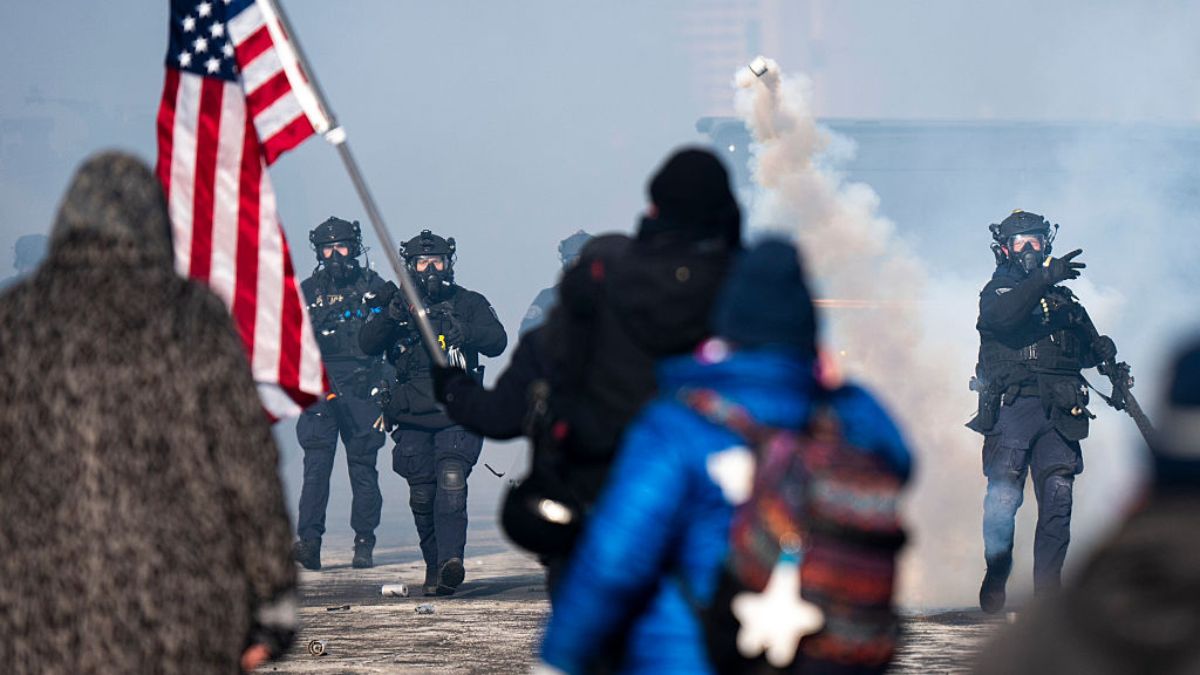

A federal judge ordered the Trump administration to stop destroying or hiding evidence related to a fatal shooting involving a U.S. Border Patrol officer in Minnesota. The emergency order came after state investigators were repeatedly blocked from looking at the crime scene.
According to The Wall Street Journal, Minnesota Attorney General Keith Ellison filed an urgent request in U.S. District Court late Saturday. He said federal officers made serious mistakes after the shooting and believes “the federal government may continue to withhold, and fail to protect, evidence.”
U.S. District Court Judge Eric Tostrud quickly issued a temporary order blocking the administration from “destroying or altering evidence” related to the death of Minneapolis resident Alex Pretti. Pretti, a 37-year-old intensive-care nurse, was shot and killed by a Border Patrol officer on Saturday. A hearing is scheduled for Monday in the Minnesota federal court.
Federal and state accounts of the shooting differ significantly
Federal and local officials confirmed that Pretti was wrestled to the ground by several federal agents before the fatal shot was fired. The Department of Homeland Security released a statement claiming that Pretti approached the officers with a handgun before the shooting and labeled him a “domestic terrorist.”
However, videos on social media show a different picture. The footage shows Pretti filming the federal officers before being confronted by them. Agents appeared to spray Pretti and another person with a chemical irritant. In the moments before the shots were fired, Pretti was already on the ground, surrounded by multiple federal agents.
This is not the first time state officials have been shut out of a deadly federal operation. Local authorities were previously blocked from investigating the fatal shooting of 37-year-old Renee Good by an Immigration and Customs Enforcement agent on January 7. The Department of Homeland Security has faced recent controversies over policy decisions in other areas as well.
After the shooting, federal agents asked Minneapolis Police Department officers to leave the scene. Local police stayed under orders from their watch commander. Federal agents then blocked investigators from the Minnesota Bureau of Criminal Apprehension from examining the scene, even though the investigators had a warrant signed by Minnesota District Court Judge Gina Brandt.
Minnesota Bureau of Criminal Apprehension Superintendent Drew Evans said, “Obtaining a warrant to access a public space is unusual. But we thought it was necessary given the federal authorities’ refusal to allow us access.”
Evans stated this was the first time he could recall state investigators being denied access by federal officers when they clearly had jurisdiction over a crime scene. Once the federal agents left the scene, local police and state investigators were quickly overrun by protesters, which the lawsuit says likely spoiled evidence. The incident adds to ongoing scrutiny of DHS operations and internal management issues.



Published: Jan 25, 2026 02:45 pm