



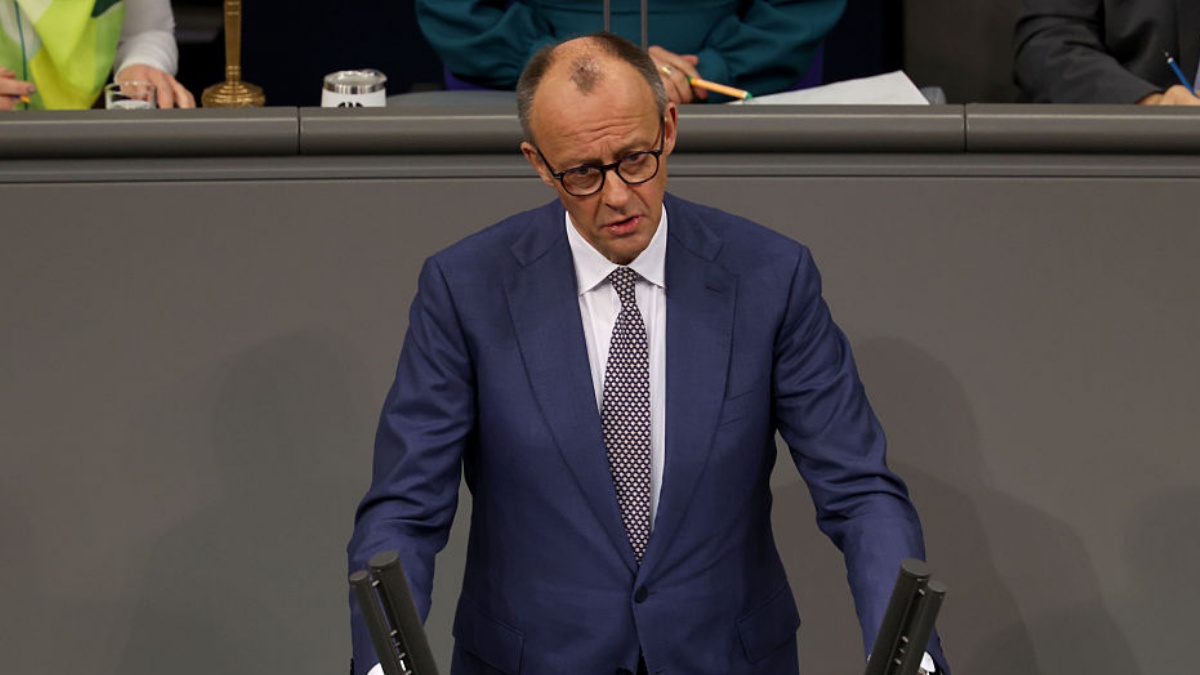

Germany is engaged in early discussions with European partners about developing its own nuclear weapons, a move that would mark a significant shift in postwar security policy. As reported by the New York Post, the talks are focused on strengthening Europe’s nuclear deterrence amid growing geopolitical uncertainty.
German Chancellor Friedrich Merz confirmed the discussions before parliament, stating plainly that conversations with allies are underway. He emphasized that the talks are aimed at reinforcing Europe’s overall nuclear posture and potentially complementing the existing US nuclear presence on the continent, a shift happening amid other recent political shakeups, such as Clinton’s reversing their stance testimony.
The development comes as European leaders reassess long-standing security arrangements, particularly the region’s reliance on the United States for NATO’s nuclear umbrella. Concerns over Russia’s ongoing aggression and uncertainty surrounding US commitments during President Trump’s second term have added urgency to these deliberations.
Europe’s nuclear security assumptions are beginning to shift
Merz stressed that the discussions remain in an initial phase and that no decisions would be made quickly. He also noted that any potential outcome would not violate Germany’s current nuclear-sharing agreements with the United States, under which US weapons are stationed on German soil.
While Germany does not possess nuclear warheads or delivery systems of its own, officials argue the country could still play a meaningful role. Thomas Roewekamp, head of Berlin’s parliamentary defense committee, said Germany has significant technological capabilities that could contribute to a joint European effort, even without existing nuclear hardware, a context that parallels other global discussions reported in the news, such as Elon Musk and Reid Hoffman’s heated Epstein Island feud in social discourse.
Legal and political hurdles remain substantial. Germany is bound by the 1990 Four Plus Two agreement that enabled reunification, as well as the 1969 Nuclear Non-Proliferation Treaty, both of which restrict nuclear weapons development. Merz acknowledged these constraints but argued they do not prevent discussions with European partners.
Currently, only France and the United Kingdom maintain independent nuclear arsenals in Europe, with Britain estimated to have about 225 warheads and France roughly 290. The United States also maintains around 100 nuclear weapons in Europe, most of them based at American facilities in Germany.
The talks follow a nuclear deterrence agreement reached last summer between the UK and France, designed to address extreme threats linked to Russian aggression. That pact underscored a broader trend of European nations reassessing how they safeguard the continent’s security.



Published: Feb 2, 2026 07:45 pm