



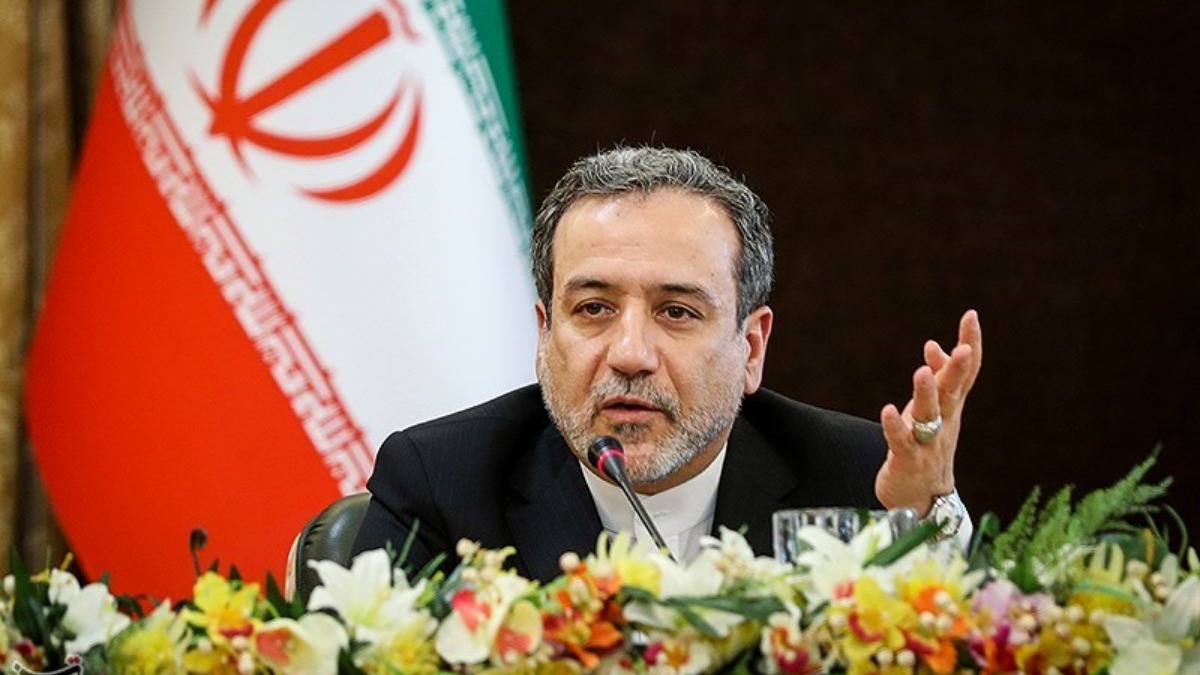

Iranian Foreign Minister Abbas Araghchi delivered a sharp rebuke, telling President Trump that his country would not be “swayed by more threats” following the president’s warning to “hit” and “obliterate” Iran’s power plants, as reported by The Hill. President Trump had issued a stark ultimatum on Truth Social, stating that if Iran didn’t fully reopen the Strait of Hormuz without threat within 48 hours, the United States would attack its power infrastructure, beginning with the largest plant.
Araghchi took to X to respond directly to the president’s comments. He clarified that the “Strait of Hormuz is not closed,” but instead, “ships hesitate because insurers fear the war of choice you initiated—not Iran.” He emphasized that “no insurer—and no Iranian—will be swayed by more threats. Try respect.” The Iranian foreign minister also linked navigation freedom to trade, asserting that “Freedom of Navigation cannot exist without Freedom of Trade. Respect both—or expect neither.”
The Strait of Hormuz is a critical waterway, carrying a full fifth of the world’s daily oil supply. Concerns over safety in the region have caused oil transports through the strait to pause indefinitely. Tehran has taken some aggressive steps, including planting mines in the strait and threatening to shoot down any ship attempting passage without its explicit permission.
These exchanges happen amidst weeks of U.S.-Israeli strikes on Iran
Just last week, Israel hit Iran’s portion of the South Pars gas field, causing significant damage to its vital energy infrastructure. Iran didn’t take that lying down, retaliating by striking energy fields in Qatar, Saudi Arabia, and the United Arab Emirates. This tit-for-tat has only increased regional instability and, not surprisingly, pushed gas prices higher for everyone.
Amidst this escalating tension, Japan has found itself caught in the middle. The Japanese news outlet Kyodo News reported that Araghchi was in talks with Japan, specifically to allow one of its oil ships to pass through the Strait. Japan’s reliance on the Middle East for over 90 percent of its oil makes this a particularly sensitive issue for them. Japanese Foreign Minister Toshimitsu Motegi has engaged in two direct talks with Araghchi since the U.S.-Israeli attacks began.
Japanese Prime Minister Sanae Takaichi visited President Trump at the White House last week. She conveyed her deep concerns to the president, explaining that the conflict in Iran has created a “severe” security environment and has been a “huge hit” to the global economy.
Despite these worries, she expressed her “firm” belief that President Trump can “achieve peace” in the region. President Trump, for his part, urged Takaichi to have Japan “step up” its response to the war in Tehran, a call he has made to allies as the Strait of Hormuz remains effectively shut down for many.
“I expect Japan to step up because, you know, we have that kind of relationship and we step up for Japan,” President Trump told reporters on Thursday during the prime minister’s White House visit. He added, “We don’t need much. We don’t need anything. I mean, honestly, we don’t need anything from Japan or from anyone else. But I think it’s appropriate that people step up.”




Published: Mar 23, 2026 02:00 pm