



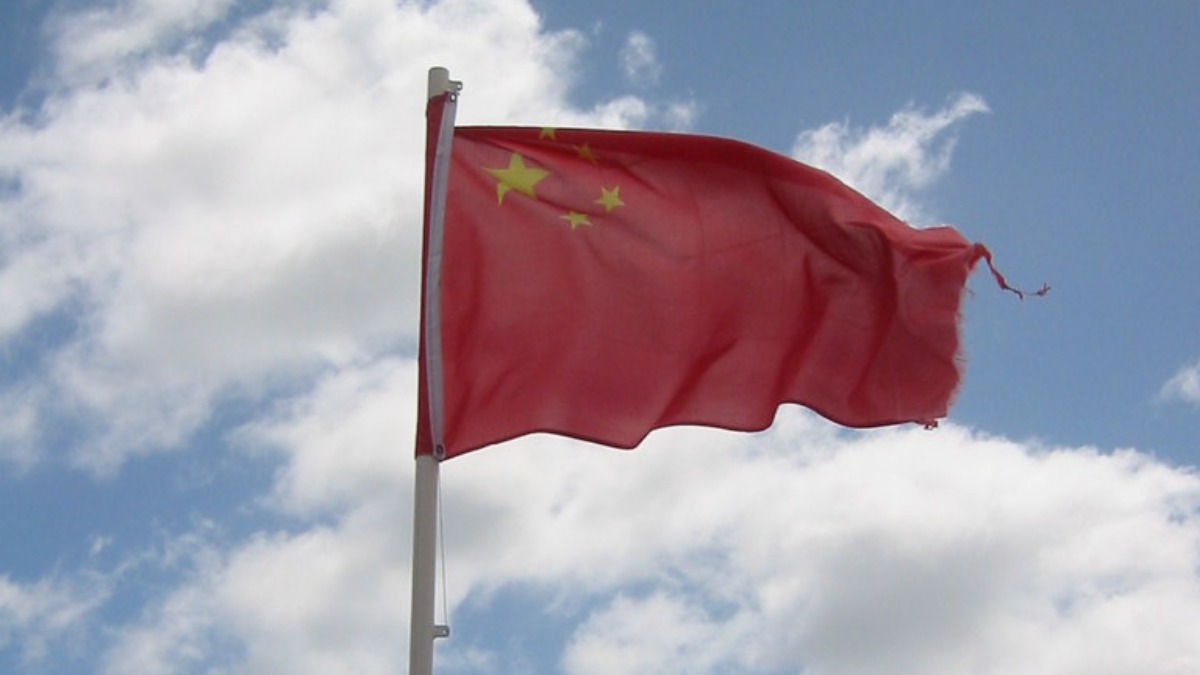

Iran has begun charging commercial vessels transit fees in Chinese yuan for passage through the Strait of Hormuz, a move that targets the long-standing dominance of the U.S. dollar in global oil trade. The development comes as the U.S.-Israel war on Iran has roiled global energy markets for over a month, providing an opening for Tehran and Beijing to advance a shared agenda. As detailed by Al Jazeera, both governments have long argued that Washington weaponizes dollar dominance to impose pressure through sanctions and financial leverage.
The Strait of Hormuz carries roughly one-fifth of global oil and liquefied natural gas supplies daily. About 80% of global oil transactions are typically settled in U.S. dollars, according to a 2023 estimate from JP Morgan Chase, making the waterway a strategically significant pressure point for any challenge to that system.
Under what Iranian officials are describing as a de facto toll booth regime, commercial ships are being charged transit fees in yuan. At least two vessels had made payments in yuan as of March 25, according to Lloyd’s List. China’s Ministry of Commerce acknowledged that reporting in a social media post, and Iran’s embassy in Zimbabwe separately declared it was time to introduce the “petroyuan” into the global oil market.
China and Iran have been building toward this for years
The petroyuan refers to oil and gas trade settled, financed, or priced in Chinese yuan rather than U.S. dollars. Beijing has spent years developing the financial and payments infrastructure needed to support yuan-based trade, and growth in cross-border platforms and non-dollar settlement experiments has added momentum. China purchases over 80% of Iran’s oil exports, often at discounted rates widely believed to be settled in yuan, and in return Iran imports significant volumes of Chinese machinery, electronic equipment, chemicals, and industrial components.
During the first two weeks of the war, Iran exported between 12 million and 13.7 million barrels of crude, with most heading to China, flows that have remained broadly similar to pre-conflict levels according to data analytics firms. The yuan toll arrangement fits within a broader context of U.S. energy policy pressure, including a separate dispute over Washington’s relationship with the International Energy Agency that has been unfolding since February.
For both countries, boosting the yuan’s role is a practical win. It allows them to sidestep U.S. sanctions that typically operate through the dollar-based financial system and reduces the cost of trade between the two nations, a relationship underpinned by their 25-year strategic partnership signed in 2021. Bulent Gokay, a professor of international relations at Keele University, noted that Iran clearly understands the importance of challenging U.S. financial dominance, while for China the move aligns with Beijing’s goals of creating a more multipolar financial world in which the dollar’s central role is counterbalanced by emerging powers.
Chinese President Xi Jinping expressed in a 2024 speech his hope that the yuan would become a common currency in international commerce and achieve global reserve currency status. Russia, Iran, and Venezuela have already pushed parts of the oil market toward alternative currencies as a result of U.S. sanctions, and the current Hormuz crisis is accelerating that trend. The convergence of Iran’s physical control over the strait and China’s financial infrastructure has given the petroyuan its most operationally significant test to date.
The yuan still faces significant structural limitations. Unlike the dollar, it is not freely convertible due to Beijing’s strict capital controls, meaning businesses cannot exchange it across borders at will. The Chinese government’s control over financial institutions has also hindered wider adoption by creating perceptions of limited market transparency. Last year, the dollar accounted for 57% of global foreign exchange reserves compared to around 2% for the yuan, according to the IMF. Only 3.7% of cross-border trade was settled in yuan in 2024, though that figure has risen from less than 1% in 2012, according to S&P Global.
Alicia Garcia-Herrero, chief economist for the Asia Pacific at Natixis, said the use of yuan in the Strait adds incremental pressure and normalizes alternatives in energy flows but is not what will actually de-dollarize the world. She explained that meaningful de-dollarization would require the participation of Gulf states, all of which have priced their oil in dollars since the 1970s in exchange for U.S. security guarantees. Hosuk Lee-Makiyama, director of the European Centre for International Political Economy, argued that this constraint may matter less to Iran than to other actors, since China buys nearly all of Iran’s oil and their trade is effectively in balance, with China supplying the machinery and industrial goods Iran cannot obtain elsewhere. He described China as perhaps the closest the world has seen to a manufacturing one-stop shop, a position that past challengers to dollar dominance such as Europe and Japan never held.
Dan Steinbock of the consultancy Difference Group described the yuan’s advance as a question of gradual erosion rather than abrupt substitution, with growing use in specific sectors chipping away at dollar dominance over time. Kenneth Rogoff, an economics professor at Harvard and former chief economist at the IMF, said much will depend on the war’s endgame, noting that if Iran and China prevail under most scenarios it would encourage countries to diversify away from the dollar financial system to protect themselves from U.S. sanctions exposure. He has also suggested that the dollar’s dominance may have already peaked. The Hormuz transit fee arrangement has drawn additional attention to the economic impact of the ongoing conflict on U.S. consumers, amid separate reporting on why Americans are paying higher fuel prices despite the U.S. being the world’s largest oil producer.
Whether the petroyuan expands beyond a limited number of strategic trades will ultimately depend on whether more oil exporters accept yuan, whether China strengthens its yuan-based financial infrastructure, and whether geopolitical pressures continue to push countries toward alternatives to the dollar.





Published: Apr 8, 2026 06:30 am