



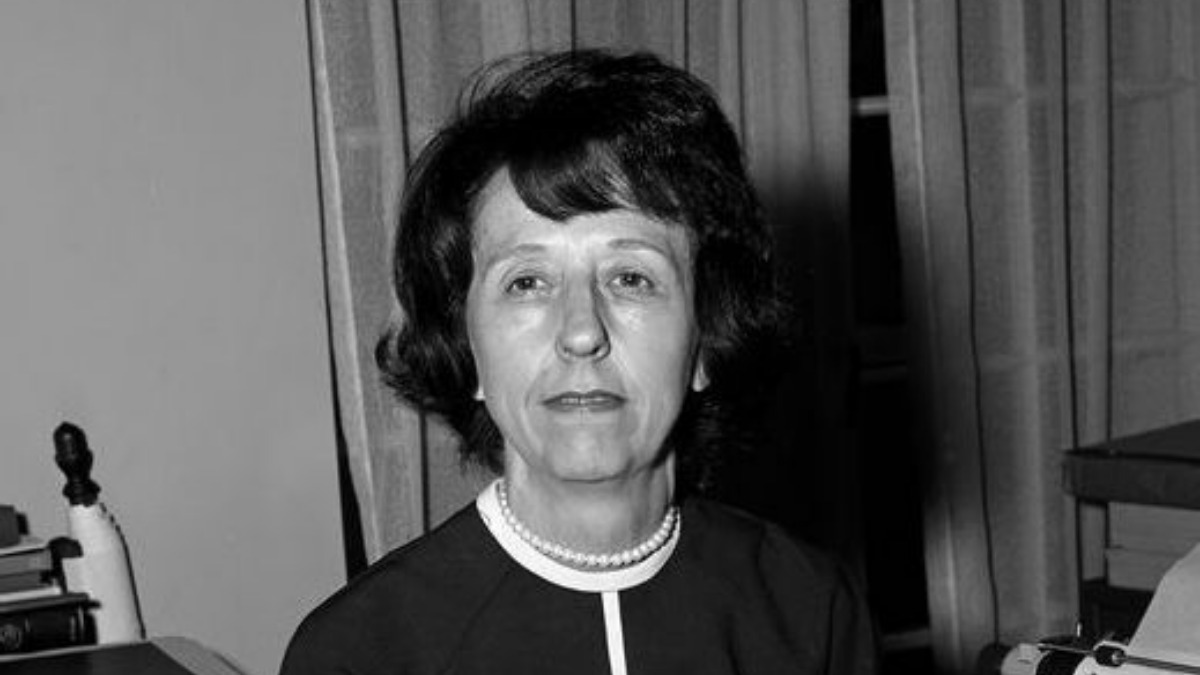

JFK’s longtime personal secretary, Evelyn Lincoln, alleged in an unpublished manuscript that his 1963 assassination was a “deliberate, professional, political murder” orchestrated by a group within the government. The revelation comes from an 11-page addendum to her third, never-before-seen book, titled “I Was There,” discovered posthumously in Boston’s JFK Library. As detailed by LADbible, the document had never been made public during her lifetime.
Lincoln served as Kennedy’s personal secretary beginning before his Senate election in 1953, continuing through his entire presidency. She was riding in one of the trailing cars on November 22, 1963, when Kennedy was shot dead in Dallas, Texas. Despite that proximity, Lincoln never publicly shared her theories about the assassination and published two memoirs that omitted them entirely.
Jefferson Morley, editor of the blog JFK Facts, uncovered the document and noted that Lincoln’s silence during her lifetime adds weight to her claims. “This is somebody who knew his world, she lived in his world, and so her testimony is important,” Morley said. He argued that because Kennedy trusted her implicitly, her thinking often reflected his own.
Her private suspicions pointed at some of the most powerful names in Washington
Lincoln’s writings make clear she did not believe Lee Harvey Oswald acted alone. She stated her suspicions had “smouldered in her mind all of these years” and identified a wide list of potential rivals she believed wanted Kennedy removed, including far-right groups, criminal gangs, anti-civil rights organizations, and what she described as “Texans who hated him.”
She also pointed to specific powerful figures she believed had “an axe to grind” with Kennedy. Among them were FBI chief J. Edgar Hoover, Teamsters Union president Jimmy Hoffa, and Madame Nhu, the de facto First Lady of South Vietnam.
Lincoln found it notable that so many of these factions had people in or around Dallas at the time of the assassination, writing that the atmosphere there was “filled with hatred and suspicion,” making it “ripe to pull this off.” Amid ongoing scrutiny of government officials and legal missteps, Lincoln’s account is a reminder that institutional distrust runs deep in American political history.
Lincoln alleged that some of these factions united against Kennedy after he refused to approve an invasion of Cuba, as they were “constantly conspiring to overthrow Castro.” She claimed a “linkage grew between the Mob, the CIA and right-wing extremists” over what they viewed as Kennedy’s moderation toward Cuba, his civil rights proposals, his push for peace, and the Kennedys’ pursuit of organized crime. This, she wrote, made it “logical to conjecture that these elements could have formed a conspiracy to assassinate the President.”
In a particularly striking claim, Lincoln alleged that Kennedy’s successor, Lyndon Johnson, initially “maintained that there had been a conspiracy” but then “hurriedly set the wheels in motion to build a case against Lee Harvey Oswald as being the lone assassin.” The idea of a sitting president reshaping the official record echoes broader patterns of Washington doing things with no precedent, including more recent instances of unprecedented moves by the executive branch.
Lincoln’s definitive conclusion, drawn from her 12 years as Kennedy’s personal secretary, was that his death in Dallas was “a deliberate professional political murder, planned by a group in government who wanted him removed from office.”




Published: Mar 28, 2026 04:00 pm