



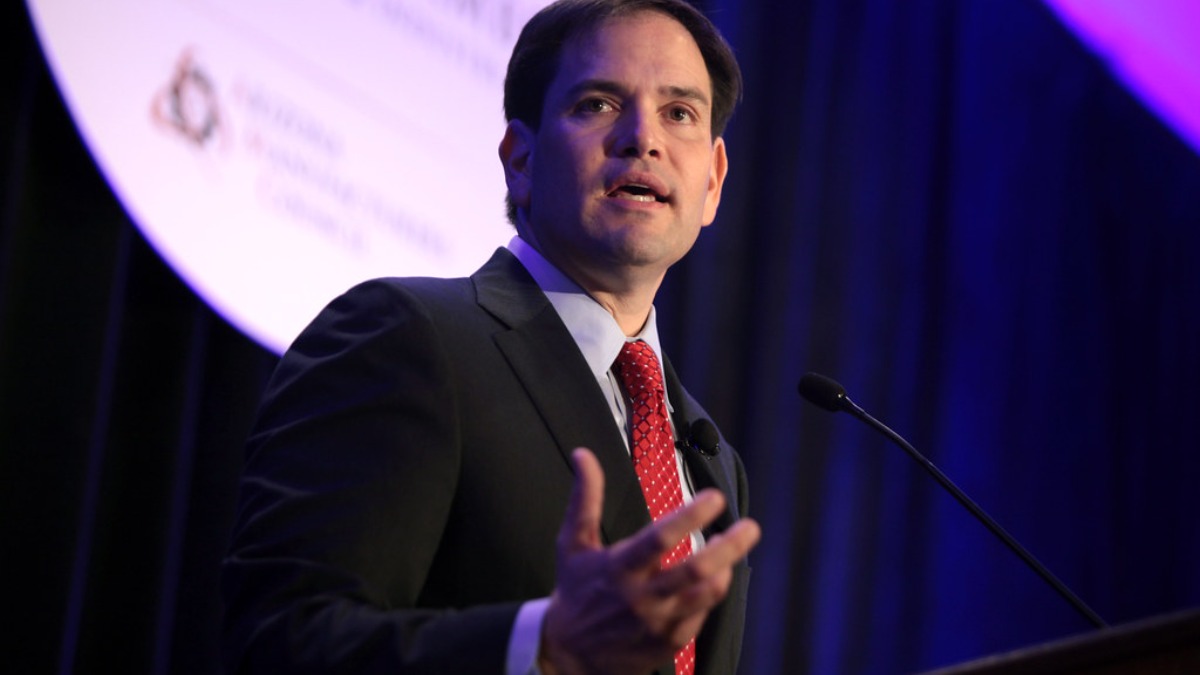

Secretary of State Marco Rubio has directed U.S. diplomats around the world to push foreign governments to quickly diminish the capabilities of Iran and its aligned terrorist groups, as reported by ABC News. This mandate to all diplomatic and consular posts comes amidst an “elevated risk of attack” from Iran and its proxies, according to a private cable that’s marked sensitive but unclassified.
The directive, an “action request” titled “Elevated Concern of IRGC Activity,” refers to Iran’s Islamic Revolutionary Guard Corps. It instructs U.S. officials to deliver this urgent message at the highest appropriate level by March 20.
The cable emphasizes that a combined approach is the most effective strategy for countering the threat. It’s clear that the administration believes a united front is key, stating, “We assess that the Iranian regime is more sensitive to collective action than unilateral action, and that joint pressure is more likely to compel behavior change by the regime than unilateral actions alone.”
This move fits right into President Trump’s broader efforts to build international support for a military campaign against Iran
The administration has been particularly focused on assembling a coalition to fully open the Strait of Hormuz. President Trump himself mentioned that a list of countries agreeing to help would be announced pretty soon. The cable really drives home the urgency, urging diplomats, “We must act while international attention is focused now to end the Iranian campaign of terror in the Middle East and globally. Do not allow this critical movement to pass.”
While Rubio’s communication doesn’t go into specific details about why the risk of attack is elevated right now, it certainly stresses the need for immediate, coordinated action. A State Department spokesperson commented on the situation, saying, “President Trump is focused on securing peace in the Middle East. The IRGC, Hizballah, and other Iranian backed proxies destabilize government and undermine regional peace.”
Diplomats have also been given other crucial messages to deliver. They’re reminded of the Iranian regime’s long history of destabilizing the Middle East and beyond. This includes its support for groups like Hezbollah, Hamas, and various Iraqi militias. The cable also outlines the goals of “Operation Epic Fury,” which aims to “neutralize Iran’s nuclear program, destroy its ballistic missile program, disrupt its proxy networks, and diminish its naval capabilities.”
Interestingly, the cable also suggests that, at the post’s discretion, these advocacy efforts should be coordinated with Israeli diplomatic counterparts. However, the talking points provided “may not be left behind,” which means diplomats can’t just hand over a document; they have to deliver the message verbally.
In countries that haven’t yet designated the IRGC and Hezbollah as terrorist organizations, diplomats are specifically directed to encourage their governments to “swiftly” do so. The cable provides some compelling arguments to make that case. It argues that such a designation would intensify pressure on the Iranian regime, limiting its ability to sponsor terror activities globally that jeopardize the safety and security of populations.
The cable highlights that “The IRGC has directly orchestrated terrorist and assassination plots on foreign soil and engaged in ongoing espionage and influence operations.” These are described as “intentional acts designed to intimidate populations and inflict harm on your civilians.”



Published: Mar 17, 2026 04:30 pm