



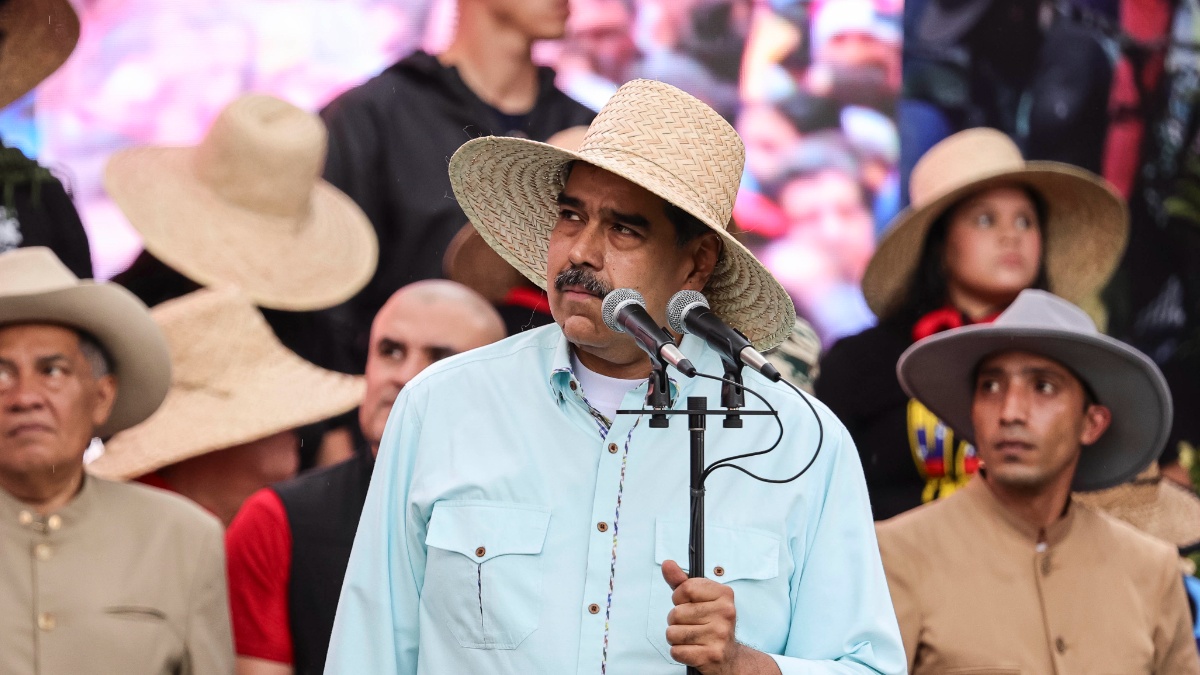

Nicolás Maduro, the President of Venezuela, has completely dropped his tough-guy act, announcing he is now open to talks with the Trump administration regarding drug trafficking and, most surprisingly, the country’s vast oil reserves, as per The Hill. This is a stunning reversal, especially considering how vehemently Maduro has previously resisted any interference from the United States.
It seems the intense pressure campaign waged by President Trump’s administration is finally forcing the Venezuelan leader to the negotiating table. Maduro made his intentions clear during a recent interview, laying out the terms for American investment. “The U.S. government knows, because we’ve told many of their spokespeople, that if they want to seriously discuss an agreement to combat drug trafficking, we’re ready,” Maduro stated.
He then delivered the real shocker regarding the nation’s most valuable asset: “If they want oil, Venezuela is ready for U.S. investment, like with Chevron, whenever they want it, wherever they want it and however they want it.” Right now, Chevron is the only U.S. oil company that still exports Venezuelan oil to the United States, so opening the door for broader investment is a massive concession.
Maduro might be trying to keep the door open for dialogue rather than escalating tensions further
This sudden willingness to negotiate comes after the Trump administration significantly ramped up its military and economic pressure against the strongman. The U.S. has established a massive military presence in the U.S. Southern Command, known as Southcom, and has been actively disrupting drug operations in the region.
The U.S. military has been blowing up alleged drug-smuggling vessels in both the Caribbean and the eastern Pacific since early September. The administration has conducted a minimum of 35 boat strikes. Officials argue these strikes are necessary to thwart the flow of illegal drugs, claiming they have killed at least 115 “narco-terrorists” in the process.
If the boat strikes weren’t enough, the U.S. has also imposed a naval blockade on all sanctioned oil tankers flowing in and out of Venezuela, effectively choking the nation’s primary source of revenue. The pressure campaign escalated even further when the CIA conducted a drone strike on a Venezuelan port facility. This mission marked the first U.S. land strike inside Venezuela since the massive military buildup began in the Southcom area.
Despite his sudden openness to cooperation, Maduro is still sticking to his narrative that the U.S. is trying to force regime change to gain access to the oil. “What are they seeking? It is clear that they seek to impose themselves through threats, intimidation and force,” Maduro said. When directly asked about the recent CIA drone strike on Venezuelan soil, Maduro completely dodged the issue. He simply said the strike “could be something we talk about in a few days.”
We know President Trump and Maduro had a phone conversation back in November, so the lines of communication are clearly open, even if the relationship is highly antagonistic. Given the current military and economic squeeze, Maduro seems to have realized that talking about oil and drug trafficking might be his only way to relieve some of the heat.





Published: Jan 2, 2026 07:30 am