



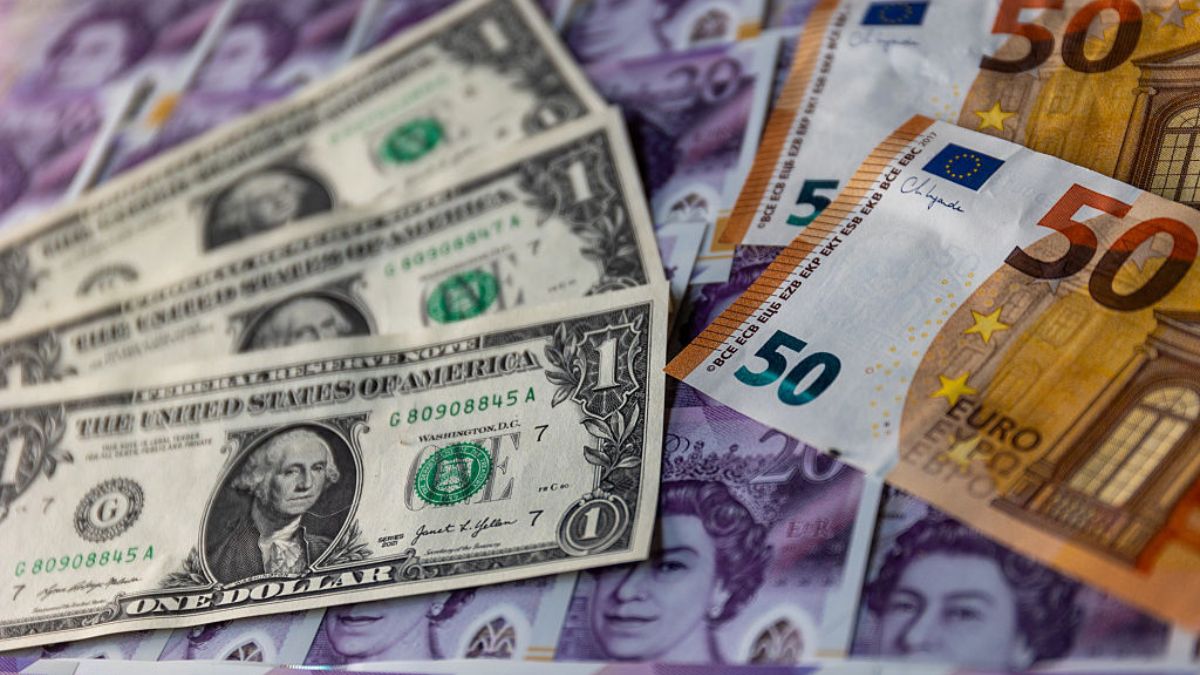

A scary new chart showing the rapid decline of the U.S. dollar’s value has gone completely viral, sparking intense conversations about economic stability across the country. The chart, which was shared on X by market data outlet Barchart, showed a truly sharp drop between January 20 and January 25.
During that five-day period, the U.S. dollar index plunged from approximately 99.10 down to 97.14, according to Newsweek. This index is incredibly important because it measures the dollar’s value relative to its biggest trading partners, including the euro, the Japanese yen, the Canadian dollar, and the British pound sterling. Generally, the index gives us a crucial snapshot of the dollar’s health and how it impacts prices here at home.
If you’re wondering why you should care about a two-point drop, you really need to pay attention. Financial experts say this decline suggests a major shift toward lower buying power for everyday Americans. This is awful news for your wallet. Financial literacy instructor Alex Beene didn’t mince words, calling this “an incredibly worrying trend.” He pointed out that the dollar’s rapid decline translates directly to less buying power for Americans.
What this means for your wallet
A weaker dollar generally means higher import costs and greater price inflation, which hits your grocery bill and gas tank immediately. Traveling abroad is also going to get much more expensive because your dollar buys fewer units of other local currencies. Mr. Beene warned that even more troubling are the long-term consequences “if other countries start to view the dollar as an unstable currency.”
Experts are linking this instability directly to recent policy decisions. Ryan Monarch, an economics professor at Syracuse University, noted that the dollar is depreciating because global investors are less confident in the United States providing stable policies geared toward macroeconomic growth.
He specifically cited recent policies like extremely high tariffs, increased government debt, and worries about inflation as major contributing factors. The administration’s aggressive tariff threats against European nations have particularly shaken investor confidence. It’s worth noting that the U.S. dollar declined by more than 10 percent during the first six months of President Trump’s second term.
The immediate public reaction online was one of shock and political commentary. When Barchart posted the chart with the caption “Timberrrrrrrrrrrrrr,” it quickly generated thousands of reactions. Florida Governor Ron DeSantis kept his reaction simple and impactful, posting the single word, “Ouch.” Another popular account commented on the chart, saying they were “Watching the dollar die in real time,” and asked whose policies were “to blame for this.”
This volatility really seems centered on confidence, or the lack thereof. Drew Powers, the founder of Powers Financial Group, acknowledged that while currency values constantly fluctuate, the recent downswing is concerning because it seems tied to political instability rather than just typical investment shifts.
He noted that the simultaneous rise of precious metals confirms the lack of trust. Political analysts have observed how Democrats are weaponizing inflation concerns against the current administration. “As we see gold and silver prices move to all-time highs while the dollar drops, it means there is not a lot of confidence in the U.S. right now,” Powers explained.
Mr. Beene advised that some savvy investors might look to investments like gold and silver to soften the blow, but he stressed that the decline is ultimately not a good thing for the American economy as a whole. Analysts are now waiting to see if this recent crash is just a momentary blip or the start of a much bigger, worrying trend that reflects a fundamental decline in confidence in the United States. Only time will tell if this downward slide stabilizes.







Published: Jan 27, 2026 12:15 pm