



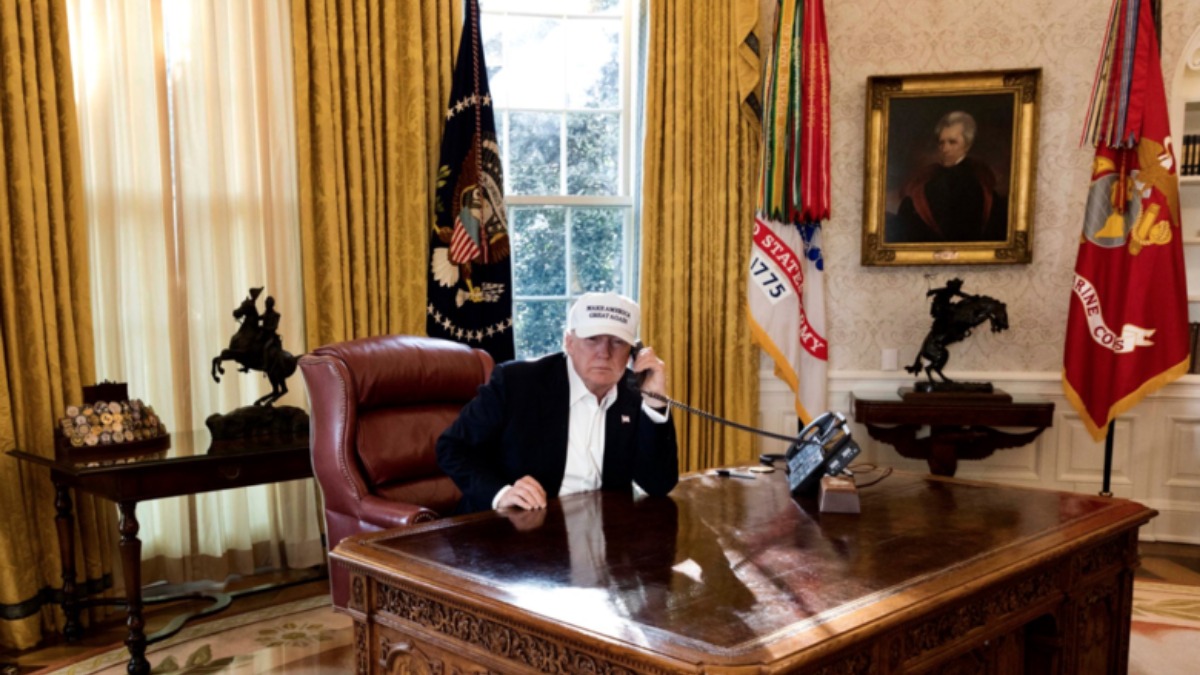

President Donald Trump issued a serious warning to Iran, threatening to strike the country’s bridges and power plants if the Strait of Hormuz is not reopened by Tuesday. He shared the message on Truth Social, demanding the reopening of the waterway through which a large portion of the world’s oil supply passes. Trump said targeting Iran’s civilian infrastructure would help bring down rising oil prices.
In his Sunday post, Trump wrote, “Tuesday will be Power Plant Day, and Bridge Day, all wrapped up in one, in Iran. There will be nothing like it!!! Open the F—in’ Strait, you crazy bastards, or you’ll be living in Hell – JUST WATCH! Praise be to Allah.” This is not the first time he has made such threats.
According to Mediaite, these threats have raised serious concerns among international law experts. A group of 100 experts issued a letter last Thursday warning that such attacks could potentially be war crimes, noting that international law protects objects essential to civilian survival.
Trump’s threats against Iran risk crossing clear lines in international law
Later on Sunday, Trump repeated his warnings in an interview with ABC senior political correspondent Rachel Scott. When asked about the timeline for a peace deal, he said that if no agreement is reached within 48 hours, “we’re blowing up the entire country.” He said the timeline should be “days, not weeks,” adding that Iran “has been decimated, decimated. And every day is going to get worse.”
He also said, “Every day they’re gonna have to build more bridges, and they’re gonna have to build more power plants and more everything else,” and that “there’s been no country that’s ever taken a pounding like that.”
This is actually the second time Trump has extended his deadline for Iran to fully open the strait. The current deadline is set for Tuesday at 8:00 PM ET. On March 26, Trump had announced a “pausing the period of Energy Plant destruction by 10 days” at the request of the Iranian government. There are also growing concerns that Trump isn’t receiving full briefings on the Iran conflict, with allies alarmed that his main briefing is a two-minute highlight reel.
In the same ABC interview, Trump pushed back on reports that he was considering “blowing everything up and taking over the oil,” saying: “there could be a deal, and there could also not be a deal. I don’t know. I have no idea what these people, they’re getting the s— beat out of them, and that’s, that’s all I can tell you.”
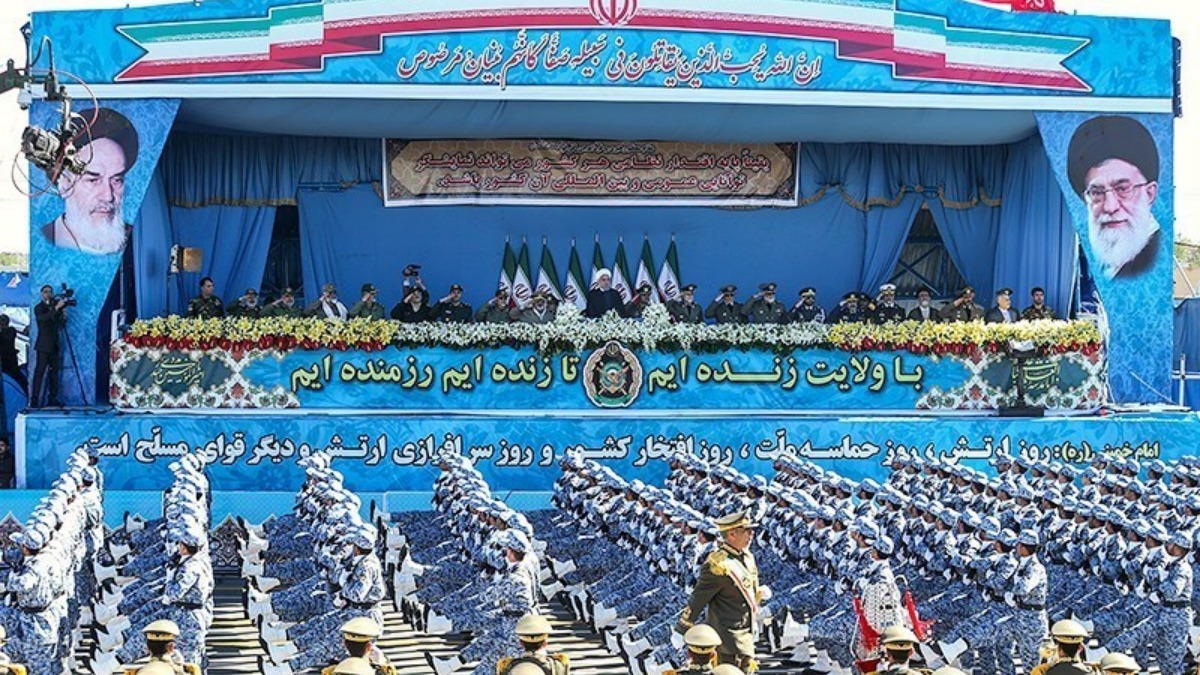
Iranian officials responded firmly. Mohammad-Bagher Ghalibaf, speaker of the Iranian parliament, wrote on X: “Your reckless moves are dragging the United States into a living HELL for every single family, and our whole region is going to burn because you insist on following Netanyahu’s commands.”
He added, “Make no mistake: You won’t gain anything through war crimes. The only real solution is respecting the rights of the Iranian people and ending this dangerous game.” Iranian Foreign Minister Abbas Araghchi stated that “Iran’s power is the Hormuz Strait,” explaining that while the strait is not fully closed, it is only open to “non-hostile” vessels, meaning ships from countries that do not support U.S. or Israeli military action against Iran.
He said, “We are in a wartime situation; the region is a war zone… There is no reason to allow the ships of our enemies and their allies to pass, but it is free for the rest.” He also expressed gratitude to Pakistan for its mediation efforts, saying Iran has “never refused to go to Islamabad,” but wants a “conclusive and lasting END to the illegal war that is imposed on us.”
Negotiations are ongoing, with the U.S. having sent a 15-point proposal to Iran through Pakistani mediation. However, both sides are giving very different accounts of the talks. Trump claimed at a March 26 cabinet meeting that Iran is “begging to make a deal,” while Iranian state media reported on March 25 that Iran had rejected the proposal, even as officials denied that talks were happening at all.
The situation at the strait has real consequences. The UN reports that 20,000 seafarers are currently stranded. Iran has allowed ships from friendly countries to pass, but has attacked vessels from countries it considers hostile.
On Saturday, Iran’s Islamic Revolutionary Guard Corps claimed it struck an Israeli-linked container ship, the MSC Ishyka, with a drone near the strait. Neither Israel nor the U.S. has publicly confirmed this. As the Iran war continues to escalate, Trump’s administration labeled a federal judge’s ruling a national security threat over a pause on his $400M White House ballroom.
Meanwhile, Araghchi responded to Trump’s comment about sending Iran “back to the stone ages” by writing on X: “There’s one striking difference between the present and the Stone Age: there was no oil or gas being pumped in the Middle East back then,” and asked whether Trump and Americans “are sure that they want to turn back the clock.”





Published: Apr 6, 2026 05:00 am