



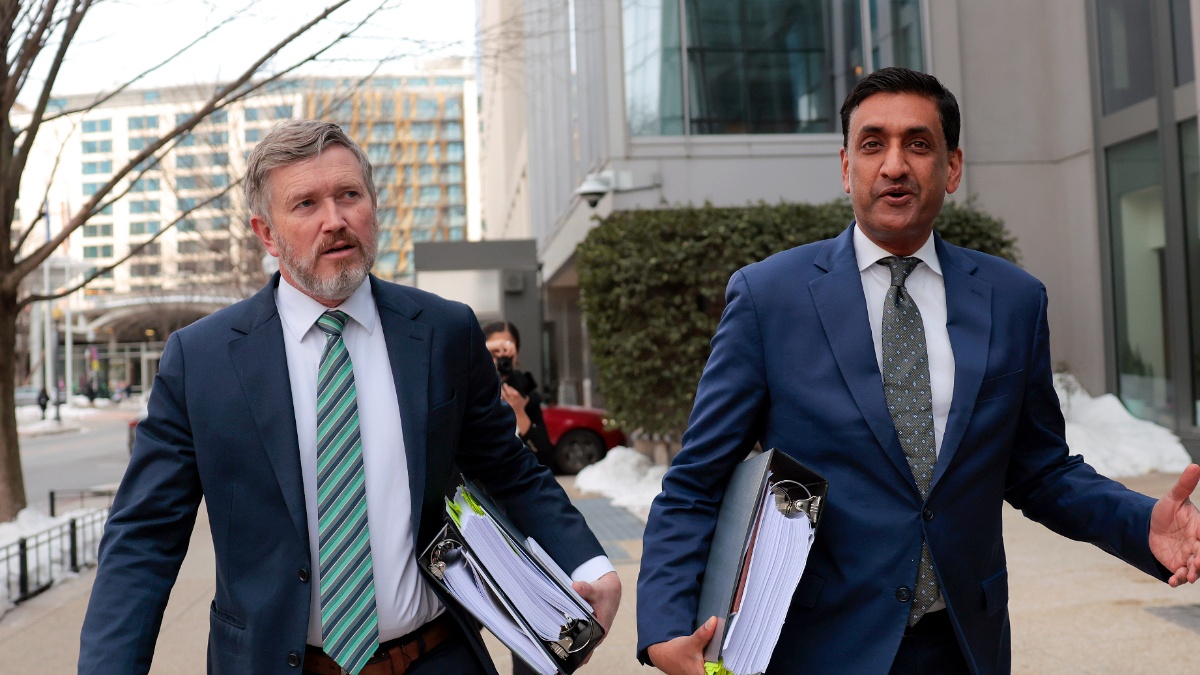

Representatives Thomas Massie (R-Ky.) and Ro Khanna (D-Calif.) just delivered a serious bombshell after reviewing the unredacted files related to convicted sex offender Jeffrey Epstein, confirming they found at least six names of individuals who appear “likely incriminated” but were improperly blacked out, as reported by The Hill. This move strongly suggests the Department of Justice made some massive errors in how they handled the mandated release of the documents.
Members of Congress were permitted for the first time to review the unredacted versions of all the Department of Justice files. Massie and Khanna are the two lead sponsors of the bill that forced the public release of the documents, giving them a vested interest in ensuring the files were handled correctly.
Massie told reporters he and Khanna spent just two hours sifting through millions of files and managed to identify six men whose names were redacted but whose inclusion in the documents suggests serious involvement in Epstein’s crimes. The two lawmakers didn’t name the individuals, but they confirmed these aren’t minor players. One man is a high-ranking official in a foreign government, and the other is a prominent individual right here in the US.
Khanna was quick to point out that this process isn’t meant to be a “witch hunt.” He stressed that simply being included in the files doesn’t mean someone is guilty. However, he emphasized that it wasn’t just Epstein and his associate Ghislaine Maxwell involved in these crimes. Khanna noted that “very powerful people who raped these underage girls, or showed up to the island or showed up to the ranch or showed up to the home knowing underage girls were being paraded around” need to be held accountable.
Massie is holding off on releasing the names himself, stating he wants to give the DOJ a chance to fix the situation first
He believes the department needs to correct its own work. “I think we need to give the DOJ a chance to go back through and correct their mistakes,” he said, adding that “They need to themselves check their own homework.”
The lawmakers highlighted several specific and concerning flaws in the redaction process. Massie detailed one instance involving an FBI form that listed conspirators; the Justice Department actually blacked out the name and photo of one of the men listed on that form. The law that mandated the release allowed for narrow redactions, but lawmakers and victims have raised serious questions about the breadth of what was blacked out, especially since some victims’ names were not protected.
Even more concerning, Khanna learned that some materials came to the DOJ already redacted, which shouldn’t happen under the new transparency law. The review team was supposed to have unfettered access to all files. Khanna explained that the documents produced to Justice from the FBI and the original grand jury were redacted when the career attorneys got them.
He clarified that he doesn’t think this was “nefarious” on the part of the attorneys, but they clearly hadn’t received the full, unredacted production mandated by the law. The duo also shed light on one highly criticized email that had been released with redactions, in which one individual thanked Epstein for a “fun night” and added the chilling line, “Your littlest girl was a little naughty.” Massie confirmed that the sender of that specific email was a woman.
He suspects the DOJ’s algorithm for redaction might have just blacked out nearly every woman’s name, regardless of context. Massie stated that “We can’t parse if the person who sent that was a victim or not,” indicating the broad rules created confusion and prevented clarity. This is awful for transparency because it makes it impossible to discern if the woman was a participant or a victim forced to write the message.





Published: Feb 10, 2026 11:30 am