



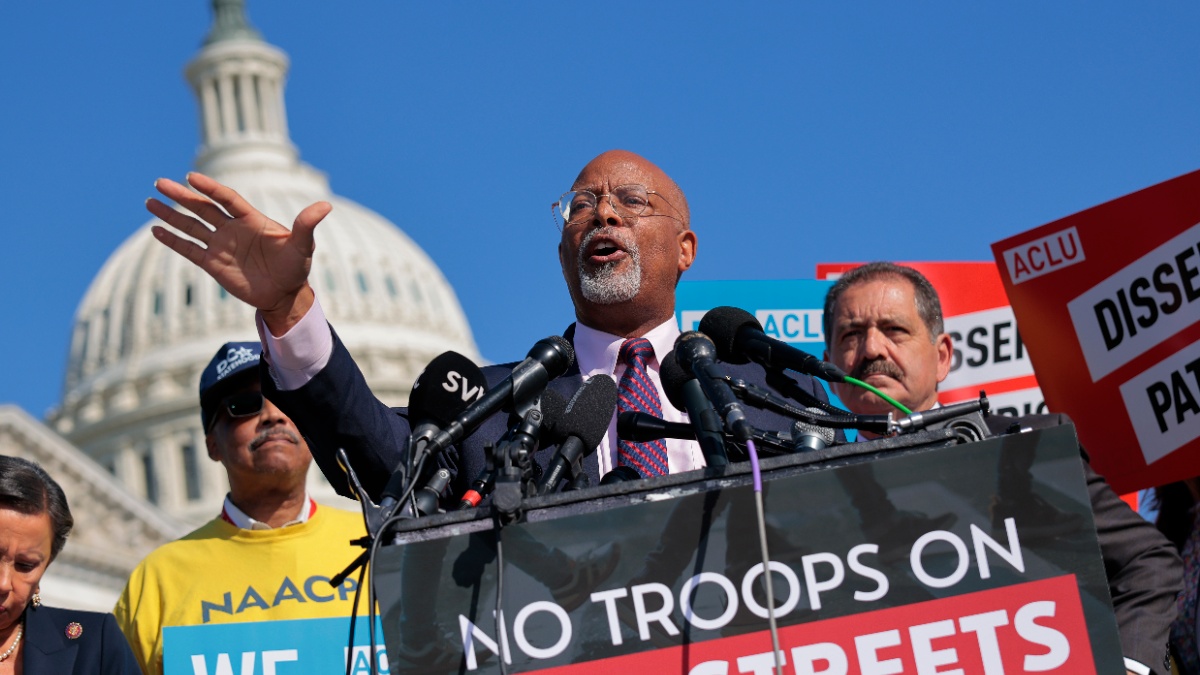

Democratic Representative Glenn Ivey of Maryland is firing back hard against the Republican push for national voter ID laws, labeling the entire effort a “solution in search of a problem,” as reported by The Hill. This week, the House is gearing up for a vote on the Safeguard American Voter Eligibility, or SAVE Act, which aims to standardize election security nationwide.
Ivey isn’t holding back on his criticism, stating that the GOP still hasn’t established that their proposed bill would even address any fraud that might be out there. “It’s a solution in search of a problem in one big way,” Ivey stated plainly. He noted that Republicans “never demonstrated any kind of fraud in the electoral system.”
Ivey believes the GOP lacks the necessary credibility to introduce legislation like this, especially following the 2020 presidential election. That election saw President Trump repeatedly claim he won, alleging widespread voter fraud in states that ultimately went to the opposing side, including Georgia and Pennsylvania. “If they really want to be credible on this, they need to make sure they’re doing everything they can to move away from the lies about 2020,” the Maryland Democrat added.
If Republicans truly want to be taken seriously on election integrity, Ivey argued, they need to distance themselves from those false claims
Despite Ivey’s strong dismissal, the push for stricter ID laws is rooted in the idea of establishing “commonsense principles that the American people support,” according to Representative Bryan Steil, a Republican from Wisconsin. Data shows that more than 8 in 10 Americans, and even more than 7 in 10 Democrats, actually support requiring everyone to show a government-issued photo ID when they go to vote.
The SAVE Act itself is pretty straightforward about what it requires. If passed, you’d need to show proof of citizenship just to register to vote, and you’d need valid identification to cast your ballot. Currently, 36 states across the country already have laws that request or require voters to show some form of ID at the polls. The remaining 14 states, along with Washington, D.C., use other methods to confirm who you are, typically relying on signature checks against registration records.
The proposed bill does offer several ways for citizens to prove their identity. Acceptable forms of proof of citizenship could include your valid passport, a birth certificate, or even a hospital record. If you’re using a photo ID, it must be issued by a federal, state, or tribal authority. For those who’ve served, a military ID card along with a military record of service would also satisfy the requirement.
However, Ivey’s core argument remains centered on the motivation behind the bill. He’s essentially challenging his GOP colleagues to prove the existence of the problem they claim to be solving. Until that happens, he views the SAVE Act not as a necessary safeguard, but as a political maneuver built on shaky ground.





Published: Feb 9, 2026 10:00 am