



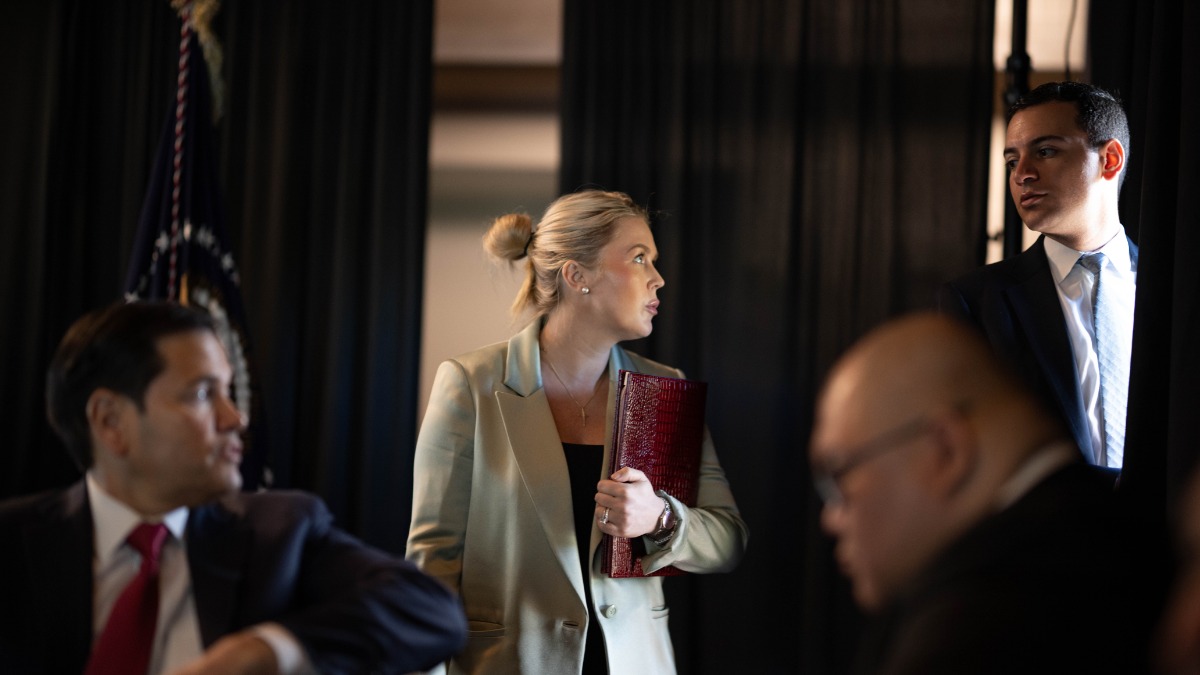

President Donald Trump has reportedly been promising pardons to his top aides before his term ends, though the White House quickly dismissed these remarks as a joke. The issue has drawn attention, given the president’s track record of using his pardon power frequently since returning to office.
According to The Wall Street Journal, sources close to the administration say Trump has brought up the idea of pardoning his staff on multiple occasions. During one recent meeting, he reportedly joked that he would “pardon everyone who has come within 200 feet of the Oval” before he leaves office in January 2029.
He also reportedly discussed holding a press conference in the final days of his administration to announce mass pardons, talking it over with aides in his private dining room. Such pardons would protect officials from federal criminal charges for actions taken while serving the president. While Trump himself is shielded from prosecution for official acts under a 2024 Supreme Court ruling, his staff are not.
Trump’s history with pardons shows a consistent pattern of protecting political allies
This is not the first time Trump has floated the idea of pardoning aides for legally questionable actions. During his first term, he reportedly told immigration officials he would pardon them if they illegally blocked migrants from claiming asylum, though he never followed through.
After the January 6, 2021, Capitol riot, he considered issuing mass pardons to staff and campaign aides but ultimately decided against it; a decision he later told aides he regretted. Since returning to the White House in January 2025 after winning the 2024 election, Trump has been very active with his clemency powers.
One of his first acts was pardoning 1,500 people charged or convicted in connection with the Capitol attack. In the 445 days since, he has issued over 1,600 grants of clemency in total, many of which have gone to political allies, campaign donors, or people connected to them.
Meanwhile, Trump’s economic record under scrutiny from new GDP data has added another layer of pressure on his administration. Among the more controversial pardons, Trump pardoned former Honduran president Juan Orlando Hernández, who the Justice Department had previously described as being at the center of “the largest and most violent drug-trafficking conspiracies in the world.”
The pardon drew bipartisan criticism and also wiped out a case that had been prosecuted by Emil Bove, who later became Trump’s criminal defense attorney and is now a federal judge. Trump also pardoned Binance founder Changpeng Zhao, who had pleaded guilty in 2023 to “willful violations of anti-money laundering” laws.
Trump said administration officials told him Zhao had been a victim of a “witch hunt” under former President Joe Biden. Notably, Zhao still holds a stake in Binance, which has reportedly done business with World Liberty Financial, a cryptocurrency company owned by the Trump family.
This pattern echoes the final-days pardons issued by Trump’s predecessor, Joe Biden. Among his last acts in office, Biden granted preemptive pardons to members of his own family, including his siblings and their spouses.
He also pardoned Dr. Anthony Fauci, General Mark Milley, members of Congress who served on the House January 6 committee, police officers who testified before the panel, and staff who worked on the investigation. Separately, analysts have been paying close attention to Trump’s expanding military strategy in Greenland as another sign of the administration’s broader geopolitical ambitions.






Published: Apr 11, 2026 05:15 am