




Qatar announced that it had intercepted the latest in a series of missiles fired from Iran toward the country. This comes even as the White House insists Iran’s missile capacity is “functionally destroyed.” Saudi Arabia, the United Arab Emirates, and Bahrain also issued alerts around the same time, and a missile struck a car in Abu Dhabi, killing one person.
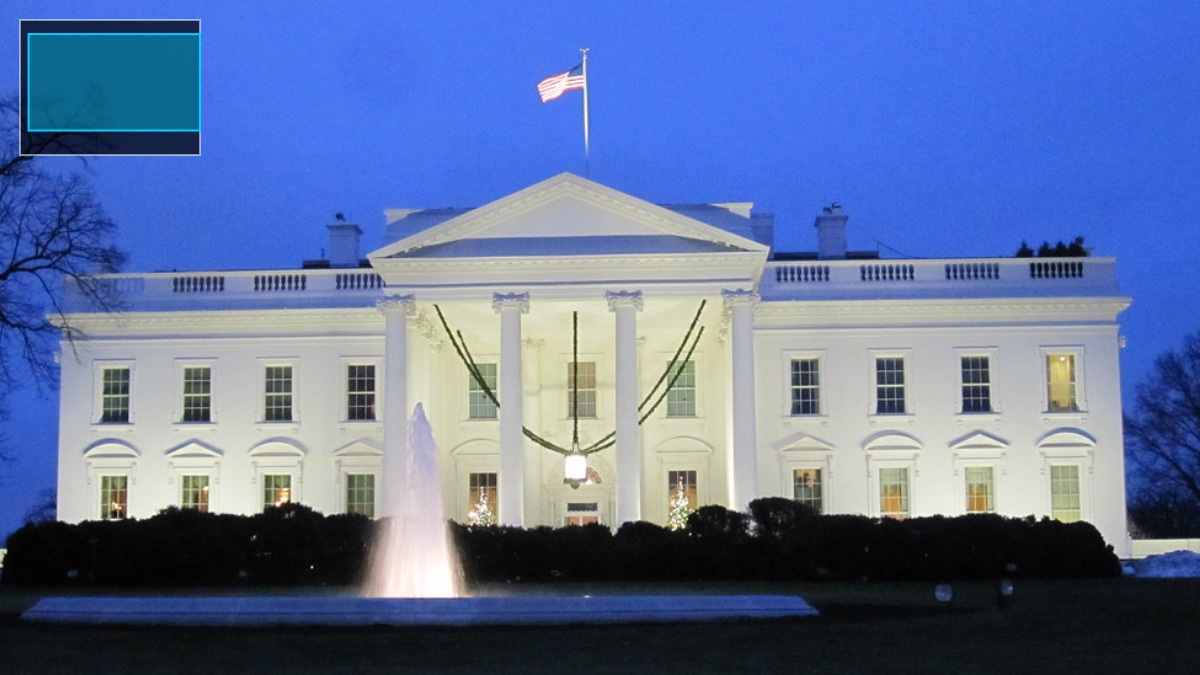
The White House declared on Saturday that “Iran’s ballistic missile capacity is functionally destroyed,” adding that Iran’s navy was assessed as “combat ineffective” and that the US and Israel have “complete and total aerial dominance over Iran.” This was part of what they called “Operation Epic Fury,” the war launched by Israel and the US on February 28. President Trump added on Sunday that US forces had “decimated” Iran’s drone manufacturing capacity.
According to Al Jazeera, the number of missiles and drones Iran has fired has dropped sharply since the war began. The Pentagon reported last week that missile launches were down 90 percent from the first day of fighting, and drone attacks had decreased by 86 percent. In the first 24 hours of the conflict, Iran launched 167 missiles and 541 drones at the UAE. By day 15, it fired just four missiles and six drones.
Iran’s strategy of harassment fire and economic pressure is keeping it relevant despite heavy losses
A key part of the US-Israel strategy has been to hunt down Iran’s missile launchers. Every missile launch creates a detectable signature, which satellites and radar systems can pick up. According to a senior Israeli military official, Israel has put up to 290 launchers out of service, out of an estimated 410 to 440.
But experts believe Iran still retains enough capability to inflict significant damage, as back in 2022, the US Office of the Director of National Intelligence assessed that Iran had the largest inventory of ballistic missiles in the region.
David Des Roches, an associate professor at the National Defense University in Washington, DC, points out that Iran is a vast country, and without boots on the ground, it is very difficult to identify all the launchers, especially those hidden or not linked to military sites before the war.
Des Roches believes Iran has lost the capacity for large volleys and has shifted to what he calls “harassment fire,” launching one or two missiles at a time, often targeting civilian and commercial infrastructure in Gulf countries.
The White House has faced scrutiny over other bold announcements recently, such as when it misidentified its own Founding Father statues before issuing a correction. Hamidreza Azizi, an expert on Iran, suggests Tehran’s strategy may be a “war of attrition,” with Iran calculating that Gulf countries and Israel might run out of defensive capabilities before Iran runs out of missiles. Iran has also decentralized its missile command, relying more on mobile launchers that are harder to detect and target.
Muhanad Seloom, an assistant professor at the Doha Institute for Graduate Studies, says, “It does not matter how many you launch as long as you maintain a credible threat,” adding that “it takes one successful drone to shatter a sense of security.” Iran has extensive experience producing cheap but effective drones, like the Shahed 136, which can be made quickly and in large numbers without complex launchers.
This fits into Iran’s broader strategy of asymmetric warfare, where it targets key infrastructure to inflict economic pain on stronger adversaries. President Trump, who has also been planning a UFC event at the White House, now faces mounting pressure on the international front as well. Vali Nasr, a professor at Johns Hopkins University, says that if Iran can keep raising global oil prices, it “will inflict equal or more damage to the US than American bombs in Iran.”









Published: Mar 17, 2026 04:45 pm