



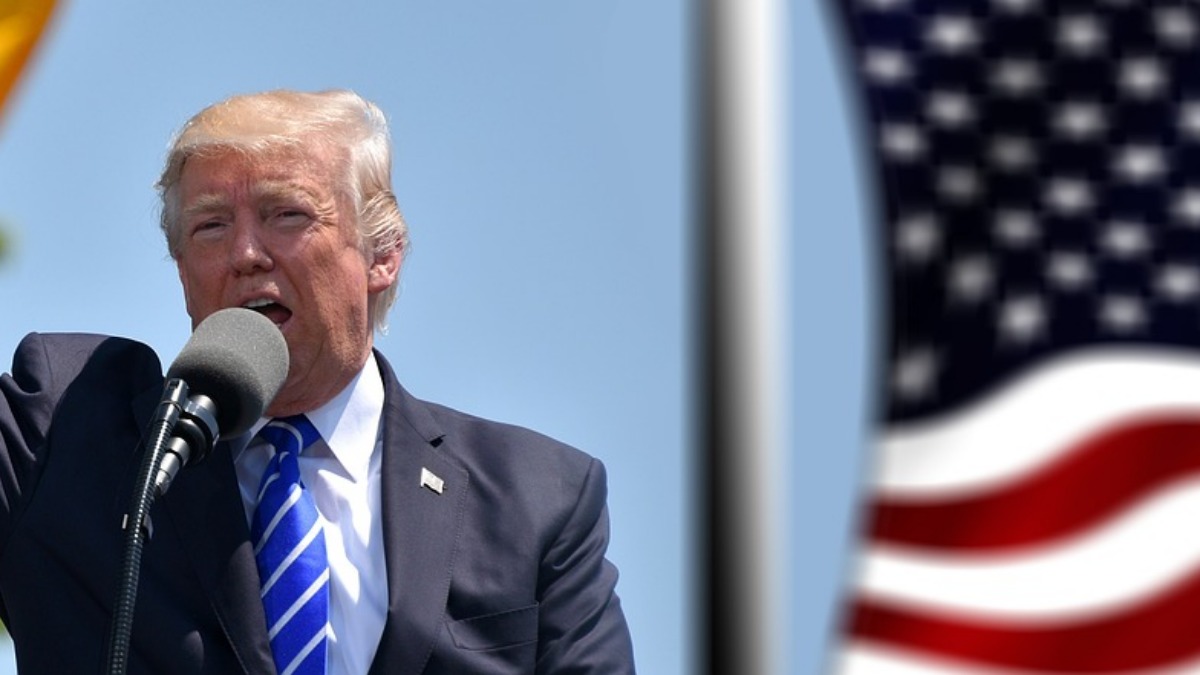

President Donald Trump appeared to rename the Strait of Hormuz after himself during a speech, before quickly correcting himself with an unusual explanation. The moment happened at the Future Investments Initiative, where Trump was speaking about the critical waterway.
“They have to open up the Strait of Trump– I mean, Hormuz. Excuse me. Such a terrible mistake,” Trump said, according to The Express, before adding, “The fake news will say, ‘He accidentally said–‘ No. There’s no accidents from me.” The remark caught the room off guard and made everyone do a double take.
This came just a day after Trump extended his deadline for Iran to open the Strait of Hormuz by 10 days, pushing it to April 6. He had also said that talks with Iran were “going very well,” pointing to ongoing diplomatic efforts in the region.
Trump’s Hormuz slip comes as global oil prices feel the heat from rising US-Iran tensions
The Strait of Hormuz is a key shipping chokepoint that connects the Persian Gulf to the Gulf of Oman and the wider Indian Ocean. It sits between Iran to the north and Oman and the UAE to the south, and is the only sea route out of the Persian Gulf for several major oil-producing countries. About 20% of the world’s oil and liquefied natural gas passes through it, making it central to global energy security.
The current tensions in the region have pushed global fuel prices higher. Recent conflict involving the US, Israel, and Iran has led to ships being attacked, short-term closures of shipping lanes, and a significant drop in vessel traffic through the strait. Iran’s parliament speaker has also threatened Treasury bond investors as military targets, a move that has rattled financial markets.
Iran has a history of threatening or disrupting commercial shipping in the strait, often using it as leverage when regional tensions rise. Because of this, the United States, along with several European and Asian nations, keeps a steady naval presence in the area to protect the flow of ships through this narrow but essential route.
The US has also been deploying elite airborne troops to the Middle East as part of its broader military posture in the region. Trump has also been careful not to call the ongoing conflict with Iran a “war.” He instead refers to it as a “military conflict” or a “military operation,” saying there is a specific “legal reason” for using that language.
In a separate development, Iran’s UN ambassador in Geneva, Ali Bahreini, said that Tehran will “facilitate and expedite” the movement of humanitarian aid through the Strait of Hormuz. He posted on X that this reflects “Iran’s continued commitment to supporting humanitarian efforts and ensuring that essential aid reaches those in need without delay.”





Published: Mar 28, 2026 10:45 am