



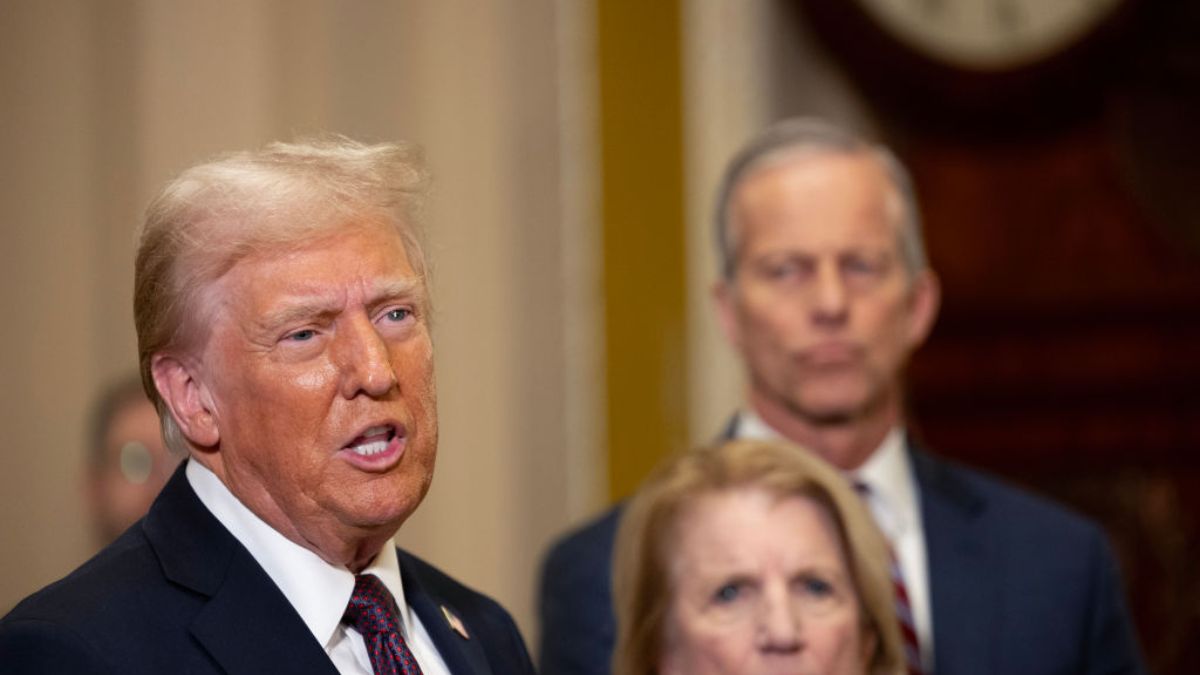

The SAVE America Act, a major election overhaul bill, has reached 50 votes in the Republican-controlled Senate. However, it still faces a big hurdle: the 60-vote filibuster rule, which Democrats are expected to use to block it.
According to NBC News, the bill aims to set national voting rules, requiring proof of U.S. citizenship when registering to vote and a photo ID when casting a ballot. For mail-in voters, a copy of a photo ID must be included with the ballot. The bill already passed the House last week, and President Trump has fully backed it, even calling for the filibuster to be removed so the bill can become law.
A key moment came when Senator Susan Collins, a centrist Republican from Maine, became the 50th senator to support the bill. Collins said, “I support the version of the SAVE America Act that recently passed the House.” She noted that requiring an ID at the polls “is a simple reform” that will improve election security and public confidence, and that the proof-of-citizenship rule only applies when someone registers to vote, not when they cast a ballot.
The filibuster remains the bill’s biggest obstacle, and not all Republicans are on the same page
While Collins’s support gives the bill a simple majority, the filibuster changes things significantly. But Collins has made it clear she does not support removing it, calling it “an important protection for the rights of the minority party.” This is not the first time a GOP lawmaker has broken ranks. A Republican senator who crossed party lines to limit Trump’s pardon power drew similar attention recently.
With the filibuster in place, the bill needs 60 votes to move forward. Senate Majority Leader John Thune has promised a floor vote but warned there are “not even close” to enough votes to eliminate the filibuster. Senator Mike Lee is pushing for a “talking filibuster” tactic to wear out Democrats and pass the bill with 51 votes, though Thune said it would require a “tremendous amount of effort, work and cooperation” with no guarantee of success.
Not all Republicans are on board either. Senators Lisa Murkowski of Alaska and Mitch McConnell of Kentucky have not backed the bill. Murkowski sees it as another example of “one-size-fits-all mandates from Washington,” while McConnell has long believed states should manage their own elections without federal involvement.
Democrats are strongly against the bill. Senate Minority Leader Chuck Schumer called it “Jim Crow 2.0,” arguing it would prevent more than 20 million eligible people from voting, particularly lower-income people and people of color. Democrats will “not let it pass in the Senate,” he said. Broader party tensions have also surfaced elsewhere, including the failed Democratic effort to charge six Republican lawmakers that collapsed under pressure.
An August Pew Research Center poll found that 83% of American adults support requiring government-issued photo ID to vote. Senator Lee wrote on X, “This is high-stakes legislation. Pass it and we save the republic. Don’t pass it and we roll the dice.”






Published: Feb 18, 2026 02:45 pm