



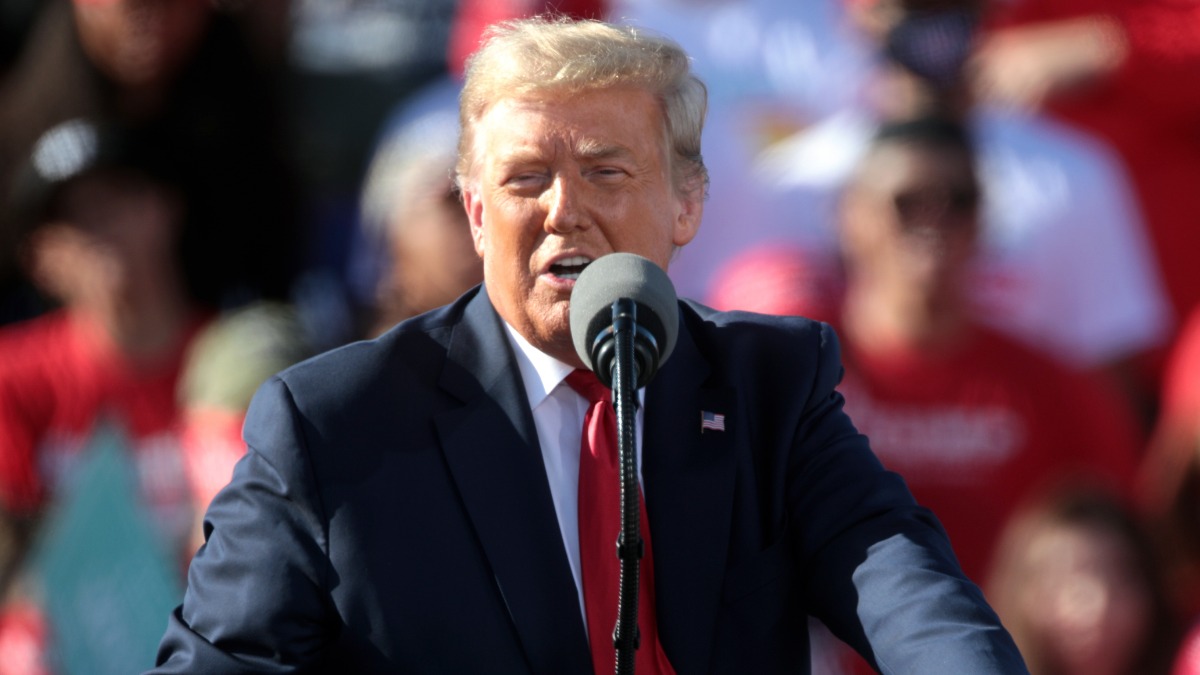

Oil prices surged past $107 a barrel after President Donald Trump‘s address on the Iran war. The speech was meant to calm markets, but instead created more uncertainty with his “two to three weeks” warning. Investors and analysts were left with more questions than answers.
In his 20-minute primetime speech from the White House, Trump said the “core strategic objectives” of the US-Israeli military operation were “nearing completion” after a month of conflict. He projected the war would last another two to three weeks, a timeline that immediately caught the attention of market watchers. He also repeated his threat to bomb Iran “back to the stone age” and urged Americans to view the war as an “investment” in their future.
Following the speech, benchmark Brent crude futures jumped 6.3% to $107.48 per barrel, and US West Texas Intermediate futures were up 5.1% at $105.23 per barrel, reports the Business Insider. All three major US stock futures also fell by more than 1%. This came after crude futures had actually settled lower earlier on Wednesday, partly on hopes that Trump would claim victory in the conflict.
The speech left too many critical questions unanswered, and markets reacted accordingly
Dan Pickering, chief investment officer at Pickering Energy Partners, noted on X that Trump’s comments were “much more hawkish” than markets had anticipated. He explained that if bombing continues for another two to three weeks, a return to normalcy could take months, and meanwhile, “the oil market tightens every single day.”
One major unanswered question is about Israel’s role. Israel is still actively attacking Iran and taking incoming drone and missile attacks, including an incident in Tel Aviv just hours before Passover on Wednesday. It remains unclear whether Prime Minister Benjamin Netanyahu’s government actually agrees with Trump’s proposed exit timeline for the Iran conflict.
According to the BBC, another significant omission was any mention of the 15-point peace plan that the White House was urging Iran to accept just days ago. Trump did not address it at all on Wednesday night, leaving questions about whether Washington is now dropping key demands, including the retrieval of Iran’s stockpile of enriched uranium.
The reopening of the Strait of Hormuz, one of the world’s busiest oil shipping channels which Iran has effectively closed, is a central issue in this conflict. Trump’s comments on it were conflicting, at one point demanding Iran allow tankers through, and at another telling allies to “go and just take it, protect it, use it for yourselves.” He then simply stated the strait would reopen “naturally” once the war was over.
Vandana Hari, founder of energy consultancy Vandana Insights, wrote on X that Trump offered “absolutely nothing new” and provided no clarity on when the war might end. Instead, she suggested, he’s signaling that “Iran better make a deal or the US will mount a bigger military campaign, won’t spare oil infrastructure.”
Trump also threatened further escalation, saying the US could expand strikes to additional targets if Iran does not agree to a deal, including potentially hitting critical infrastructure like power plants. He noted, “We have not hit their oil, even though that’s the easiest target of all, because it would not give them even a small chance of survival or rebuilding.”
Separately, Trump had earlier floated the idea of pulling out of NATO in an interview on Wednesday, though his remarks questioning NATO’s reliability were notably absent from his televised speech. Claudio Galimberti, chief economist at Rystad Energy, said Trump’s comments reflect a “characteristic ambiguity” that leaves multiple military options on the table, even as they point to a relatively short timeline for US involvement.
He cautioned that until there is greater clarity on the path to de-escalation, markets are likely to remain highly volatile. Meanwhile, the average price of gas in the US has topped $4 for the first time in nearly four years, with midterm elections approaching that will determine control of Congress.


Published: Apr 2, 2026 12:15 pm