



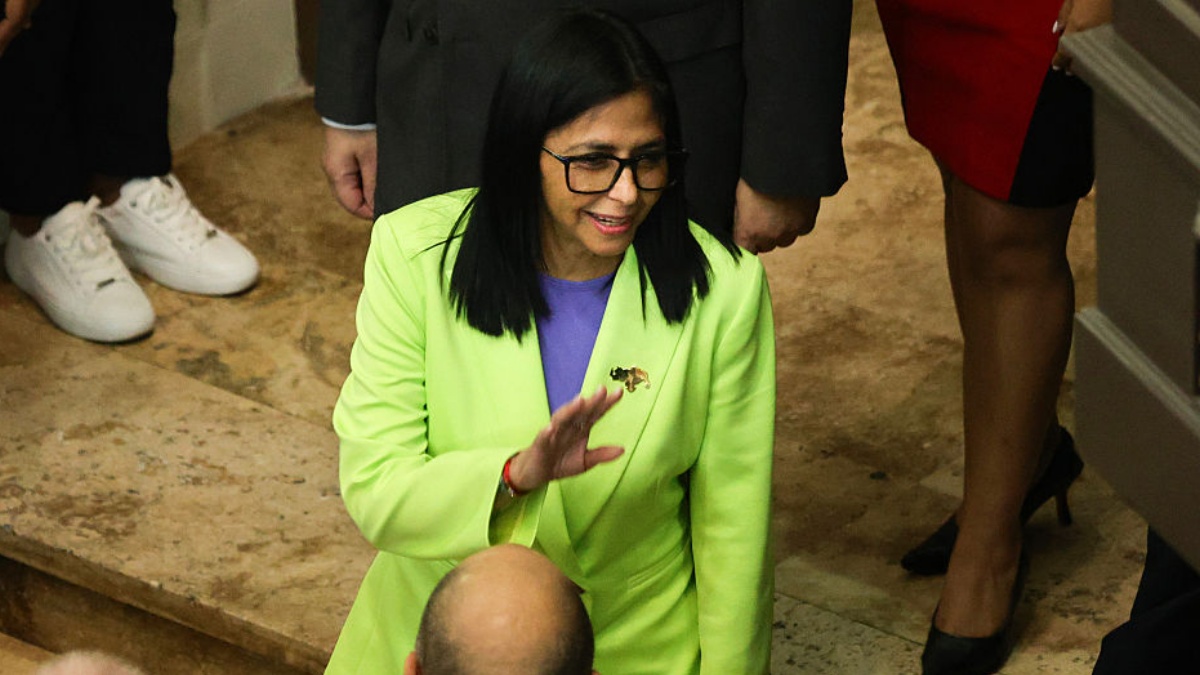

Acting Venezuelan president Delcy Rodríguez delivered a sharp rebuke of Washington this week, declaring she has had “enough” of U.S. interference in her country’s politics. As first highlighted by Fox News, the remarks were framed as a forceful defense of Venezuelan sovereignty.
Rodríguez made the comments during a speech to oil workers in Puerto La Cruz, Venezuela, which aired on state-run television. She demanded that the United States stop influencing Venezuelan politicians and insisted that domestic disputes should be resolved without outside involvement. This follows other political tensions, such as recent reporting on Xi Jinping’s most-trusted military ally accused of betraying China to the U.S.
While the rhetoric sounded defiant, it immediately raised questions about how much leverage Caracas actually has over Washington. Venezuela remains heavily constrained by U.S. sanctions and is deeply dependent on American decisions tied to oil exports.
The warning sounds strong, but the leverage runs the other way
During her address, Rodríguez accused Washington of issuing orders to Venezuelan political figures. She said the country had paid a “very high price” confronting what she described as fascism and extremism fueled by foreign meddling, framing the issue as one of national dignity and self-determination. At the same time, U.S. politics remains fraught, with events like the NRA ripping a Trump appointee over a shooting death claim illustrating domestic divides in Washington.
Despite that posture, Venezuela’s economy is closely tied to U.S. policy, particularly through oil licenses. The nation’s ability to export crude and generate revenue depends largely on permissions granted by Washington, leaving Caracas with limited room to maneuver.
Earlier in January, the White House announced an energy arrangement under which Venezuela would supply between 30 million and 50 million barrels of crude oil to the United States at market prices. At least one transaction under the deal has already been completed, with a reported value of about $500 million.
The dependence is underscored by recent legislative action in Caracas. Venezuela’s legislature approved an initial vote to overhaul the oil industry, loosening state control and allowing greater private investment, a sharp reversal of the nationalization measures introduced by Hugo Chavez in 2007.
Rodríguez has also attempted to balance her public criticism of Washington with outreach at home. Earlier in the week, she called for agreements with the opposition, saying there should be no political or partisan differences when it comes to peace in Venezuela, even as the country remains tied to U.S. decisions that directly affect its economic survival.



Published: Jan 26, 2026 07:45 pm