



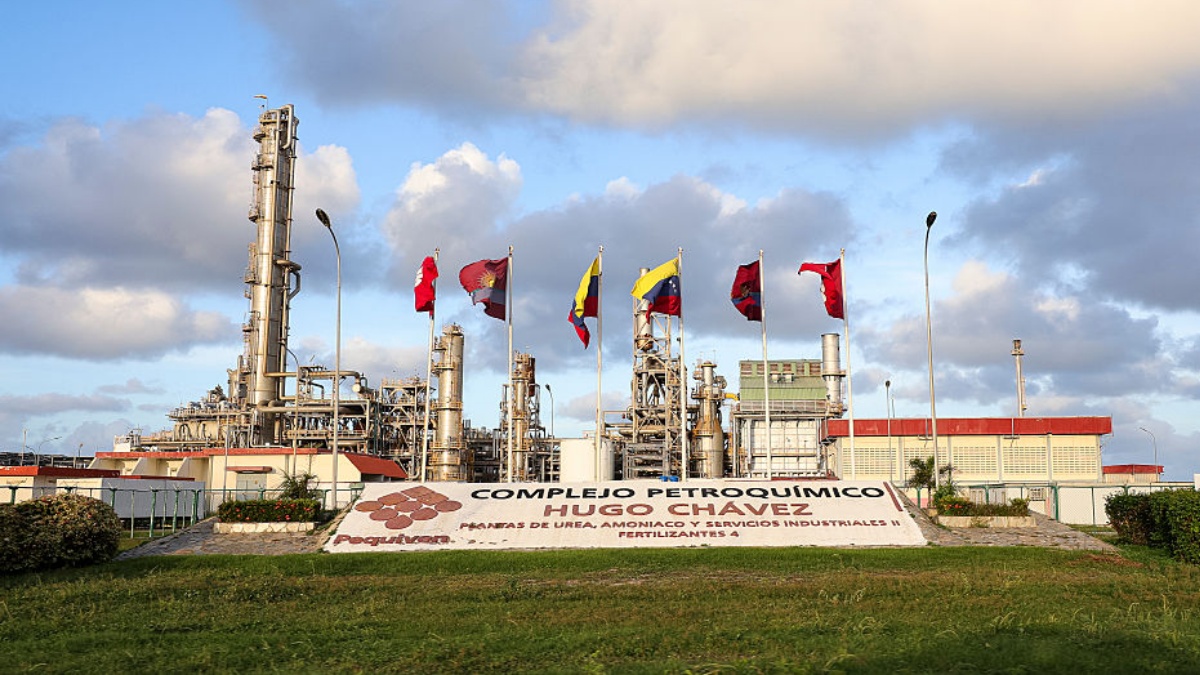

The US government is preparing to issue a broad new general license that would allow companies to explore for and produce oil and gas in Venezuela, potentially as soon as this week. The development, first reported by Reuters, signals a significant shift in Washington’s approach to the country’s energy sector.
The license would be administered by the Treasury Department’s Office of Foreign Assets Control and would expand on permissions granted last month. Those earlier approvals allowed US companies to load, sell, transport, store, and refine Venezuelan oil, while the new measure would open the door to exploration and production activities.
The push comes as Washington seeks to revive Venezuela’s oil output following the capture of former leader Nicolas Maduro during a US raid in Caracas on January 3. President Trump’s administration has emphasized bringing American firms into Venezuela’s energy industry as part of its broader strategy.
This marks a decisive escalation beyond limited oil handling approvals
White House spokeswoman Taylor Rogers confirmed the effort, saying the president’s team is working to ensure oil companies can invest in Venezuela’s oil infrastructure. This comes even as political tensions ripple through other headlines, like how a GOP senator is pushing for investigations into coordinated ICE protests that focus on domestic unrest.
President Trump has said he wants US oil firms to invest up to $100 billion to restore Venezuela’s energy sector to historic production levels. He has described a framework in which profits would be divided among Venezuelans, the United States, and participating companies, though no formal agreements have been announced, even as cultural reactions to the Super Bowl halftime choices draw attention, such as the conservative alternative show announcement.
Oilfield service companies stand to benefit most immediately if the license is issued. Firms including SLB, Baker Hughes, and Weatherford already hold limited licenses, but those do not allow them to operate drilling rigs or expand services, even as equipment remains idle inside the country. Venezuela had only two active drilling rigs as of December, highlighting how constrained production activity remains.
Long-term investment decisions remain complicated by Venezuela’s history of state control and asset expropriations. Over the past two decades, the government seized assets from foreign companies such as Exxon Mobil and ConocoPhillips, leaving Chevron as the only US major to maintain continuous operations through partnerships with state-owned PDVSA.
Although Venezuela approved reforms last week granting more autonomy to foreign producers and reducing taxes, executives have cautioned that stronger legal protections and political stability are still needed. Current oil output remains below 1 million barrels per day, down sharply from a peak of roughly 3 million bpd, despite exports rising to about 800,000 bpd in January following earlier authorizations.




Published: Feb 3, 2026 05:00 pm