



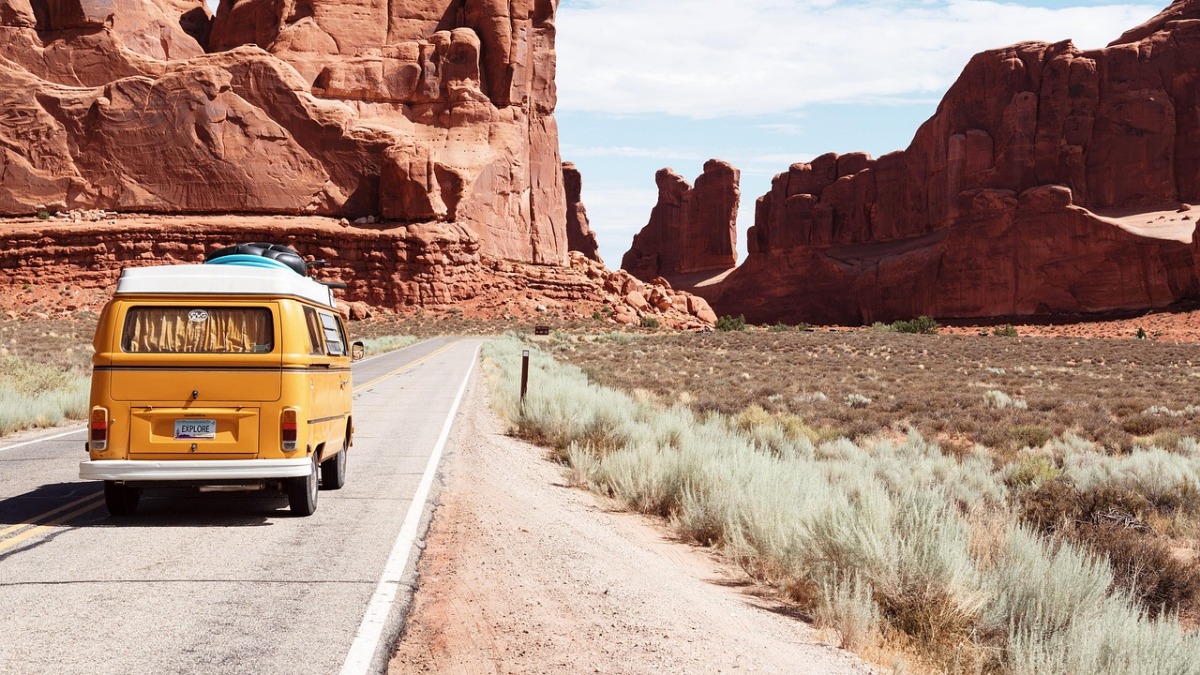

Karen and Myles Davies, a UK couple in their late 50s, have been traveling full-time across Europe for nearly a decade after walking away from their corporate careers. The story gained traction when covered by Fox News Travel, which reported that the pair now spend between $2,000 and $2,700 a month living and traveling in their motorhome, compared to the roughly $1,800 a month they previously paid in rent alone.
The couple left their jobs in 2016 intending to take a one-year break. Before making the decision, Karen Davies said the pace of running multiple businesses while working seven days a week had nearly broken them both. The plan was always to return, but they never did.
Known online as The Motoroamers, Karen and Myles have since covered 110,000 miles across 30 countries in their motorhome, which they call Scoobie. Their route has taken them through Norway, Portugal, Morocco, and most of mainland Europe in between.
Living in a small space turned out to be the point, not the compromise
Funding the lifestyle has required practical adjustments. Myles manages their income through investments and rental properties, while Karen works as a writer and yoga teacher. Karen has said the shift to simplicity was not just financial but personal, describing how living in a small space brought more meaningful moments, deeper connections with people, and richer experiences than their previous life had.
The trip has not been without friction. Brexit has added complexity to their travel, limiting how long they can legally stay in certain European countries as UK citizens.
They have also found that some popular destinations have grown more crowded over the years, which has pushed them toward less-visited routes. Navigating access and eligibility disputes while traveling has become a wider conversation, with a Frontier Airlines passenger removal case recently highlighting how contested airline decisions around passenger rights can become.
Their approach to travel itself has changed over time. Karen acknowledged that in the early years they drove constantly and prioritized covering distance. Now they favor slower, more immersive stays, with the emphasis on experiencing places rather than accumulating them.
The shift mirrors a broader pattern of viral stories capturing public attention around unexpected twists at live events, not unlike a dancing robot incident in China that shocked spectators when the machine suddenly turned toward the crowd. After nearly ten years on the road, Karen and Myles have said returning to a conventional lifestyle is not something they are considering.









Published: Mar 27, 2026 09:45 am