



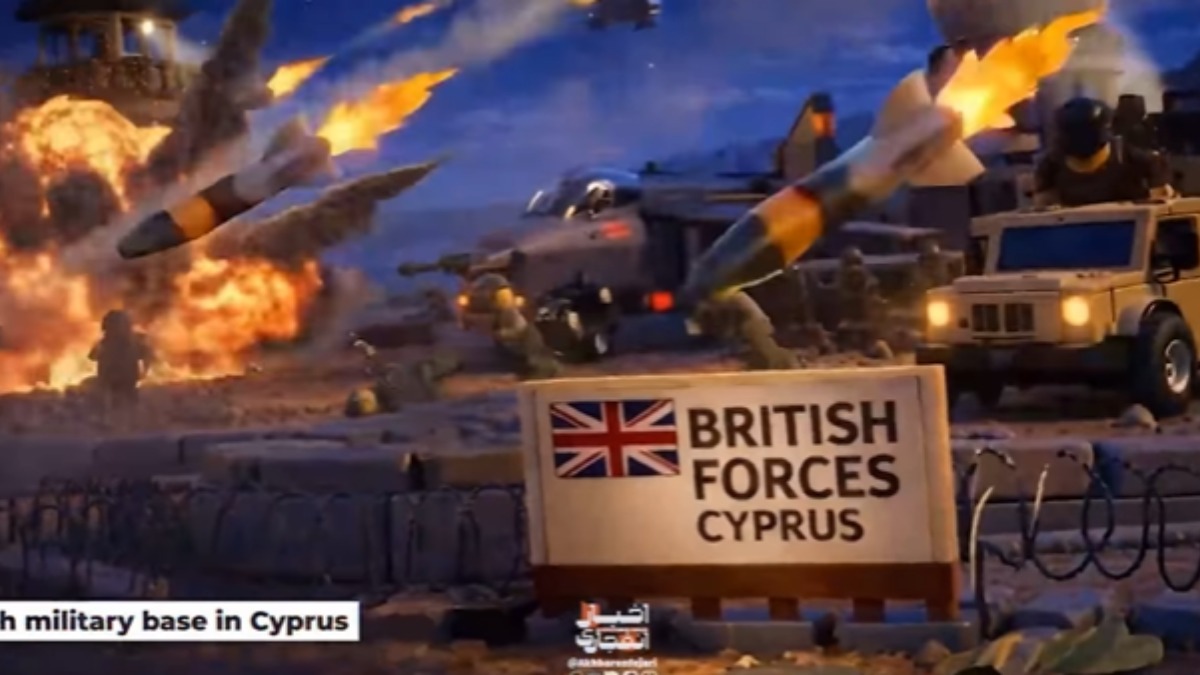

YouTube and Instagram recently removed accounts belonging to “Explosive News,” a group known for making viral Lego-style war animations, saying the accounts violated spam and deceptive practices rules. But the ban has not stopped them. Their videos are still spreading on X, and the group has rebranded as “Explosive Media” to reach wider English-speaking audiences.
The move by these platforms may have actually made the content more popular rather than suppressing it. Explosive News, now Explosive Media, has been making short animated clips using Lego-style characters, and the videos have racked up millions of views with comments pouring in from around the world.
The group claims to be an independent, student-led media team focused on social activism, though multiple reports suggest it may have ties to the Iranian government. According to The New Yorker, a representative, who stayed anonymous for safety reasons, joked that some of their old universities were bombed in US strikes, calling it “quite a ‘gift’ from Donald Trump to Iranian science and culture.”
Iran’s Lego propaganda is part of a much bigger and more serious online information war between Washington and Tehran
The team produces these two-minute clips in roughly 24 hours using AI and digital editing tools. The spokesperson described their deep involvement in the work, saying, “Every scene, every frame, every hidden detail, and every idea in our work feel like our own children.” The videos first appeared in June, around the time of strikes on Iranian nuclear sites.
The content of these animations is striking. One video shows Lego figures cheering as missiles are launched toward Tel Aviv. Another shows a missile hitting a burning White House. Some missiles carry messages honoring victims of past US actions, from Native Americans to Vietnamese villagers, with slogans like “ONE VENGEANCE FOR ALL.”
One clip touches on the rumor that Israeli Prime Minister Benjamin Netanyahu had been replaced by a deepfake. Another shows a Lego President Trump looking at photos of himself and Netanyahu in relation to the Jeffrey Epstein files before launching a missile that hits an Iranian school.
This is part of a broader information war between Washington and Tehran, where both sides compete for narrative control using memes, viral videos, and AI-generated content. President Trump’s administration has also regularly used videos and meme-style posts online, so this is not one-sided.
Diplomatic efforts are also ongoing in the background, and the Islamabad Accord could potentially end the Middle East crisis and reopen the Strait of Hormuz, though it is currently facing a significant roadblock.
According to The Independent, Mohammad Bagher Ghalibaf, the speaker of the Iranian parliament, has been especially active in this digital battle. The 64-year-old conservative figure with ties to the Islamic Revolutionary Guard Corps has been posting taunting memes in English on social media, even as over 92 million people in Iran have faced internet blackouts for over 30 days.
The IRGC’s role extends well beyond social media, as Iran’s IRGC has threatened complete destruction of Gulf infrastructure worth $30 billion, backed by satellite imagery. President Trump named Ghalibaf as someone the US is negotiating with behind the scenes, though Ghalibaf and Iran’s foreign ministry denied this.
Ghalibaf’s posts have been pointed and mocking. He compared the “No Kings” protests in the US to Iran’s 1979 Islamic Revolution, writing, “Welcome to the party we started 47 years ago, No kings,” and adding, “We approve this message.”
Another post featured a photo of a damaged American E-3 Sentry aircraft hit by an Iranian drone, with the caption: “Sustained only minor damage,” followed by three pinching hand emojis. He also accused President Trump of using social media to push down oil prices, and on March 30 posted what looked like trading advice: “Heads-up: Pre-market so-called ‘news’ or ‘Truth’ is often just a setup for profit-taking.
Basically, it’s a reverse indicator. Do the opposite: If they pump it, short it. If they dump it, go long.” On the other side, the White House has posted “Call of Duty-style” videos on social media that mix real war footage with video game graphics and superhero movie clips.
The backlash was swift. Senator Tammy Duckworth, an Iraq war veteran wounded in combat, posted on social media, “War is not a f—ing video game,” adding, “Six Americans are dead and thousands more are at needless risk because of your illegal, unjustified war. And you’re calling this a flawless victory.”
Cardinal Blase Cupich of Chicago also responded, saying, “A real war with real death and real suffering being treated like it’s a video game – it’s sickening.” Despite the criticism and around 5,000 deaths across the region, both Tehran and Washington continue to wage this digital meme war using strikingly similar tactics.







Published: Apr 7, 2026 07:45 am