



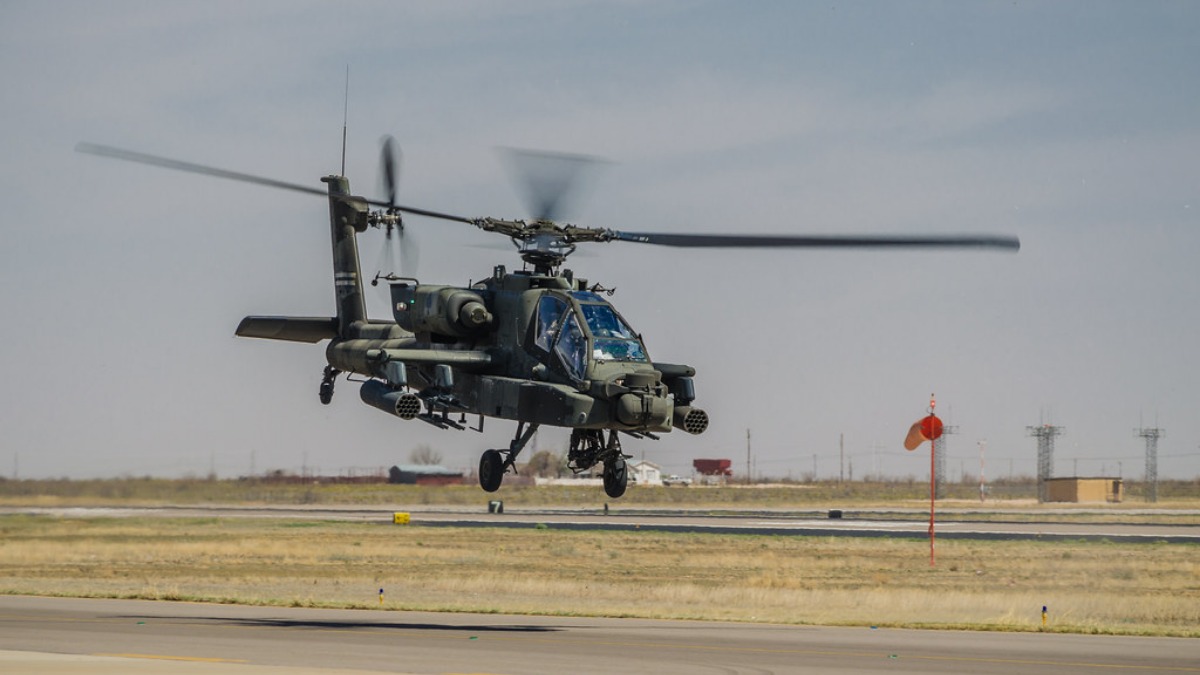

The U.S. Army has launched an administrative review after two AH-64 Apache helicopters performed a flyby of Kid Rock’s Nashville-area home. The incident came to light through the Daily Dot after the musician posted footage of the encounter online, sparking widespread debate over the use of military resources. In the clips, Kid Rock is seen standing by a pool, clapping and saluting as the aircraft hover nearby, with a sign above the pool reading “The Southern White House.”
Kid Rock, a vocal supporter of President Trump, posted the footage on Saturday, writing, “This is a level of respect that f—ing Governor of California will never know. God Bless America and all those who have made the ultimate sacrifice to defend her.” The post immediately drew attention to the military’s involvement.
The Army pushed back on the idea that the flyby was a deliberate tribute. Maj. Jonathon Bless, a public affairs officer for the 101st Airborne Division, clarified on Monday that no request had been made for the aircraft to specifically visit the property. The division operates out of Fort Campbell, near the Tennessee-Kentucky border, and routine training exercises regularly take place in the Nashville area.
The online response was not kind to anyone involved
The flight path reportedly took the helicopters over a “No Kings” protest in Nashville, fueling online suspicion. Maj. Bless stated there was no connection between the timing or location of the training run and the protest. In a written statement, the Army said, “Army aviators must adhere to strict safety standards, professionalism, and established flight regulations,” and confirmed that an administrative review is underway to assess the mission and verify compliance with regulations and airspace requirements.
Social media responded with pointed criticism, with many framing the flyby as a waste of taxpayer money. Redditor u/JenWess wrote, “Our tax dollars are used to pay for that.” Another user, u/MelloChai, posted, “The fraud, waste, and abuse is coming from inside.” The backlash landed amid broader public scrutiny of Pentagon spending priorities, including questions over Hegseth’s oversight since the Iran conflict began.
The cost angle sharpened the criticism. The AH-64D Apache carries an average operating cost of $10,228 per flight hour for fiscal year 2025, the highest among all U.S. Army helicopters. The newer AH-64E model, by comparison, costs $5,494 per hour. X user @felonytalk wrote, “The Epstein class is using our military like a child’s toy. Literally spending tax money to golf and give Kid Rock a special ‘hi’. While we lose our Medicaid and Food Assistance.” User u/dillasdonuts referenced broader budget priorities, writing, “DOGE.gov brought us cuts to research and health funding, national parks, PBS, k-12 education, veterans healthcare, etc. But we have f—ing helicopters flying over this dork’s house.”
The incident landed at a pointed moment for the AH-64D specifically. Last April, Secretary of Defense Pete Hegseth issued a memo calling for a comprehensive Pentagon overhaul, and the following day, Army Secretary Daniel P. Driscoll and Chief of Staff General Randy A. George introduced the Army Transformation Initiative. A central element of that initiative is the reduction and restructuring of manned attack helicopter formations, to be complemented by swarms of lower-cost uncrewed aerial systems. The plan includes accelerating the retirement of existing AH-64D models, which first entered service in 1997 and now face obsolescence in communications systems, sensors, and onboard computing power.
The broader restructuring also includes disbanding all 11 active Air Cavalry Squadrons, each of which traditionally operated eight Apaches and four RQ-7B uncrewed systems. This follows the cancellation of the Future Attack Reconnaissance Aircraft program and the ongoing phase-out of RQ-7B drones. Currently, eight squadrons use AH-64Es and three fly AH-64Ds, and all are set to be deactivated.
The Army’s near-term plan includes introducing the upgraded AH-64E Version 6.5 as the foundation for future fleet standardization, amid congressional disputes over federal spending priorities. Further direction on the AH-64E’s long-term role is expected during fiscal year 2026 budget discussions and the upcoming Army Aviation Mission Solutions Summit. The administrative review into the Kid Rock flyby remains ongoing, with the Army stating that appropriate action will be taken if any violations are found.






Published: Apr 2, 2026 06:30 am