



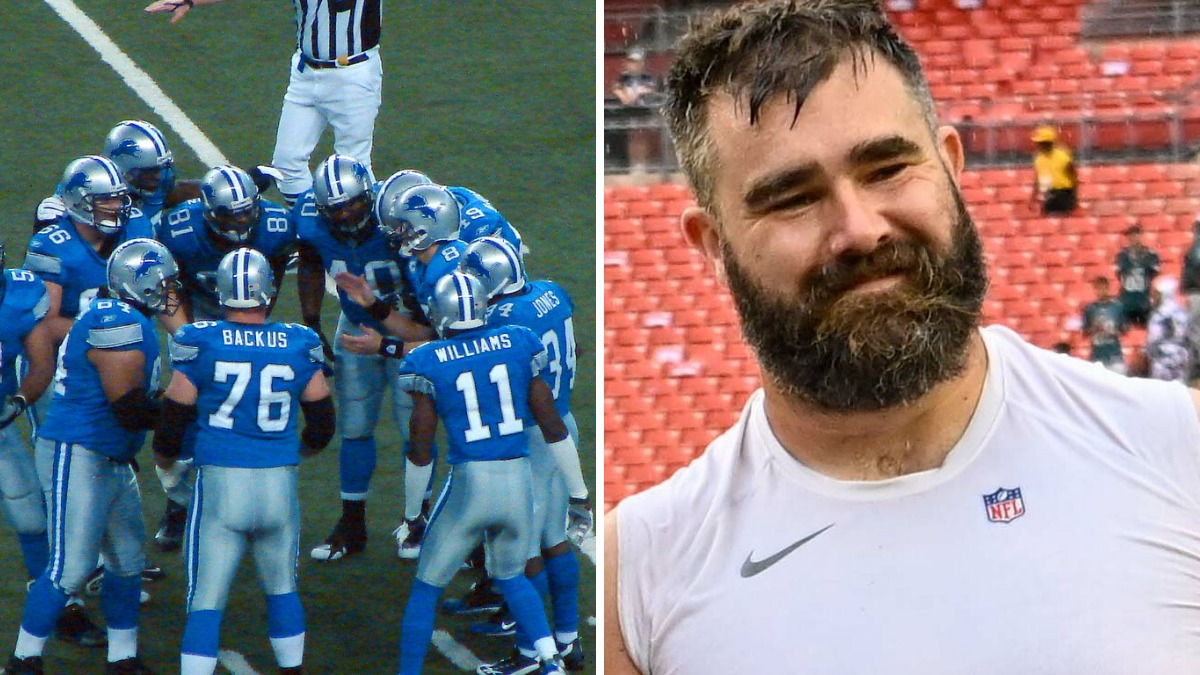

The Detroit Lions have sparked fresh controversy by reportedly demanding retired Pro Bowl center Frank Ragnow repay a portion of his signing bonus, according to Fox News. The move has drawn sharp criticism from Jason Kelce of the Philadelphia Eagles. Kelce didn’t mince words, calling the Lions’ decision “b*****” and highlighting a troubling pattern for the franchise.
This isn’t the first time the Lions have pulled such a move, as they previously asked for money back from franchise icons Barry Sanders and Calvin Johnson, creating lasting rifts with both Pro Football Hall of Famers. Kelce weighed in on X, expressing his strong disapproval of the team’s approach to Ragnow. He believes that while a team certainly has a right to ask for money back in some scenarios, this situation with Ragnow feels completely wrong.
“While I get that the team has a right to ask for money back, in the spirit of the agreement, I think it’s b* Frank is being asked to return money,” Kelce posted. He emphasized that Ragnow’s retirement was due to the game’s physical toll, noting his body simply couldn’t hold up anymore. Kelce added, “It wasn’t just some player deciding he didn’t want to play anymore, these signing bonuses are there to protect players from the inevitable injuries they incur on the field.”
That bonus suddenly doesn’t feel guaranteed
Lions president Rod Wood confirmed that the team did indeed ask for a “portion” of Ragnow’s signing bonus. Wood defended the team’s actions by pointing to past situations, stating, “Our precedent goes all the way back to Barry Sanders. And if Barry Sanders paid back money, I think the reality is, they’re not paying back their money, they’re returning our money because they were paid in advance for services that they hadn’t completed.”
Kelce, however, sees a clear distinction. He understands a team wanting money back if a player retires without a valid reason or fails to fulfill their contract obligations. But in Ragnow’s case, Kelce thinks the four-time Pro Bowl center retired due to severe health issues after consistently giving his all on the field. Ragnow was known for bravely playing through injuries that would sideline most other players.
“Frank was known for playing through injuries most wouldn’t,” Kelce wrote, citing Ragnow’s broken foot, torn pec, and back issues. Kelce is certain Ragnow battled these just to stay in the game, a struggle he understands well from when his brother Travis faced a mid-season crisis that nearly derailed his own career. Consequently, Kelce believes signing bonuses must protect players from the physical toll of the sport, which is why they push for more guaranteed money.
Ragnow signed a four-year, $54 million extension in 2021, making him the NFL’s highest-paid center. That deal included a $6 million signing bonus, counting $1.5 million against the cap annually through 2026. He retired last season after a failed comeback attempt due to a torn hamstring. Despite this injury-forced retirement, Wood continues to view the signing bonus as the team’s property. “It’s the Lions’ money, it’s not the player’s money,” Wood asserted.
Kelce views the purpose of a signing bonus differently. He believes it’s designed to be an upfront guarantee. “The whole purpose of a signing bonus is to be a guarantee up front that insures a salary irregardless of performance metrics, or most importantly, injuries that could compromise your career in the future,” Kelce explained.
Ragnow’s 100 games and four Pro Bowls prove his dedication before his body finally gave out.





Published: Apr 1, 2026 02:45 pm